The club of masks
Allen Upward
THE CLASSIC COLLECTION · 1900
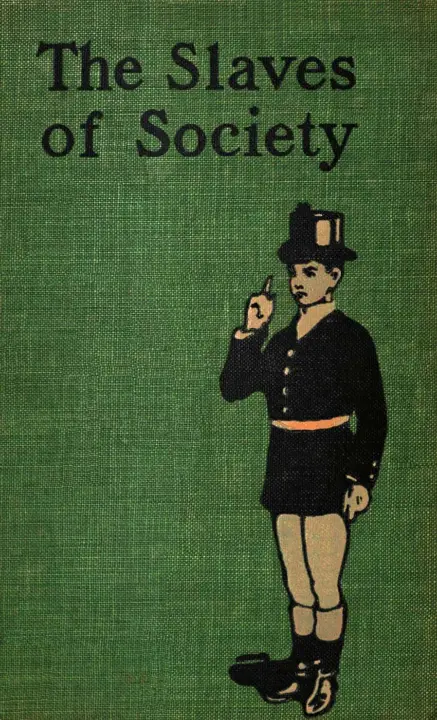
"The Slaves of Society: A Comedy in Covers" by Allen Upward is a comedic novel written in the late 19th century. The narrative delves into the intricacies of social class and personal relationships in British society, particularly focusing on the lives of the upper class. Central to the story are the marchioness and her daughter, Lady Victoria, as they navigate societal expectations and romantic entanglements, specifically involving the music-hall singer Belle Yorke and the wealthy Mr. Hammond. The opening of the story introduces a scene in the lavish drawing-room of the marchioness, where she engages in witty banter with Mr. Despencer about the burdens of social status. They discuss the suitability of potential marriage prospects for Lady Victoria, weighing a wealthy brewery heir against the dubious reputation of Belle Yorke, a rising star in the music hall. Through this dialogue, hints of hidden relationships and societal pressures arise, establishing the foundation for the comedic elements that unfold as the characters interact with each other and the societal norms they each grapple with. The introduction sets a satirical tone that explores themes of ambition, reputation, and the farcical nature of social customs.
Introduction adapted from the source catalogue; source summaries may be automatically generated.
Free to read · English · 37,736 words · No account needed
MAKE TIME FOR A GOOD BOOK
On by default. Untick to stop anonymous reading totals. Each page counts after 10 seconds in view. How this works.
Anonymous counting is on unless you have switched it off.
This time the marchioness felt certain she had been scratched. She glanced furtively at her companion, who preserved the composure of entire innocence as he set down his empty teacup on a small ebony stool, inlaid with mother-of-pearl, and made himself more at ease by drawing back into his chair and crossing his superbly trousered legs. After a little pause, she asked suddenly:
“You know Mr. Hammond?”
“No.” The word was spoken with a touch of disdain.
“Not know Mr. Hammond! Why, I thought Hammond’s ales were drunk in all
the clubs?”
“It doesn’t follow that you know a man because you drink his beer. But I have heard of him. Isn’t he rather an outsider?”
The marchioness looked indignant.
“He is run after by all the best people,” she remonstrated.
“Yes, but is he worth it?” returned Despencer.
“He is worth two millions,” retorted the marchioness.
Despencer sat up in his chair and glanced at her.
“Rather a loud kind of man, they tell me,” he observed.
“They tell me it is the thing to be loud now,” said his companion.
“The sort of man that takes ballet-girls to Richmond?”
“The sort of man that every mother in England would welcome as a
son-in-law.”
Despencer smiled compassionately and leaned back in his chair again.
“Oh, quite so. There could be no possible objection to him as a son-in-law. I thought you meant as an acquaintance.”
“Don’t be so insolent,” said the marchioness; “but listen. A man like that ought to marry, and to marry well. If he were to fall into the clutches of some vulgar adventuress, I should regard it as a misfortune for society.”
“This is very noble of you,” murmured her companion.
She went on: “We are all so wretchedly poor in society now that we can’t afford to lose two millions. Besides, with his money and a seat in Parliament, they are sure to make him a peer.”
“I should think that very likely. The House of Lords is the one club in London where you can’t be blackballed.”
The marchioness condescended to smile.
“How wretchedly jealous and spiteful you are to-day! To come to the point. I have determined to do my duty to society by marrying Victoria to this man.”
“Congratulations! Let me see, ought I to call you a Spartan mother, or a Roman one? I really forget.”
The marchioness raised her hand in languid remonstrance.
“I begged you just now not to be clever. Unfortunately, there is an
obstacle in the way.”
“Ah! I think I have heard something about a gallant cousin?” Despencer
suggested.
Your reading position is saved on this browser. Take it to another device with a library code. Reading pages adapt to text, rather than matching a printed edition.
Allen Upward
Allen Upward
Allen Upward
Allen Upward
BEHIND THE BOOK
This eBook is for the use of anyone anywhere in the United States and most other parts of the world at no cost and with almost no restrictions whatsoever. You may copy it, give it away or re-use it under the terms of the Project Gutenberg License included with this eBook or online at www.gutenberg.org. If you are not located in the United States, you will have to check the laws of the country where you are located before using this eBook. Read the source licence.
The original source file, including credits and licence, is retained by this library. Request an original-format copy at no charge. Please include the book title and Project Gutenberg identifier #67606.
KEEP YOUR CURIOSITY GOING
Coulson Kernahan

Maurice Baring
Frances Wright
Cécile Tormay

Frederic Jesup Stimson

W. H. P. (William Henry Pope) Jarvis