The club of masks
Allen Upward
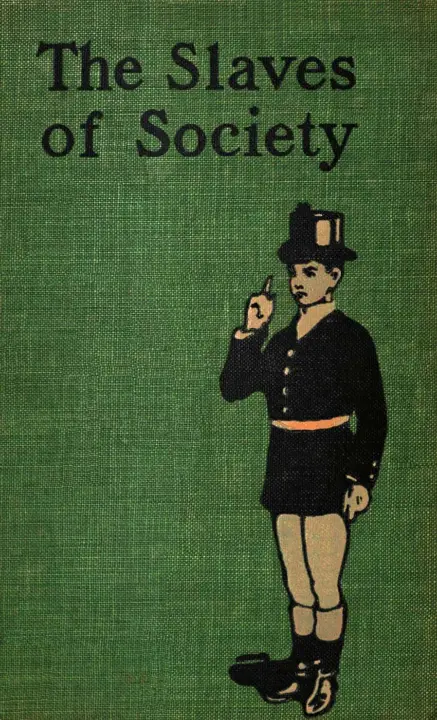
THE CLASSIC COLLECTION · 1900
"The Slaves of Society: A Comedy in Covers" by Allen Upward is a comedic novel written in the late 19th century. The narrative delves into the intricacies of social class and personal relationships in British society, particularly focusing on the lives of the upper class. Central to the story are the marchioness and her daughter, Lady Victoria, as they navigate societal expectations and romantic entanglements, specifically involving the music-hall singer Belle Yorke and the wealthy Mr. Hammond. The opening of the story introduces a scene in the lavish drawing-room of the marchioness, where she engages in witty banter with Mr. Despencer about the burdens of social status. They discuss the suitability of potential marriage prospects for Lady Victoria, weighing a wealthy brewery heir against the dubious reputation of Belle Yorke, a rising star in the music hall. Through this dialogue, hints of hidden relationships and societal pressures arise, establishing the foundation for the comedic elements that unfold as the characters interact with each other and the societal norms they each grapple with. The introduction sets a satirical tone that explores themes of ambition, reputation, and the farcical nature of social customs.
Introduction adapted from the source catalogue; source summaries may be automatically generated.
Free to read · English · 37,736 words · No account needed
MAKE TIME FOR A GOOD BOOK
On by default. Untick to stop anonymous reading totals. Each page counts after 10 seconds in view. How this works.
Anonymous counting is on unless you have switched it off.
“Don’t you believe her, Severn,” laughed Hammond. “I haven’t given your daughter the slightest encouragement--as yet.”
“Well, you should have my consent, if it counted for anything,” said the marquis, beginning to make his retreat from the room.
Again his wife’s voice arrested him.
“George, now you have come in, you must stay, you know. I should consider it very marked if you went away.”
“You don’t want me, Jane; I should only be in the way,” he objected,
feebly.
“You underrate your social powers, George. Besides, I don’t ask you to talk to any one. I only want you to show yourself.”
“If that’s all, I’m sure I needn’t stay. But I leave you my photograph.”
With these words Lord Severn made a bolt for it, and succeeded in getting out of hearing before his wife could launch a fresh injunction.
The marchioness bit her lip in some embarrassment. Despencer caught her eye and managed to infuse a certain meaning into his look, as he asked aloud:
“Who are you going to have to sing on Thursday night?”
The marchioness took her cue with the dexterity of an old diplomatist. She leaned back in her chair with an air of utter unconcern, as she responded:
“I have almost forgotten. Some people they recommended to me at the music-seller’s.” She raised her hand to her brow, as though studying to recollect. “Let me see. Oh yes, there is one woman who I believe is perfectly charming. They told me that at the music-halls all the young men were dying for her.”
Hammond moved his head rather abruptly to look at the speaker.
“Do you remember her name?” he asked.
“I think she calls herself Belle Yorke. Why, have you seen her?”
The marchioness’s expression was one of innocent surprise at the strong interest plainly depicted on her listener’s countenance.
Before he could reply to her, the conversation was again interrupted. The machine had brought a Dowager Lady Rollox and an Honorable Edith Rollox to see his mistress.
The marchioness seized the occasion with the instinct of a match-maker.
“Come and help me to talk to these stupid people,” she breathed hurriedly in Despencer’s ear, as she rose and went to meet the newcomers. Despencer meekly obeyed.
The little piece of by-play between her mother and Despencer had not been lost on the Lady Victoria Mauleverer. As soon as she and Hammond were left together she inquired, with an air of doubt:
“Do you know anything about this Belle Yorke?”
Hammond roused himself with a start from his reflections.
“I? Belle Yorke? Yes, yes. I know something about her.”
Your reading position is saved on this browser. Take it to another device with a library code. Reading pages adapt to text, rather than matching a printed edition.
Allen Upward
Allen Upward
Allen Upward
Allen Upward
BEHIND THE BOOK
This eBook is for the use of anyone anywhere in the United States and most other parts of the world at no cost and with almost no restrictions whatsoever. You may copy it, give it away or re-use it under the terms of the Project Gutenberg License included with this eBook or online at www.gutenberg.org. If you are not located in the United States, you will have to check the laws of the country where you are located before using this eBook. Read the source licence.
The original source file, including credits and licence, is retained by this library. Request an original-format copy at no charge. Please include the book title and Project Gutenberg identifier #67606.
KEEP YOUR CURIOSITY GOING
Coulson Kernahan

Maurice Baring
Frances Wright
Cécile Tormay

Frederic Jesup Stimson

W. H. P. (William Henry Pope) Jarvis