THE CLASSIC COLLECTION✦A Christmas greetingCLASSIC FREE BOOKS
A Christmas greeting
Marie Corelli
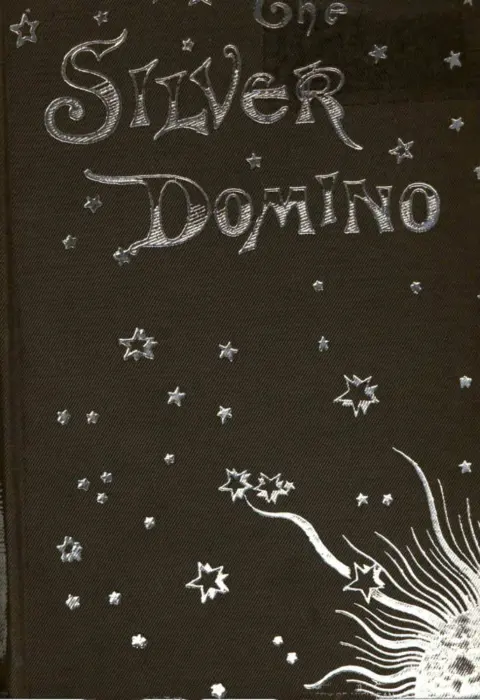
THE CLASSIC COLLECTION · 1894
"The Silver Domino; Or, Side Whispers, Social and Literary" by Marie Corelli is a work of literary satire written in the late 19th century. This text blends social critique with humorous observations about its contemporaneous societal norms and figures, particularly focusing on the hypocrisies within literature and politics. The narrator engages in a candid reflection of the social landscape, parodying well-known personalities and commenting on the pretentiousness prevalent within elite circles. The opening of the work introduces a masked narrator who enters a lively social gathering, observing the chaotic behaviors of attendees with a mix of amusement and disdain. Through witty soliloquies, the narrator reveals a disdain for the superficiality and moral failures of both the upper classes and the press. He questions the concept of friendships and enmities, hints at the absurdities of the established societal norms, and expresses a desire to critique the era's duplicitous nature while masked as a mere observer. This sets the stage for an exploration of themes such as identity, truth, and the often laughable yet profound nature of human behavior.
Introduction adapted from the source catalogue; source summaries may be automatically generated.
Free to read · English · 55,715 words · No account needed
MAKE TIME FOR A GOOD BOOK
On by default. Untick to stop anonymous reading totals. Each page counts after 10 seconds in view. How this works.
Anonymous counting is on unless you have switched it off.
The phrase, "the stronger Dickens," is coming it very strong indeed, but--it's only the paragraph-men. These chroniclers of the time have pathetically informed us how on one occasion Kip ran away from the "clamour" (of the paragraph-men) to India to fetch his papa, and how his papa came back with him, to look after him, I suppose, and protect him from all the naughty, vicious people who wanted to blow his skin out into the size of a bull when Nature meant him to keep to the strict proportions of the other figure in the fable. Good Rudyard! Already the bloom is off the rye, just slightly, for if we are to believe the Athenæum, an Eden Phillpotts is "the new Kipling." "O Eden Phillpotts! Phoebus! What a name! To fill the speaking-trump of future Fame!" The "loose ungrammatical" Byron's lines fit Phillpotts as excellent well as Kipling. Phillpotts is really a fine name in every way--splendidly hideous, and available for all sorts of Savile Club and Saturday Review witticisms, such as--
"Phill the Pott and fill the can
Eden is our Coming Man!"
Or this, sung slowly with religious nasal intonation to the well-known
hymeneal melody--
"The voice that breathed o'er Eden,
From Athenæum bowers,
Said 'Phillpotts' stories must be praised,
He is a friend of ours!'"
Think of it, Rudyard! think of it! Art ready to cope with Phill? Wilt meet Potts on his own ground? Deem not thyself Eden's superior, for he "understands," according to the Athenæum, "proportion, contrast, balance, and the value of unhalting movement," things that inferior persons like Scott, Thackeray, Balzac, and others had to study all their lives long. Moreover, another journal dictatorially announces that "novel-readers must prepare to welcome" Phillpotts. Mark that "must"! That "must" would fain seize the Ass-public by the throat, and make it eat Phillpotts like a turnip. But the Ass is a fastidious ass sometimes--it likes to nose its food before devouring; it will nose Phillpotts at its pleasure. Meantime, it is nosing thee, friend Kipling, dubiously and with a faint touch of derision. Ridicule kills; beware of it, my boy. And to avoid ridicule and secure dignity, hist!--a side-whisper, meant kindly--Put down your Boom business! Stamp it out. Hush it up. If you don't take my advice you'll regret it. The thing has been over-done. You have had more friends than are good for you; a few stanch foes would have brought you much more benefit in the long run. When your ill-advised flatterers quote your jingly "Barrack-Room Ballads" as though they were things immortal--when good Frank Harris, of Fortnightly prowess, imposes a growling recital of scraps of your doggerel, "Fuzzy-wuz," on patiently-bored people sitting at a social meal, with the air of one considering it a finer production than "The Isles of Greece," or Shelley's "Cloud"--we say with Hamlet, "Somewhat too much of this." In the year of grace 1900 "Barrack-Boom Ballads" will have gone the way of all "occasional verse," and not a line will remain in the memory of the public. The English people know perfectly well what poetry is, and no critic will ever persuade them that you can write it. At the same time no one wishes to deny your surface cleverness or your literary ability. You are on the same rank with Bret Harte, Frank Harris, Frank Stockton, Anstey, and a host of others, and there is no objection taken to your standing along with these; but there is objection, honest objection, made to your being forced higher aloft than your compeers, by means of a ridiculously exaggerated, aggressively ubiquitous "boom." When Walter of the Times rushed frantically into a court of law about his copyright in a Kipling article (he having taken no such heed of any other author's article till then), the outside public laughed and shrugged their shoulders at the absurdity of the thing. From the fuss made, one would have imagined that God Himself read the Times every morning, and was particularly interested in Kipling. This sort of nonsense never lasts. The reaction infallibly sets in. Never was a name sent up sky-high like a rocket, but it did not fall plump down like a stick. And so, excellent Rudyard, beware! You are not "the greatest English author" by a long way. In weak moments I admit that the newspaper-gushers work me into a delirium-tremens of ecstasy about you, and, like my friend Frank Harris, my hand trembles and my voice takes on a rich growl as I quote "Fuzzy-wuz" and the "immortal" (alas!) "Tomlinson"--but in these fits I am not answerable for my words or actions. When I put away "Plain Tales" and "Life's Handicap," and forget all your press notices, I can think of you calmly and quite dispassionately, as one literary labourer among hundreds of others, who are all striving to put their little brick into the building of the Palace of Art, and I perceive that yours is a very small brick indeed! I fear it will scarcely be perceived in the wall twenty years hence. And my present opinion of you is--would you care to know it? Of course not, but you shall have it all the same. I consider you, then, to be a talented little fellow with a good deal of newspaper-reporter "smartness" about you, and an immense idea of your own cleverness, an idea fostered to a regrettable extent by the overplus of "beans" which gentle Edmund Yates, among others, is sorry to have given you. You have some literary skill, and you use a rough brevity of language which passes for originality in these days of decadence, but you are shallow, Rudyard; as shallow as the small mountain brook that makes a great noise in the rapidity of its descent, but can neither turn a mill-wheel or bear a boat on its surface. Your men characters are mostly coarse bears--unmannerly ruffians in their speech at least--your women are, on the average, either trifling or despicable. Though unlovable, they are, however, interesting for the moment, but only for the moment. Because a good many of us know fellows who are brave and "virile" and all the rest of it, and yet who are not obliged to use a slang word in every sentence; and we also know women who are not solely occupied with the subjugation of the "masculine persuasion"; and we prefer these decent folk as a rule. But, whatever your literary failings or attainments, and however you may display them in futuro, be wise in time and put down your "boom." No man can live up to a "boom"; it is not humanly possible. As for your "strong strain of humour," I am disposed to accept that as a fact. It is a strain--your humour. Your hydraulic pump is for ever going, and if the result is not always witty, it is flippant enough. And flippancy passes for wit nowadays. "Chaff" has replaced epigram, except when one finds a bon mot in an old forgotten French play or novel, and passes it off in English as one's own "to set the table in a roar." As a matter of fact though, human life is tragic; and the comedy part of it is only invented hurriedly and inserted by the clowns of the piece.
Your reading position is saved on this browser. Take it to another device with a library code. Reading pages adapt to text, rather than matching a printed edition.
Marie Corelli
Marie Corelli

Marie Corelli

Marie Corelli
BEHIND THE BOOK
This eBook is for the use of anyone anywhere in the United States and most other parts of the world at no cost and with almost no restrictions whatsoever. You may copy it, give it away or re-use it under the terms of the Project Gutenberg License included with this eBook or online at www.gutenberg.org. If you are not located in the United States, you will have to check the laws of the country where you are located before using this eBook. Read the source licence.
The original source file, including credits and licence, is retained by this library. Request an original-format copy at no charge. Please include the book title and Project Gutenberg identifier #63446.
KEEP YOUR CURIOSITY GOING

David Patterson (Spirit) Hatch

David Patterson (Spirit) Hatch

David Patterson (Spirit) Hatch

Ralph Waldo Emerson

Maurice Baring

Oscar Wilde & James McNeill Whistler