THE CLASSIC COLLECTION✦A Christmas greetingCLASSIC FREE BOOKS
A Christmas greeting
Marie Corelli
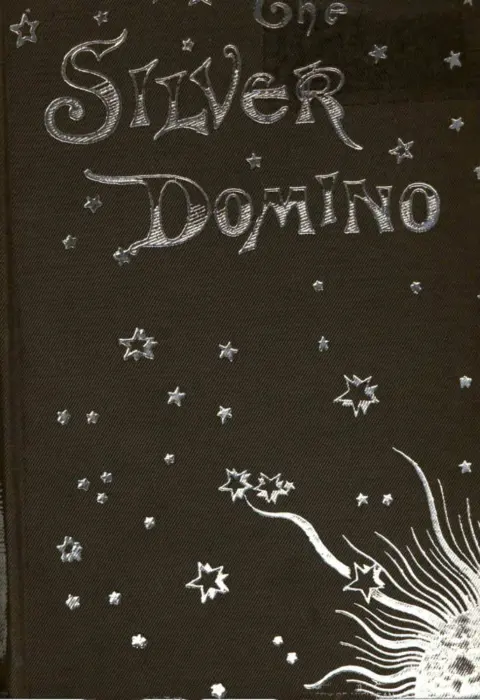
THE CLASSIC COLLECTION · 1894
"The Silver Domino; Or, Side Whispers, Social and Literary" by Marie Corelli is a work of literary satire written in the late 19th century. This text blends social critique with humorous observations about its contemporaneous societal norms and figures, particularly focusing on the hypocrisies within literature and politics. The narrator engages in a candid reflection of the social landscape, parodying well-known personalities and commenting on the pretentiousness prevalent within elite circles. The opening of the work introduces a masked narrator who enters a lively social gathering, observing the chaotic behaviors of attendees with a mix of amusement and disdain. Through witty soliloquies, the narrator reveals a disdain for the superficiality and moral failures of both the upper classes and the press. He questions the concept of friendships and enmities, hints at the absurdities of the established societal norms, and expresses a desire to critique the era's duplicitous nature while masked as a mere observer. This sets the stage for an exploration of themes such as identity, truth, and the often laughable yet profound nature of human behavior.
Introduction adapted from the source catalogue; source summaries may be automatically generated.
Free to read · English · 55,715 words · No account needed
MAKE TIME FOR A GOOD BOOK
On by default. Untick to stop anonymous reading totals. Each page counts after 10 seconds in view. How this works.
Anonymous counting is on unless you have switched it off.
Robert Louis Stevenson started as a "poet," I believe. Now he has become the "Thucydides of literature"--vide Pall Mall Gazette. Such nice, pretty classical names the Pall Mall discovers for its particular darlings. Has the Pall Mall read Thucydides? I rather doubt it. I have, and find no resemblance to Mr. Stevenson. And, truth to tell, I preferred Mr. Stevenson's past poetry to his present prose. Yet why should I murmur, remembering the sweet, sound slumber into which I fell over "The Wrecker"--that trying mixture of Marryat and Clark Russell. I think it is a capital story for schoolboys though, and that is why the Pall Mall admires it. I am not a schoolboy; the Pall Mall is; a dear, bright, gamesome, peg-top-and-marble creature, who thinks the greatest joke in life is to break a neighbour's window or ring a neighbour's bell, and then run away laughing. Its animal spirits are too delightfully boisterous for it to appreciate any sort of deep sentiment; a story of strong human passions, or a romance in which love has the most prevailing share, would not appeal to its unlessoned fancy. And, very naturally, it appreciates Stevenson, because he gives it no hard, uncomfortable life-problems to think about.
Another "poet" who calls himself so is Hall Caine. He says the "Scapegoat" is not so much a novel as a drama, and not so much a drama as a "poem." Very good indeed! Excellent fooling, upon my life. Hall Caine can be very funny if he likes, though you wouldn't think it to look at him. When he called his story of the "Bondman" a "New Saga," it was only his fun. His wit is quite irrepressible. Among other humorous things, he has had his portrait taken in a loose shirt and knickers, seated facing the bust of Shakespeare, like a day-labourer fronting the Sphynx. It is altogether refreshing to find a Lilliputian literary ephemera so entirely delighted with himself as Hall Caine. He is much more convinced of the intrinsic value of his own genius than Oscar Wilde, with less reason than Oscar for his conviction. Oscar is a really clever man; Hall Caine tries to be clever and does not succeed. Oscar is a born wit, moreover, and though he does crib a few bon-mots from Molière and a few paradoxes from Rochefoucauld, what does it matter for the English who do not understand French, and have to get "books of the words" in order to "follow" Sarah Bernhardt. Besides, Hall Caine borrows from the French also; the plot of his "Scapegoat" is taken from the French, so one of my critical friends assures me, and critics are always right. Francis Adams (also a "poet") "went" for Hall Caine not long ago in the Fortnightly--a regular good knock-down thrust it was, too. But Adams's prowess is of no avail in these things. The more you abuse a fellow, the more his books sell. The best way to utterly damn an author is to say that his novels are "nicely written," "prettily told," "harmless fiction," or "innocuous literature." If these phrases do not finish him off, nothing will. An original, powerful, passionate writer is always "slated," and always "sells." Witness the career of one Emile Zola. With all his faults, the man is a great poet; realism and romance unite in strange colours on his literary palette, and with his forceful brush he paints life in all its varied aspects fearlessly and without any regard for outside opinions. His one blemish is the blemish of the whole French nation--moral Nastiness. But if we talk of "poets" who, though making their bread-and-butter out of the writing of prose, still insist on belonging to the gods of Parnassus, none of the stringers of rhyme and jinglers of ballads, and weavers of "sagas" and the like, that afflict this enlightened and imaginative nation, could write such a true poem from end to end as "Le Rêve." Such consummate art, such unravelling of exquisite romance out of commonplace material, is not to be discovered in the English literary brain. The English literary brain is dull, lumpish, and heavy--the English literary worker is dominated by one idea, and that is, how much hard cash shall he get for his work? And thus it is that poets, real poets, are rarer than swallows in snow; so that is why I am slightly exercised in my mind respecting the Petrarch sort of minstrel I spoke of a while ago. He is unquestionably a poet, and seems to get on without any "booming." This strikes me as very odd. However, most of the "best" men go unboomed. No occasion to puff a good article. As for the pretended poets, countless as the sands of the sea, there is a great consolation in the reflection that in a few more years they will all be as though they never had been. Good old Posterity will know nothing about them, and herein Posterity is to be heartily congratulated. Poetical gnats must live like other gnats, I suppose--they are rather troublesome, and make a buzzing noise in one's ears, but as their whole existence lasts no more than a day, we must have patience till the sun sets.
Your reading position is saved on this browser. Take it to another device with a library code. Reading pages adapt to text, rather than matching a printed edition.
Marie Corelli
Marie Corelli

Marie Corelli

Marie Corelli
BEHIND THE BOOK
This eBook is for the use of anyone anywhere in the United States and most other parts of the world at no cost and with almost no restrictions whatsoever. You may copy it, give it away or re-use it under the terms of the Project Gutenberg License included with this eBook or online at www.gutenberg.org. If you are not located in the United States, you will have to check the laws of the country where you are located before using this eBook. Read the source licence.
The original source file, including credits and licence, is retained by this library. Request an original-format copy at no charge. Please include the book title and Project Gutenberg identifier #63446.
KEEP YOUR CURIOSITY GOING

David Patterson (Spirit) Hatch

David Patterson (Spirit) Hatch

David Patterson (Spirit) Hatch

Ralph Waldo Emerson

Maurice Baring

Oscar Wilde & James McNeill Whistler