THE CLASSIC COLLECTION✦A Christmas greetingCLASSIC FREE BOOKS
A Christmas greeting
Marie Corelli
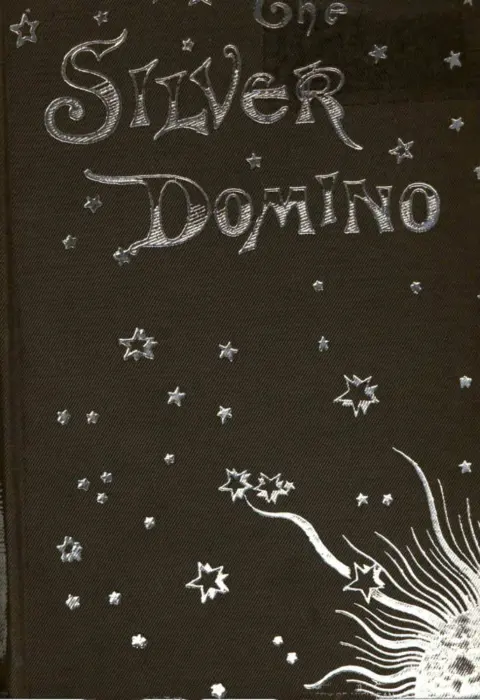
THE CLASSIC COLLECTION · 1894
"The Silver Domino; Or, Side Whispers, Social and Literary" by Marie Corelli is a work of literary satire written in the late 19th century. This text blends social critique with humorous observations about its contemporaneous societal norms and figures, particularly focusing on the hypocrisies within literature and politics. The narrator engages in a candid reflection of the social landscape, parodying well-known personalities and commenting on the pretentiousness prevalent within elite circles. The opening of the work introduces a masked narrator who enters a lively social gathering, observing the chaotic behaviors of attendees with a mix of amusement and disdain. Through witty soliloquies, the narrator reveals a disdain for the superficiality and moral failures of both the upper classes and the press. He questions the concept of friendships and enmities, hints at the absurdities of the established societal norms, and expresses a desire to critique the era's duplicitous nature while masked as a mere observer. This sets the stage for an exploration of themes such as identity, truth, and the often laughable yet profound nature of human behavior.
Introduction adapted from the source catalogue; source summaries may be automatically generated.
Free to read · English · 55,715 words · No account needed
MAKE TIME FOR A GOOD BOOK
On by default. Untick to stop anonymous reading totals. Each page counts after 10 seconds in view. How this works.
Anonymous counting is on unless you have switched it off.
Outside the sun was shining.
There was no hole anywhere to be seen.
And the woman looked up, and lo! there was God laughing at her.
Then said the woman: 'There is no hole.'
And God gaily answered, 'No.'
Then the woman asked: 'Where is Hell?'
And God, very much amused, replied: 'I haven't the least idea!'
And the woman smiled right joyously, and said: 'I have had bad
Dreams.'
And God said: 'You have!'
The sunlight lay across the bed of the woman from South Africa. She woke, and thought of the deep red hole she had seen. And she reflected on her strange meeting with X. Y. Z. of the Athenæum, and the 'Religious Spirit' of the Pall Mall. And she also thought what a playful and hilarious personage God was. Then she remembered she had had late supper the previous evening. Which accounted for 'Dreams.'
The sunlight still lies now and then across the bed of the woman
from South Africa.
It is a way the sunlight has.
And God laughs, as well He may."
Now I hope everybody sees what a "touching simplicity" there is, what a child-like familiarity with the Deity pervades the whole of this "prose poem." And yet there is a "subtlety," a candour, a strange melancholy, a curious cynicism, and a weirdness of conception and strong picturesqueness about its every line. It is unique in itself; it wants no explanation, because it says everything in the fewest words. It has a diction as innocent and unadorned as that of an infant's first spelling-book. And all the best critics I know want authors to let "brevity be the soul of wit," and to tell their stories as concisely as possible. If I were a novel-maker and wished to please the critics, I should write my "thrillers" in telegram form; twelve or twenty-four words to a chapter. Then I am sure I should get very well reviewed. Critics have no time to read any thoroughly finished and careful work--they seldom can do more than scan the first page and the last. I know this, being a Critic myself, and I think it is a thousand pities authors should take any trouble to write a middle part to their stories. An Ollendorf curtness of wording is always desirable, unless, indeed, one happens to be a George Meredith, and can manage to get cleverly involved in a long sentence which takes time to decipher, and when deciphered has literally no meaning at all. Then of course one is a genius at once; but such masterly art is rare. And so on the whole I like the "allegory" style best, because it is both brief and obscure at the same time. It has the surface appearance of simplicity, but its depth--ah! it is surprising to what a depth you can go in an allegory. You can fall down a regular well of thought and go fast asleep at the bottom, and when you wake up you wonder what it was all about, and you have to begin that allegory over again. That is what I call "reading"--hard reading--sensible reading. I like a thing you can never make head or tail of--the brain fattens on such provender. I am going to write out several dozen "Dreams" by and by--some of the queer ones I have had after a bout of champagne, for example--and I shall give them gratis to the Pall Mall with my fondest blessing. If there is "one bright particular star" in the sphere of journalism I worship more than another it is the Pall Mall, and I feel I can never do too much for it. And it likes "dreams" and little innocent religious allegories, because it is so good itself, and, like the boy Washington, has "never told a lie." I have always considered that the Pall Mall and the German Kaiser are the only two earthly institutions "God" can favour, seeing that, according to the lady from South Africa, He has taken to "laughing" at most things. It is a pleasant picture, that of God laughing--one, too, not to be found in all the Bible. There the Deity has been represented as angry, jealous, reproachful, or benignant, but it has been left to South African literary skill to show us how He "laughed." And as the Pall Mall thinks it all right that He should laugh, why then we ought to coincide unanimously in the Pall Mall's opinion. Because just imagine what London would be without the Pall Mall! Can mind conceive a more hideous desert?--a more wildly howling desolation? We should be left friendless and all unguided without our angel of reform; our clean, white-winged, heavenly, truthful Apostle of Northumberland Street, who is always able to tell us what is good and what is bad; who can inform us all, statesmen, clerics, authors, artists, and day-labourers, exactly what we ought and what we ought not to do. In the event of another Deluge (and some of the scientists assure us we shall have it soon) I know of a way in which some few of us might be saved; that is, some few with whom "God" is delighted, such as myself and the German Kaiser. We should simply require to make friends with the Pall Mall staff, (several of the members are ladies, and how charming to have their society!), and build an ark out of planks from the Pall Mall office floors. We should then paste it all over with Pall Mall placards of the latest accounts of the Flood up to date of sailing, for the fishes to read, and then we should get into it; we who were the elected ones (including the Kaiser of course), and off we would go in smiling safety, secure from winds and waves, being the only "just people" left on a corrupted earth. And if in the end we found another Mount Ararat, and it were left to the governing body, i.e., the Pall Mall staff and the German Kaiser, to begin a new world ... O ye gods and little fishes! What a world it would be!
Your reading position is saved on this browser. Take it to another device with a library code. Reading pages adapt to text, rather than matching a printed edition.
Marie Corelli
Marie Corelli

Marie Corelli

Marie Corelli
BEHIND THE BOOK
This eBook is for the use of anyone anywhere in the United States and most other parts of the world at no cost and with almost no restrictions whatsoever. You may copy it, give it away or re-use it under the terms of the Project Gutenberg License included with this eBook or online at www.gutenberg.org. If you are not located in the United States, you will have to check the laws of the country where you are located before using this eBook. Read the source licence.
The original source file, including credits and licence, is retained by this library. Request an original-format copy at no charge. Please include the book title and Project Gutenberg identifier #63446.
KEEP YOUR CURIOSITY GOING

David Patterson (Spirit) Hatch

David Patterson (Spirit) Hatch

David Patterson (Spirit) Hatch

Ralph Waldo Emerson

Maurice Baring

Oscar Wilde & James McNeill Whistler