THE CLASSIC COLLECTION✦A Christmas greetingCLASSIC FREE BOOKS
A Christmas greeting
Marie Corelli
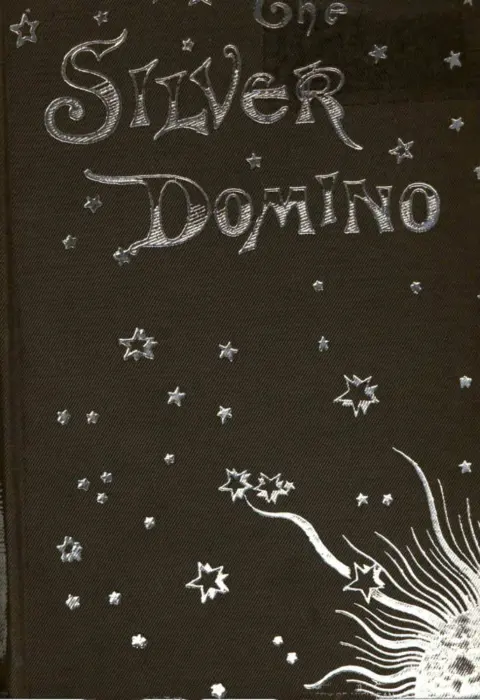
THE CLASSIC COLLECTION · 1894
"The Silver Domino; Or, Side Whispers, Social and Literary" by Marie Corelli is a work of literary satire written in the late 19th century. This text blends social critique with humorous observations about its contemporaneous societal norms and figures, particularly focusing on the hypocrisies within literature and politics. The narrator engages in a candid reflection of the social landscape, parodying well-known personalities and commenting on the pretentiousness prevalent within elite circles. The opening of the work introduces a masked narrator who enters a lively social gathering, observing the chaotic behaviors of attendees with a mix of amusement and disdain. Through witty soliloquies, the narrator reveals a disdain for the superficiality and moral failures of both the upper classes and the press. He questions the concept of friendships and enmities, hints at the absurdities of the established societal norms, and expresses a desire to critique the era's duplicitous nature while masked as a mere observer. This sets the stage for an exploration of themes such as identity, truth, and the often laughable yet profound nature of human behavior.
Introduction adapted from the source catalogue; source summaries may be automatically generated.
Free to read · English · 55,715 words · No account needed
MAKE TIME FOR A GOOD BOOK
On by default. Untick to stop anonymous reading totals. Each page counts after 10 seconds in view. How this works.
Anonymous counting is on unless you have switched it off.
Poor Mrs. Henry Wood! What a wonderfully "groovy" woman she was! always writing, as one of my brother-critics has aptly remarked, "in the style of an educated upper housemaid." And yet her books sell largely--partly because Bentley and Son advertise them perpetually, and partly because they "will not bring a blush to the cheek of the Young Person." This latter reason accounts for the popularity (in the pious provinces) of that astoundingly dull writer, Edna Lyall. Patience almost fails me when I think of that lady's closely-printed, bulky volumes, all about nothing. "Groove"? ye gods! I should think it was a "groove"--a religious, goody-goody "groove," out of which there is never the smallest possibility of an escape. But perhaps one of the circumstances that surprises me most in the fate of all the mass of fiction produced weekly, is the curious placidity with which the public take it up, scan it, lay it aside, and forget it instantly. Scarce one out of all the writers writing, male and female, has a book remembered by Mudie's supporters after a year. If any novel is still thought of and talked of after that period, you may be sure it is not "groovy," but that it runs in a directly contrary current to all "grooves" of preconceived opinion--that it has something vaguely irritating about it as well as pleasing--hence its success. But on the whole I am not sure that I do not prefer "groovy" writers after all. There is a comfortable certainty in their literary manœuvres. They are not going to frighten you by exploding a big fiery bomb of Imagination or Truth (both these things are abhorrent to me) on the reader unawares. It is really quite a weird sensation to take up the latest book by a writer who has the reputation of being able to tell you something different each time, because, of course, you never know what he or she may be at. You may have your very soul racked by painful or pathetic surprises--and why should we have our souls racked? The persistently "original" man may take us to the brink of a hell and force us to look down when we would rather not; he may suddenly exert all his forces to drag our leaden minds after him up to a heaven where we are not quite ready to go. Then, again, he may give us descriptions of human passion such as will make us grow quite hot and anon quite cold with the most curious feelings; what have we done that we should be afflicted with literary ague? No; it is better, it is safer, to have our novelists all arranged in "grooves" or "sets" ready to hand, so that we shall know exactly where to find the chroniclers of rural stories, sporting stories, detective stories, ghost stories, every "male and female after their kind," each in his or her own appointed place. To get a book by an author who is recognised as a manufacturer of "racing novels," and find him breaking out into a strain of sublimated philosophy, would be indeed an alarming circumstance to most readers. Oh, yes, it is better to be "groovy"; sometimes the public get tired and throw you over, but that sort of thing happens more frequently in restless France and Italy than in England. Had I been "groovy" I should have been famous--at least, so I have been told by a lady skilled in the fashionable science of palmistry. But being unable to play the mill-horse, and go round and round in a recognised rut, here I am--the merest un-notorious Nobody. What a pity! I cannot but heave an involuntary sigh over my lost opportunities. If I had only had the necessary ambition, I could have been made a "Celebrity at Home" for one of the leading journals. "Fancy that!" to quote from the immortal Ibsen's "Hedda Gabler." And then--proud thought!--I should have been a Somebody. Not because I had achieved something--oh, no, that isn't required of a "Celebrity at Home." Not at all. In fact, the less you do nowadays the more likely you are to become a "celebrity" of the newspapers. So that as I have done nothing, and moreover, as I have really nothing to do, I ought, by all modern rule and plan, to be "interviewed" as--well, let me modestly suggest, as a "Coming" person, perhaps? Lots of fellows are "Coming," according to the press, who never arrive. I could be advertised as one of those, without doing much harm to anybody? Won't some one back me up? I am fully aware of the extent of my loss in literature in having failed to find a "groove"--but it's never too late to mend, and perhaps I shall discover it still and settle down in it. At present I am not anxious, because, as far as my observations on the great literary raree-show have gone, I find the chief object of the modern Pen is to earn Money, not Fame. Now, of money I have enough, and of fame--well! I am a friend of Gladstone's, and that assures fame to anybody!
Your reading position is saved on this browser. Take it to another device with a library code. Reading pages adapt to text, rather than matching a printed edition.
Marie Corelli
Marie Corelli

Marie Corelli

Marie Corelli
BEHIND THE BOOK
This eBook is for the use of anyone anywhere in the United States and most other parts of the world at no cost and with almost no restrictions whatsoever. You may copy it, give it away or re-use it under the terms of the Project Gutenberg License included with this eBook or online at www.gutenberg.org. If you are not located in the United States, you will have to check the laws of the country where you are located before using this eBook. Read the source licence.
The original source file, including credits and licence, is retained by this library. Request an original-format copy at no charge. Please include the book title and Project Gutenberg identifier #63446.
KEEP YOUR CURIOSITY GOING

David Patterson (Spirit) Hatch

David Patterson (Spirit) Hatch

David Patterson (Spirit) Hatch

Ralph Waldo Emerson

Maurice Baring

Oscar Wilde & James McNeill Whistler