THE CLASSIC COLLECTION✦A Christmas greetingCLASSIC FREE BOOKS
A Christmas greeting
Marie Corelli
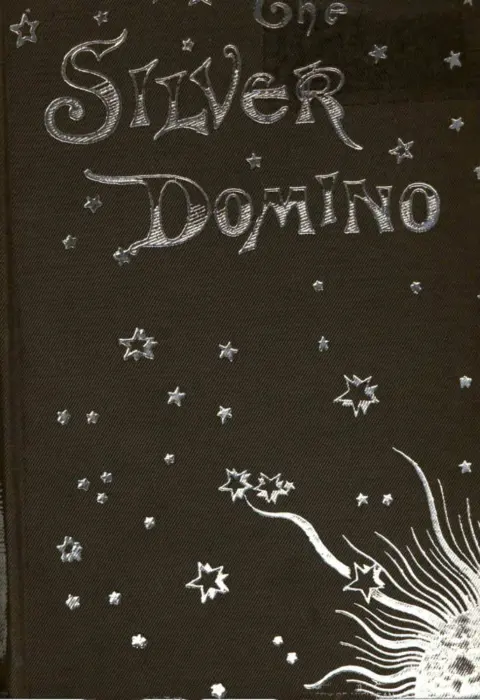
THE CLASSIC COLLECTION · 1894
"The Silver Domino; Or, Side Whispers, Social and Literary" by Marie Corelli is a work of literary satire written in the late 19th century. This text blends social critique with humorous observations about its contemporaneous societal norms and figures, particularly focusing on the hypocrisies within literature and politics. The narrator engages in a candid reflection of the social landscape, parodying well-known personalities and commenting on the pretentiousness prevalent within elite circles. The opening of the work introduces a masked narrator who enters a lively social gathering, observing the chaotic behaviors of attendees with a mix of amusement and disdain. Through witty soliloquies, the narrator reveals a disdain for the superficiality and moral failures of both the upper classes and the press. He questions the concept of friendships and enmities, hints at the absurdities of the established societal norms, and expresses a desire to critique the era's duplicitous nature while masked as a mere observer. This sets the stage for an exploration of themes such as identity, truth, and the often laughable yet profound nature of human behavior.
Introduction adapted from the source catalogue; source summaries may be automatically generated.
Free to read · English · 55,715 words · No account needed
MAKE TIME FOR A GOOD BOOK
On by default. Untick to stop anonymous reading totals. Each page counts after 10 seconds in view. How this works.
Anonymous counting is on unless you have switched it off.
Somewhere, once upon a time, I called George Meredith an Eccentricity. I meant him no harm by this phrase or term--I mean none now, when I repeat it. He is an Eccentricity--of Genius! Ha! where are you now, all you commentators and would-be clearers-up of the Mighty Obscure? An Eccentricity--a bit of genius gone mad--an Intellectual Faculty broken loose from the moorings of Common Sense, and therefore a hopelessly obstinate fixture in the "groove" of literary delirium. A Meredithian description of Meredith is found in his story of "One of our Conquerors"--a description there applied to the character of Dudley Sowerby, but fitting Meredith himself exactly. Here it is; "His disordered deeper sentiments were a diver's wreck where an armoured subtermarine, a monstrous puff-ball of man, wandered seriously light in heaviness, trebling his hundred-weights to keep him from dancing like a bladder-block of elastic lumber; thinking occasionally amid the mournful spectacle, of the atmospheric pipe of communication with the world above, whereby he was deafened yet sustained." Of course it is difficult to grasp all this at once--but I seize upon the words, "a bladder-block of elastic lumber"--I know, I feel that "bladder-block" is Meredith, though I cannot precisely inform myself or others what a "bladder-block" in its original sense may mean. But meanings are not expected to be vulgarly apparent on the surface of this "diver's wreck" or new school of prose--you have to search for them; and you must hold fast to whatever "atmospheric pipe of communication" you can find, in order to keep up with this "Monstrous puff-ball of man wandering seriously light in heaviness." It has been left to George Meredith to tell us about "the internal state of a gentleman who detested intangible metaphor as heartily as the vulgarest of our gobble-gobbets hate it"--and if we would not be considered "gobble-gobbets" ourselves, we must strive to be grateful for the light he throws on our intellectual darkness. He is supposed to understand women in and out and all round, so we must take it for granted that a woman can "breathe thunder." It sounds alarming--it is alarming--but if Meredith says it, it must be true. And he does say it. With the calm conviction of one who knows, he assures us that "the lady breathed low thunder." She is a very remarkable person altogether, this "lady," called Mrs. Marsett, and her modes of action are carried on in positive defiance of all natural and physical law. For at one time we are told "her eye-lids (not her eyes) mildly sermonised," and on another occasion she actually "caught at her slippery tongue and carolled," quite a feat of leger de langue. Again, "her woman's red mouth was shut fast on a fighting underlip." Till I read this, I was fool enough to think that the underlip was part of the mouth, but now I know that the underlip is quite a separate and distinct thing, as it is able to go on "fighting" while the mouth is "shut fast" on it. She does all sorts of curious things with this mouth of hers, does Mrs. Marsett; in one scene of her career it is said that "she blushed, blinked, frowned, sweetened her lip-lines, bit at the under one, and passed in a discomposure." Moreover, this strange mouth was given to the utterance of bad language, for with it and her "slippery tongue" Mrs. Marsett said her own name was "Damnable!" and what was still worse, "had the passion to repeat the epithet in shrieks and scratch up male speech for a hatefuller," whatever that may mean. Of course, it is all very grand and mixed and magnificent, if any one chooses to think so; people can work themselves up into an epilepsy of enthusiasm over prose run mad à la Meredith, as over poetry gone a-woolgathering à la Browning. It is a harmless mania which is confined to the few, and is of a distinctly non-spreading tendency; while those who are not partakers in the craze can look on thereat and be amused thereby--for Meredith is at all times and all seasons both personally and in literature a real entertainment. Whether he be haranguing to the verge of deafness some stray acquaintance in the Garrick Club; whether he be met, a greybeard solitary, stalking up the slopes of Box Hill, at the foot of which he resides; whether he be inveighing against the "porkers," i.e., the Public, within the precincts of a certain small and extortionate but rigidly pious bookseller's shop in the town of Dorking; or whether he be visited in his own small literary "châlet," which he built for himself in his own garden, away from his house, what time he had a wife, (a very charming, kindly lady, whose appreciative sense of humour enabled her to understand her husband's gifts better than any of his wildest worshippers), in order to escape from "domesticity" and the ways of the "women" he is supposed to understand--in each and all of these positions he is distinctly amusing--and never more so than when he thinks he is impressive. Yet there can be no doubt whatever as to his natural cleverness, and the original turn of mind which might have made him a distinctly great writer, if he had not forced himself into the strained style of the artificial "groove" he has adopted. Even now, if he would only leave the first spontaneous output of his thought alone, instead of altering it when it is on paper, and weighing it down with all the big words he can find in the dictionary, he would probably write something above the average of interest. However, it's no use being hard upon him, as he has quite recently been Lynched.[1] I cannot endure his novels, it is true--but still, I never wished him to meet such a frightful fate. When we reflect on the barbarity of the institution known as Lynch-law, we cannot but wonder how his admirers have tamely stood by and seen him delivered over to so awful a punishment. Yet it is a positive fact that they have made no defence. And he has been torn limb from limb, and broken into explained pieces by a pitiless executioner self-elected to the performance of the abhorrent deed. A woman too--yclept Hannah as well as Lynch; and eke a spinster--mind cannot picture a more formidable foe--a more fearful fate! Heaven save you, poor Meredith! for man cannot. Lynched you are, and Lynched you must be by every word, sentence and chapter, until you be dead, and may God have mercy on your soul!
Your reading position is saved on this browser. Take it to another device with a library code. Reading pages adapt to text, rather than matching a printed edition.
Marie Corelli
Marie Corelli

Marie Corelli

Marie Corelli
BEHIND THE BOOK
This eBook is for the use of anyone anywhere in the United States and most other parts of the world at no cost and with almost no restrictions whatsoever. You may copy it, give it away or re-use it under the terms of the Project Gutenberg License included with this eBook or online at www.gutenberg.org. If you are not located in the United States, you will have to check the laws of the country where you are located before using this eBook. Read the source licence.
The original source file, including credits and licence, is retained by this library. Request an original-format copy at no charge. Please include the book title and Project Gutenberg identifier #63446.
KEEP YOUR CURIOSITY GOING

David Patterson (Spirit) Hatch

David Patterson (Spirit) Hatch

David Patterson (Spirit) Hatch

Ralph Waldo Emerson

Maurice Baring

Oscar Wilde & James McNeill Whistler