THE CLASSIC COLLECTION✦A Christmas greetingCLASSIC FREE BOOKS
A Christmas greeting
Marie Corelli
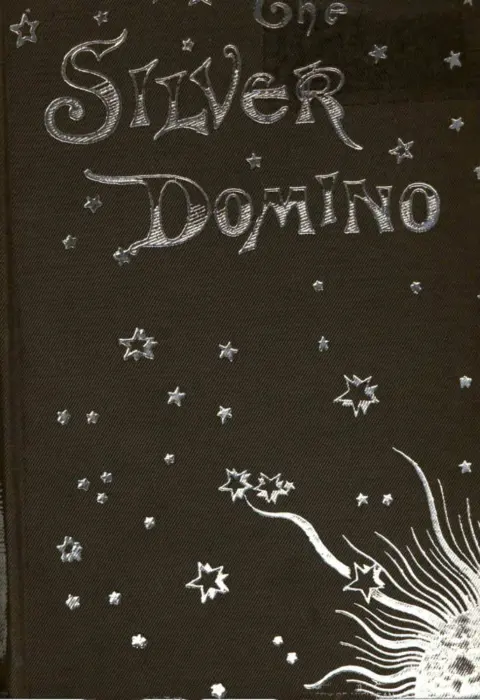
THE CLASSIC COLLECTION · 1894
"The Silver Domino; Or, Side Whispers, Social and Literary" by Marie Corelli is a work of literary satire written in the late 19th century. This text blends social critique with humorous observations about its contemporaneous societal norms and figures, particularly focusing on the hypocrisies within literature and politics. The narrator engages in a candid reflection of the social landscape, parodying well-known personalities and commenting on the pretentiousness prevalent within elite circles. The opening of the work introduces a masked narrator who enters a lively social gathering, observing the chaotic behaviors of attendees with a mix of amusement and disdain. Through witty soliloquies, the narrator reveals a disdain for the superficiality and moral failures of both the upper classes and the press. He questions the concept of friendships and enmities, hints at the absurdities of the established societal norms, and expresses a desire to critique the era's duplicitous nature while masked as a mere observer. This sets the stage for an exploration of themes such as identity, truth, and the often laughable yet profound nature of human behavior.
Introduction adapted from the source catalogue; source summaries may be automatically generated.
Free to read · English · 55,715 words · No account needed
MAKE TIME FOR A GOOD BOOK
On by default. Untick to stop anonymous reading totals. Each page counts after 10 seconds in view. How this works.
Anonymous counting is on unless you have switched it off.
And, as I live, I listened to thee, Gladstone; I swallowed, as it were, thine every word, in spite of increasingly lethargic mental indigestion. Specially did I strive to follow thee in thy wild flights up the stairs of many religious theories, when with gray hair ruffled and eyes aglare, thou didst solemnly rend piecemeal "Robert Elsmere," forgetting, O thou grand old Paradox, that if thou hadst never lifted up that clamant voice of thine in Nineteenth-Century-Magazine utterance, Robert and his oppressive religious troubles might scarcely have attracted notice? Didst thou not "boom" Robert, and then feign surprise at the result? Ay, venerable Splitter of Straws and Hewer of Logs, wilt deny the truth? And shall I not advise thee in thine own terms to retire from public life, not "now," but "at present." Or if not "at present" then "now"? Either will serve, before thou dost make more blows with thy hatchet-brain (somewhat dulled at the edge) at the future honour and welfare of thy country.
Ah, what things I could have said to thee, thou Quibble, when thou didst venture to assail me with thy converse, if thou hadst but taken decent pause for breathing! Why, amongst other marvels, didst thou deem it worth thy while to flatter me, or to praise the casual sputterings of my pen? Thy unctuous insinuations carried no persuasion; thy "nods and becks and wreathed smiles" were wasted on me; thy soft assurances of the "certainty of my future brilliant fame" went past my ears like the murmur of an idle wind. For a fame "assured" by thee is nothing worth; and thy Polonius-like approbation of any piece of work, literary or otherwise, is as a mark set on it to make it seem ridiculous. For thou art destitute of humour save in wood-cutting; and thou needest many a lesson from my dear friend Andrew Lang before thou canst successfully comprehend the subtly critical art of proving a goose to be a swan. And so, by monosyllables slipt in like frailest wedges between thy florid bursts of ambiguity, I strove to entice thy wandering wits back to the discussion of personal faith in matters religious, wherein I found thee most divertingly inchoate, but my feeble efforts were of small avail. For lo, while yet I strove to understand whether thou wert in truth a Roman Papist, a Calvinist, a Hindoo, a Theosophist, or a Special Advocate of the War Cry, the subject of Creed, like a magic-lantern slide, disappeared from thy mental view, and Divorce came up instead. Frightful and wonderful, according to thee, goodman Gladstone, are the wicked ways of the married! No sooner are they united than they move heaven and earth to get parted--so it is at any rate very frequently in the free and happy American Republic, where the disagreeing parties need not move heaven and earth, but simply make a mutual assertion. Oh, of a truth here was no smiling matter! No Deity in question, but a very positive Devil, needing thy exhortation and exorcism; and thy jaws clacked on sternly, strenuously, and with a resolute gravity and persistency that seemed admirable. Not every man could be expected to find a Mrs. Gladstone, but surely all were bound to try and discover such a paragon. If all married society were composed of Mr. and Mrs. Gladstones, why, married society would realise the fabled Elysium. And supposing there continued to be only one Mr. and Mrs. Gladstone, and all the rest were quite a different set of hopelessly different temperaments, then, naturally, it was impossible to state what disasters might ensue. It would be a case of Noah and his wife over again--after them the Deluge. In the interim, Divorce was shocking, abominable, sinful, diabolical, ungodly--an upsetting of the most sacred foundations of morality--and it was chiefly because Gladstonian domestic tastes were not universal. This, at least, is what I seemed to gather from thee in thine onslaughts against the large and melancholy mass of the Miserably Married; I say I "seemed" to gather it, because it "seemed" thy meaning, but as thy whole mode of speech and action is only "seems," I cannot be absolutely sure either of myself or thyself. For thou didst set out an attractive row of various learned propositions, gently, and with the bland solicitude of a hen-wife setting out her choicest eggs for sale, then suddenly and incontinently, and as one in a fit of strangest madness, thou didst sweep them up and fling them aside into airy nothingness without concern for the havoc wrought. Thou didst calmly state what appeared to be a Fact, reasonable and graspable; and with all the powers of my being I seized upon it as a grateful thing and good for consideration; when suddenly thy senile smile obscured the intellectual horizon, and thy equably modulated voice murmured such words as these: "Not that I desire to imply by any means that this is so, or should be so, but that it might (under certain circumstances, and provided certain minds were at harmony upon the point) probably become so." Ah, thou embodied Confusion worse Confounded! Had it not been for this constant playing of thine at thy favourite shuffling game of cross-purposes, I should have roused my soul from its stupor of forced attention to demand of thee more of thy profound Bible scholarship. Whether, for example, if Divorce, thy bugbear, were ungodly, and the Bible true, a man should not have two, three, nay, half-a-dozen wives at his pleasure for as long or as short a time as he chose, and find situations for them afterwards as servants, telegraph-clerks, and bookkeepers, when their beauty was gone and snappishness of temper had taken the place of endearing docility. Whether English harem-life, lately set in vogue by certain great and distinguished "Upper" people, could not be easily proved pleasing unto the Most High Jehovah? For did not God love His servant Abraham? and did not Abraham bestow his affections on Sarai and Hagar? and when the hoary old reprobate was "well stricken in years" and "the Lord had blessed him in all things" did he not again take a wife named Keturah, who presented him in his centenarian decrepitude with six sons?--all "fine babies," no doubt. What sayest thou to these morals of Holy Writ, thou "many-sounding" mouthpiece of opinion? Answer me on a postcard, for with thee, more than with any other man, should brevity be the soul of wit!
Your reading position is saved on this browser. Take it to another device with a library code. Reading pages adapt to text, rather than matching a printed edition.
Marie Corelli
Marie Corelli

Marie Corelli

Marie Corelli
BEHIND THE BOOK
This eBook is for the use of anyone anywhere in the United States and most other parts of the world at no cost and with almost no restrictions whatsoever. You may copy it, give it away or re-use it under the terms of the Project Gutenberg License included with this eBook or online at www.gutenberg.org. If you are not located in the United States, you will have to check the laws of the country where you are located before using this eBook. Read the source licence.
The original source file, including credits and licence, is retained by this library. Request an original-format copy at no charge. Please include the book title and Project Gutenberg identifier #63446.
KEEP YOUR CURIOSITY GOING

David Patterson (Spirit) Hatch

David Patterson (Spirit) Hatch

David Patterson (Spirit) Hatch

Ralph Waldo Emerson

Maurice Baring

Oscar Wilde & James McNeill Whistler