THE CLASSIC COLLECTION✦A Christmas greetingCLASSIC FREE BOOKS
A Christmas greeting
Marie Corelli
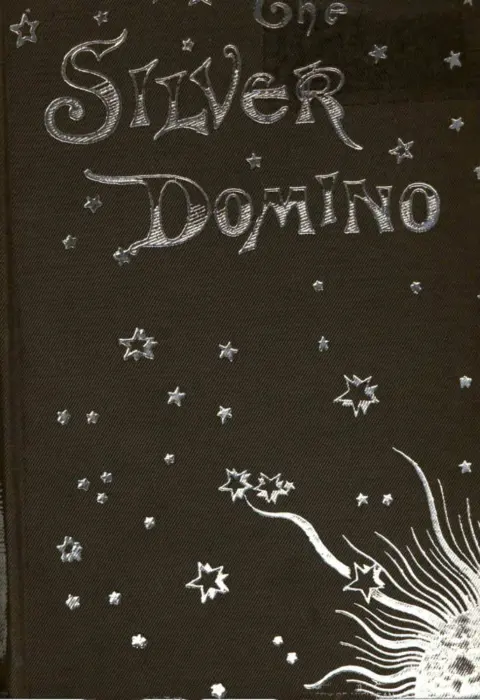
THE CLASSIC COLLECTION · 1894
"The Silver Domino; Or, Side Whispers, Social and Literary" by Marie Corelli is a work of literary satire written in the late 19th century. This text blends social critique with humorous observations about its contemporaneous societal norms and figures, particularly focusing on the hypocrisies within literature and politics. The narrator engages in a candid reflection of the social landscape, parodying well-known personalities and commenting on the pretentiousness prevalent within elite circles. The opening of the work introduces a masked narrator who enters a lively social gathering, observing the chaotic behaviors of attendees with a mix of amusement and disdain. Through witty soliloquies, the narrator reveals a disdain for the superficiality and moral failures of both the upper classes and the press. He questions the concept of friendships and enmities, hints at the absurdities of the established societal norms, and expresses a desire to critique the era's duplicitous nature while masked as a mere observer. This sets the stage for an exploration of themes such as identity, truth, and the often laughable yet profound nature of human behavior.
Introduction adapted from the source catalogue; source summaries may be automatically generated.
Free to read · English · 55,715 words · No account needed
MAKE TIME FOR A GOOD BOOK
On by default. Untick to stop anonymous reading totals. Each page counts after 10 seconds in view. How this works.
Anonymous counting is on unless you have switched it off.
And "shame on you all!" is the cry that leaps to the lips of every true Briton who thinks of the former historical glories of his country, and at the same time observes the lamentable unsteadiness, the lack of courage, the dearth of principle in politicians of every grade to-day. Parliament gabbles; it does not speak. Often it resembles a cackling chorus of old women striving to describe their own and their friends' various ailments. Why is Radicalism rampant? Why is there any Radicalism? Because so many Radicals are honest, hard-working men--honest in their opinions, honest in the utterance of those opinions, honest in thinking that their cause is good. And you, my dear Lord, have a certain sympathy with this active, energetic, vital, if wrong-headed honesty--you know you have. You love your Sovereign, you love your country, you love the constitution, but for all that you cannot but sympathise with integrity. You know that the Monarch has left England pretty much to itself for the last thirty years, and that she has allowed the people to realise that they can get on without her, seeing she will take no part with them in their daily round. A pity! but the evil is done, and it is too late to remedy it. There is practically no social ruler of the realm, and you must confess, good Salisbury, that this fact makes your work difficult. The mass of the people can only be got to understand a monarch who behaves like one, and the more intellectual food you put into them, the more obstinate they become on the point. With similar pigheadedness they can only understand the personality of a prince whose conduct is a princely example; they are quite sure about themselves here, and have the most appallingly distinct notions concerning right and wrong. They do not go to church for these notions--no. Many cobblers and coalheavers would be mentally refreshed if they were allowed to kick a few seeming-holy clerics whose hypocrisies are apparent despite sermons on Sunday. It must not be forgotten that education is making huge strides among the populace; it has got its seven-leagued boots on, and is clearing all manner of difficulties at a bound. When your greengrocer studies Plato o' nights, when your shoemaker carries the maxims of Marcus Aurelius about in his pocket to refresh himself withal in the intervals of stitching leather, when the wife of your butcher sheds womanly tears over Keats' "Pot of Basil," a poem which the "cultured" dame has "no time" to read--these be the small signs and tokens of a wondrous change by and by. Cheap literature, especially when it is a selection of the finest in the world, is a dangerous "factor" in the making of revolutions, and among other purveyors of literary food for the million, one who calleth himself Walter Scott, of Newcastle-on-Tyne, is unconsciously doing a curious piece of work. He is putting into the hands of the "lower classes," for the moderate price of one shilling (discount price ninepence) small volumes well bound and well printed, which contain the grandest thoughts of humanity, such as "Epictetus," "Seneca," Mazzini's "Essays," "Sartor Resartus," "Past and Present," the "Religio Medici," the Emerson "Essays," and what not--and it is necessary to take into consideration the fact that the people who buy these books read them. Yes, they read them, every line, no matter how slowly or laboriously; for whether they have expended a shilling or the discount ninepence, they always want to know what they have got for their money. This is the peculiar disposition of the "masses"; the "upper ten" are not so particular, and will lay out a few guineas on Mudie by way of annual subscription, getting scarce anything back of value in exchange. After this fashion, too, the "upper ten" entertain the ungrateful, keep horses and carriages for display, and trot the dreary round of season after season, striving to extract amusement from the dried-up gourd of modern social life, and finding nothing in it all but a bitter jest or a sneering laugh at the slips in morality of their so-called "friends" and neighbours. And thus it is, my dear Lord, that the balance of things is becoming alarmingly unequal; the "aristocratic" set are a scandal to the world with their divorce cases, their bankruptcies, their laxity of principle, their listless indifference to consequences; they never read, they never learn, they never appear to see anything beyond themselves. Whereas the "bas-peuple" are reading, and reading the books that have helped to make national destinies--they are learning, and they are not afraid to express opinions. They do not think a duke who seduces his friend's wife merely "unfortunate"--they call him in plain language a low blackguard. They cannot be brought to believe that the heir to a great name who has gambled away all his estates on the turf a "gentleman"--they call him a "loose fish" without parley. Now you, excellent and true-hearted Salisbury, have to look on two sides of the question. On the one are your own people, the aristocrats, the Tories, lazy, indifferent, inert, many of them--fond of what they term "pleasure," and as careless of the interests of the country (with a few rare exceptions) as they can well be. On the other hand you have the sturdy, loyal, splendid English "masses," who in their heart of hearts are neither Radicals, Whigs, or Tories, but are simply as they always have been--"For God and the Right!" It matters not which party expresses what they consider the Right; it is the Right they want, and the Right they will have, and they will try all means and appliances in their power till they get it. And it is with this clamour for the Right that you, my Lord, sympathise, because you know how much there is just now that is wrong; how politicians shuffle and lie and play at cross-purposes simply to attain their own personal ends; how over-competition is cutting the throat of Free Trade; how foolishly the tricksters have played with poor distracted Ireland; how openly we have lowered the standard of society by admitting into it men and women of well-known degraded reputation, as well as the painted mimes and puppets of the stage; how wives are bargained for and bought for a price, almost as shamelessly as in an open market; how good faith, chivalry, honour, and modesty are every day becoming rarer and rarer among men; and how, worst of all, we try to cover our vices by a cloak of hypocrisy--the most canting hypocrisy current in the world. English hypocrisy, the ultra-pious form--oh! "it is rank; it smells to heaven!" There is nothing like it anywhere--nothing--no devil so well sainted by psalm-singing, church-going, Sunday observance, and charitable subscription lists. The married woman of title and high degree who sells the jewel of her wifely chastity for the trifling price of a fool's praise, is ever careful to look after the poor, and give her "distinguished" patronage to church-bazaars. Pah! such things are as a sickness to the mind; one's gorge rises at them; and yet they are, as the Queen said to Hamlet, "common." So common, i' faith, that we are beginning to accept them as an inevitable part of our "social observances." And, alas, my Lord of Salisbury, you can do nothing to remedy these things, and yet it is precisely "these things" that swell the rising wave of Radicalism. And despite all the power of your keen, capacious brain, and all the love of country working in your soul, believe me, the storm will break. Nothing will keep it back; because, though there are men of genius in the realm, these men are not permitted to speak. The tyrant Journalism forbids. Why "tyrant"? Is not Journalism free? Not so, my Lord; it is not the "voice of the people" at all; it is simply the voice of a few editors. Were the most gifted man that ever held a pen to write a letter to any of the papers on a crying subject of national shame, he would be refused a hearing unless he were a friend of the proprietors of whatever journal he elected to write to. And men of genius seldom are friends of editors--a curious fact, but true. And so we never really hear the "voice of the people" save in some great crisis, and when we do, it invariably astonishes us. It upsets our nerves, too, for a long time afterwards. It is always so horribly loud, authoritative and convincing! The "voices of editors" die away on these occasions like the alarmed squealings of cats chased by infuriated hounds, and into the place of such a smug and well-satisfied person as the Editor of the Times, for example, leaps a shabby, dirty, hungry, eager-eyed creature like Jean Jacques Rousseau, who, instead of a clean and carefully prepared pen, uses for the nonce a red, sputtering torch of revolution, which, setting fire to old abuses, spreads wide conflagration through the land. And how the heart leaps, how the blood thrills, when old abuses are destroyed! When the rats' nests of cliques are thrust out to perish in the gutter, when the dirty cobwebs of self-interest and love of gain are swept down, and the fat spiders within them trampled under foot, when the great white palace of national Honour is cleansed and made sweet and fresh for habitation, even at the cost of groaning labour, confusion, and stress, how one breathes again, how one lives the life of a true man in the purified strong air!
Your reading position is saved on this browser. Take it to another device with a library code. Reading pages adapt to text, rather than matching a printed edition.
Marie Corelli
Marie Corelli

Marie Corelli

Marie Corelli
BEHIND THE BOOK
This eBook is for the use of anyone anywhere in the United States and most other parts of the world at no cost and with almost no restrictions whatsoever. You may copy it, give it away or re-use it under the terms of the Project Gutenberg License included with this eBook or online at www.gutenberg.org. If you are not located in the United States, you will have to check the laws of the country where you are located before using this eBook. Read the source licence.
The original source file, including credits and licence, is retained by this library. Request an original-format copy at no charge. Please include the book title and Project Gutenberg identifier #63446.
KEEP YOUR CURIOSITY GOING

David Patterson (Spirit) Hatch

David Patterson (Spirit) Hatch

David Patterson (Spirit) Hatch

Ralph Waldo Emerson

Maurice Baring

Oscar Wilde & James McNeill Whistler