
The book of the American Indian
Hamlin Garland
THE CLASSIC COLLECTION · 1908
"The Shadow World" by Hamlin Garland is a novel written in the early 20th century. The book explores themes of spiritualism and the phenomena associated with it, centering around a group of intellectuals who engage in discussions and experiments involving psychics and the supernatural. The narrative begins to unfold through the interactions and debates amongst the characters, setting the stage for a deeper exploration of the unknown. The opening of the book introduces a dinner party where various guests express differing views on telepathy and spiritualism. The main character takes a leading role in discussing these phenomena, mentioning his involvement with the American Psychical Society and his experiences with mediums. As the conversation progresses, the guests become increasingly intrigued by the topic, leading to a proposal for a psychic séance. This sets the groundwork for potential revelations and encounters with the "shadow world" that will unfold in later chapters. The atmosphere is charged with curiosity and skepticism, reflecting the tension between belief and disbelief that pervades the narrative.
Introduction adapted from the source catalogue; source summaries may be automatically generated.
Free to read · English · 68,177 words · No account needed
MAKE TIME FOR A GOOD BOOK
On by default. Untick to stop anonymous reading totals. Each page counts after 10 seconds in view. How this works.
Anonymous counting is on unless you have switched it off.
This amused me, but I seized upon Cameron's notion. "I accept the arrangement provided you do not hold me responsible for any ill effects," I said. "It's ticklish business. There are many who hold the whole process diabolic."
"Is the house ready for the question?" asked Cameron.
"Ay, ay!" shouted every one present.
"The society is formed," announced Cameron. "As president, I suggest a sitting right now. How about it, Garland?"
"Certainly!" I answered, "for I have an itching in my thumbs that tells me something witching this way comes."
The guests rose in a flutter of pleased excitement.
"How do we go at it?" asked Mrs. Cameron.
"The first requisite is a small table--"
"Why a table?" asked Mrs. Quigg.
"The theory is that it helps to concentrate the minds of the sitters, and it will also furnish a convenient place to rest our hands. Anyhow, all the great investigators began this way," I replied, pacifically. "We may also require a pencil and a pad."
Miller was on his dignity. "I decline to sit at a table in that foolish way. I shall look on in lonely grandeur."
The others were eager to "sit in," as young Howard called it, and soon nine of us were seated about an oblong mahogany table. Brierly was very serious, Miss Brush ecstatic, and Mrs. Harris rather nervous.
I was careful to prepare them all for failure. "This is only a trial sitting, you know, merely to get our hands in," I warned.
"Must we keep still?"
"Oh no! You may talk, if you do so quietly. Please touch fingers, so as to make a complete circuit. I don't think it really necessary, but it sometimes helps to produce the proper mental state; singing softly also tends to harmonize the 'conditions,' as the professionals say. Don't argue and don't be too eager. Lean back and rest. Take a passive attitude toward the whole problem. I find the whole process very restful. Harris, will you turn down the lights before--"
"There!" said Miller, "the hocus-pocus begins. Why not perform in the
light?"
"Subdued light will bring the proper negative and inward condition sooner," I replied, taking a malicious delight in his disgust. "Now will some one sing 'Annie Laurie,' or any other sweet, low song? Let us get into genial, receptive mood. Miller, you and your fellow-doubters please retire to the far end of the room."
In a voice that trembled a little, Mrs. Harris started the dear old melody, and all joined in, producing a soft and lulling chorus.
At the end of the song I asked, matter-of-factly: "Are the conditions right? Are we sitting right?"
Your reading position is saved on this browser. Take it to another device with a library code. Reading pages adapt to text, rather than matching a printed edition.
Hamlin Garland
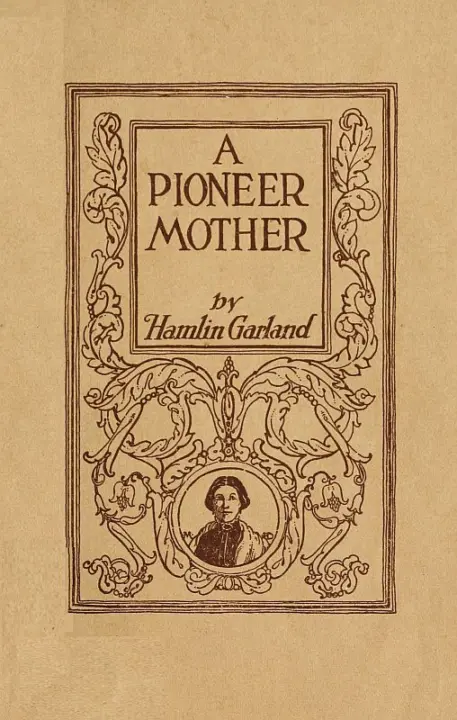
Hamlin Garland
Hamlin Garland
Hamlin Garland
BEHIND THE BOOK
This eBook is for the use of anyone anywhere in the United States and most other parts of the world at no cost and with almost no restrictions whatsoever. You may copy it, give it away or re-use it under the terms of the Project Gutenberg License included with this eBook or online at www.gutenberg.org. If you are not located in the United States, you will have to check the laws of the country where you are located before using this eBook. Read the source licence.
The original source file, including credits and licence, is retained by this library. Request an original-format copy at no charge. Please include the book title and Project Gutenberg identifier #22593.
KEEP YOUR CURIOSITY GOING
Coulson Kernahan

Maurice Baring
Frances Wright
Cécile Tormay

Frederic Jesup Stimson

W. H. P. (William Henry Pope) Jarvis