Oriental Prisons Prisons and Crime in India, the Andaman Islands, Burmah, China, Japan, Egypt, Turkey
Arthur Griffiths

THE CLASSIC COLLECTION · 1907
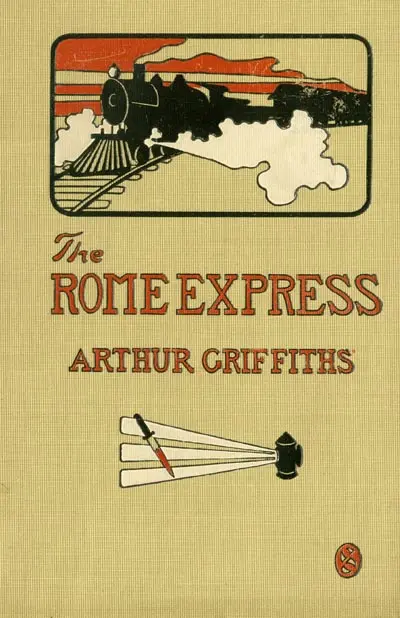
"The Rome Express" by Arthur Griffiths is a mystery novel written in the early 20th century. Set aboard a train speeding towards Paris, the story intricately weaves the lives of its passengers around a shocking murder. The narrative predominantly focuses on the discovery of a dead man in a sleeping compartment, believed to be a victim of foul play. As the plot unfolds, characters such as General Sir Charles Collingham and Countess di Castagneto come under scrutiny, their backgrounds and connections revealing layers of intrigue and suspicion. At the start of "The Rome Express," the train's occupants are roused from their slumber to face the shocking reality of murder when a lifeless body is discovered in one of the sleeping compartments. The atmosphere quickly transforms from the mundane routines of travel into a tension-filled scenario where every passenger becomes a suspect. Early scenes set the stage for the investigation, with detectives arriving to interrogate the passengers and the porter, each detail hinting at complexities within their relationships and pasts. The execution of the protagonist’s search for truth intertwines with the exploration of the human psyche, as characters grapple with fear, guilt, and the implications of their actions in the face of a horrifying crime. The vivid descriptions and suspenseful pacing invite readers to delve deeper into the narrative to uncover the truth.
Introduction adapted from the source catalogue; source summaries may be automatically generated.
Free to read · English · 35,687 words · No account needed
MAKE TIME FOR A GOOD BOOK
On by default. Untick to stop anonymous reading totals. Each page counts after 10 seconds in view. How this works.
Anonymous counting is on unless you have switched it off.
They sat there, these two, hand locked in hand, saying little, satisfied now to be with each other and their new-found love. The time flew by far too fast, till at last Sir Charles, with a half-laugh, suggested:
“Do you know, dearest Countess—”
She corrected him in a soft, low voice.
“My name is Sabine—Charles.”
“Sabine, darling. It is very prosaic of me, perhaps, but do you know that I am nearly starved? I came on here at once. I have had no breakfast.”
“Nor have I,” she answered, smiling. “I was thinking of it when—when you appeared like a whirlwind, and since then, events have moved so fast.”
“Are you sorry, Sabine? Would you rather go back to—to—before?” She made a pretty gesture of closing his traitor lips with her small hand.
“Not for worlds. But you soldiers—you are terrible men! Who can resist
you?”
“Bah! It is you who are irresistible. But there, why not put on your jacket and let us go out to lunch somewhere—Durand’s, Voisin’s, the Café de le Paix? Which do you prefer?”
“I suppose they will not try to stop us?”
“Who should try?” he asked.
“The people of the hotel—the police—I cannot exactly say whom; but I dread something of the sort. I don’t quite understand that manager. He has been up to see me several times, and he spoke rather oddly, rather rudely.”
“Then he shall answer for it,” snorted Sir Charles, hotly. “It is the fault of that brute of a detective, I suppose. Still they would hardly dare—”
“A detective? What? Here? Are you sure?”
“Perfectly sure. It is one of those from the Lyons Station. I knew him again directly, and he was inclined to be interfering. Why, I caught him trying—but that reminds me—I rescued this telegram from his clutches.”
He took the little blue envelope from his breast pocket and handed it to her, kissing the tips of her fingers as she took it from him.
“Ah!”
A sudden ejaculation of dismay escaped her, when, after rather carelessly tearing the message open, she had glanced at it.
“What is the matter?” he asked in eager solicitude. “May I not know?”
She made no offer to give him the telegram, and said in a faltering voice, and with much hesitation of manner, “I do not know. I hardly think—of course I do not like to withhold anything, not now. And yet, this is a business which concerns me only, I am afraid. I ought not to drag you into it.”
Your reading position is saved on this browser. Take it to another device with a library code. Reading pages adapt to text, rather than matching a printed edition.
Arthur Griffiths

Arthur Griffiths

Arthur Griffiths
Arthur Griffiths
BEHIND THE BOOK
This eBook is for the use of anyone anywhere in the United States and most other parts of the world at no cost and with almost no restrictions whatsoever. You may copy it, give it away or re-use it under the terms of the Project Gutenberg License included with this eBook or online at www.gutenberg.org. If you are not located in the United States, you will have to check the laws of the country where you are located before using this eBook. Read the source licence.
The original source file, including credits and licence, is retained by this library. Request an original-format copy at no charge. Please include the book title and Project Gutenberg identifier #11451.
KEEP YOUR CURIOSITY GOING
Coulson Kernahan

Maurice Baring
Frances Wright
Cécile Tormay

Frederic Jesup Stimson

W. H. P. (William Henry Pope) Jarvis




