Oriental Prisons Prisons and Crime in India, the Andaman Islands, Burmah, China, Japan, Egypt, Turkey
Arthur Griffiths

THE CLASSIC COLLECTION · 1907
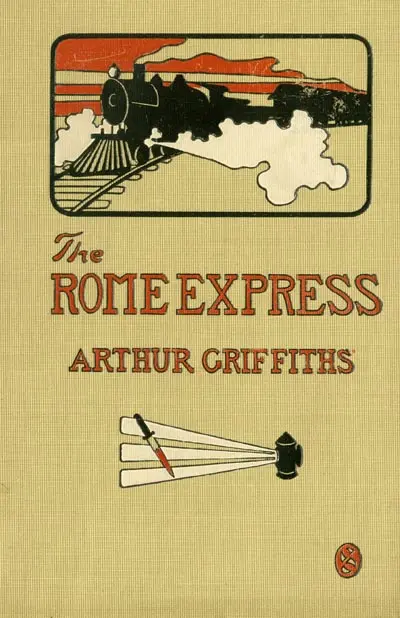
"The Rome Express" by Arthur Griffiths is a mystery novel written in the early 20th century. Set aboard a train speeding towards Paris, the story intricately weaves the lives of its passengers around a shocking murder. The narrative predominantly focuses on the discovery of a dead man in a sleeping compartment, believed to be a victim of foul play. As the plot unfolds, characters such as General Sir Charles Collingham and Countess di Castagneto come under scrutiny, their backgrounds and connections revealing layers of intrigue and suspicion. At the start of "The Rome Express," the train's occupants are roused from their slumber to face the shocking reality of murder when a lifeless body is discovered in one of the sleeping compartments. The atmosphere quickly transforms from the mundane routines of travel into a tension-filled scenario where every passenger becomes a suspect. Early scenes set the stage for the investigation, with detectives arriving to interrogate the passengers and the porter, each detail hinting at complexities within their relationships and pasts. The execution of the protagonist’s search for truth intertwines with the exploration of the human psyche, as characters grapple with fear, guilt, and the implications of their actions in the face of a horrifying crime. The vivid descriptions and suspenseful pacing invite readers to delve deeper into the narrative to uncover the truth.
Introduction adapted from the source catalogue; source summaries may be automatically generated.
Free to read · English · 35,687 words · No account needed
MAKE TIME FOR A GOOD BOOK
On by default. Untick to stop anonymous reading totals. Each page counts after 10 seconds in view. How this works.
Anonymous counting is on unless you have switched it off.
“That pestilent English officer, if you please, M. le Juge,” said the detective. “That fire-eating, swashbuckling soldier, with his blustering barrack-room ways. I long to come to close quarters with him. He ridiculed me, taunted me, said I knew nothing—we will see, we will see.”
“In fact, you wish to interrogate him yourself. Very well. Let us have
him in.”
When Sir Charles Collingham entered, he included the three officials in one cold, stiff bow, waited a moment, and then, finding he was not offered a chair, said with studied politeness:
“I presume I may sit down?”
“Pardon. Of course; pray be seated,” said the Judge, hastily, and evidently a little ashamed of himself.
“Ah! thanks. Do you object?” went on the General, taking out a silver cigarette-case. “May I offer one?” He handed round the box affably.
“We do not smoke on duty,” answered the Chief, rudely. “Nor is smoking permitted in a court of justice.”
“Come, come, I wish to show no disrespect. But I cannot recognize this as a court of justice, and I think, if you will forgive me, that I shall take three whiffs. It may help me keep my temper.”
He was evidently making game of them. There was no symptom remaining of the recent effervescence when he was acting as the Countess’s champion, and he was perfectly—nay, insolently calm and self-possessed.
“You call yourself General Collingham?” went on the Chief.
“I do not call myself. I am General Sir Charles Collingham, of the
British Army.”
“Retired?”
“No, I am still on the active list.”
“These points will have to be verified.”
“With all my heart. You have already sent to the British Embassy?”
“Yes, but no one has come,” answered the detective, contemptuously.
“If you disbelieve me, why do you question me?”
“It is our duty to question you, and yours to answer. If not, we have means to make you. You are suspected, inculpated in a terrible crime, and your whole attitude is—is—objectionable—unworthy—disgr—”
“Gently, gently, my dear colleague,” interposed the Judge. “If you will permit me, I will take up this. And you, M. le Général, I am sure you cannot wish to impede or obstruct us; we represent the law of this country.”
“Have I done so, M. le Juge?” answered the General, with the utmost courtesy, as he threw away his half-burned cigarette.
“No, no. I do not imply that in the least. I only entreat you, as a good and gallant gentleman, to meet us in a proper spirit and give us your best help.”
Your reading position is saved on this browser. Take it to another device with a library code. Reading pages adapt to text, rather than matching a printed edition.
Arthur Griffiths

Arthur Griffiths

Arthur Griffiths
Arthur Griffiths
BEHIND THE BOOK
This eBook is for the use of anyone anywhere in the United States and most other parts of the world at no cost and with almost no restrictions whatsoever. You may copy it, give it away or re-use it under the terms of the Project Gutenberg License included with this eBook or online at www.gutenberg.org. If you are not located in the United States, you will have to check the laws of the country where you are located before using this eBook. Read the source licence.
The original source file, including credits and licence, is retained by this library. Request an original-format copy at no charge. Please include the book title and Project Gutenberg identifier #11451.
KEEP YOUR CURIOSITY GOING
Coulson Kernahan

Maurice Baring
Frances Wright
Cécile Tormay

Frederic Jesup Stimson

W. H. P. (William Henry Pope) Jarvis




