Oriental Prisons Prisons and Crime in India, the Andaman Islands, Burmah, China, Japan, Egypt, Turkey
Arthur Griffiths

THE CLASSIC COLLECTION · 1907
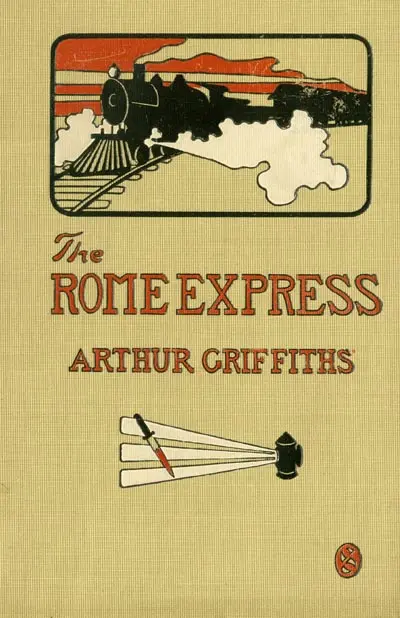
"The Rome Express" by Arthur Griffiths is a mystery novel written in the early 20th century. Set aboard a train speeding towards Paris, the story intricately weaves the lives of its passengers around a shocking murder. The narrative predominantly focuses on the discovery of a dead man in a sleeping compartment, believed to be a victim of foul play. As the plot unfolds, characters such as General Sir Charles Collingham and Countess di Castagneto come under scrutiny, their backgrounds and connections revealing layers of intrigue and suspicion. At the start of "The Rome Express," the train's occupants are roused from their slumber to face the shocking reality of murder when a lifeless body is discovered in one of the sleeping compartments. The atmosphere quickly transforms from the mundane routines of travel into a tension-filled scenario where every passenger becomes a suspect. Early scenes set the stage for the investigation, with detectives arriving to interrogate the passengers and the porter, each detail hinting at complexities within their relationships and pasts. The execution of the protagonist’s search for truth intertwines with the exploration of the human psyche, as characters grapple with fear, guilt, and the implications of their actions in the face of a horrifying crime. The vivid descriptions and suspenseful pacing invite readers to delve deeper into the narrative to uncover the truth.
Introduction adapted from the source catalogue; source summaries may be automatically generated.
Free to read · English · 35,687 words · No account needed
MAKE TIME FOR A GOOD BOOK
On by default. Untick to stop anonymous reading totals. Each page counts after 10 seconds in view. How this works.
Anonymous counting is on unless you have switched it off.
“I did think of it, monsieur, but then, he, the Italian, was just the same as myself. He was a colleague. I had no fear of him, not till the very last, when he played me this evil turn. I suspected nothing when he brought out his pocketbook,—it was stuffed full, monsieur; I saw that and my confidence increased,—called for the reckoning, and paid with an Italian bank-note. The waiter looked doubtful at the foreign money, and went out to consult the manager. A minute after, my man got up, saying:
“‘There may be some trouble about changing that bank-note. Excuse me one moment, pray.’ He went out, monsieur, and piff-paff, he was no more to be seen.”
“Ah, nigaud (ass), you are too foolish to live! Why did you not follow him? Why let him out of your sight?”
“But, monsieur, I was not to know, was I? I was to accompany him, not to watch him. I have done wrong, I confess. But then, who was to tell he meant to run away?”
M. Floçon could not deny the justice of this defence. It was only now, at the eleventh hour, that the Italian had become inculpated, and the question of his possible anxiety to escape had never been considered.
“He was so artful,” went on Block in further extenuation of his offence. “He left everything behind. His overcoat, stick, this book—his own private memorandum-book seemingly—”
“Book? Hand it me,” said the Chief, and when it came into his hands he began to turn over the leaves hurriedly.
It was a small brass-bound note-book or diary, and was full of close
writing in pencil.
“I do not understand, not more than a word here and there. It is no doubt Italian. Do you know that language, M. le Juge?”
“Not perfectly, but I can read it. Allow me.”
He also turned over the pages, pausing to read a passage here and there, and nodding his head from time to time, evidently struck with the importance of the matter recorded.
Meanwhile, M. Floçon continued an angry conversation with his offending
subordinate.
“You will have to find him, Block, and that speedily, within twenty-four hours,—to-day, indeed,—or I will break you like a stick, and send you into the gutter. Of course, such a consummate ass as you have proved yourself would not think of searching the restaurant or the immediate neighbourhood, or of making inquiries as to whether he had been seen, or as to which way he had gone?”
Your reading position is saved on this browser. Take it to another device with a library code. Reading pages adapt to text, rather than matching a printed edition.
Arthur Griffiths

Arthur Griffiths

Arthur Griffiths
Arthur Griffiths
BEHIND THE BOOK
This eBook is for the use of anyone anywhere in the United States and most other parts of the world at no cost and with almost no restrictions whatsoever. You may copy it, give it away or re-use it under the terms of the Project Gutenberg License included with this eBook or online at www.gutenberg.org. If you are not located in the United States, you will have to check the laws of the country where you are located before using this eBook. Read the source licence.
The original source file, including credits and licence, is retained by this library. Request an original-format copy at no charge. Please include the book title and Project Gutenberg identifier #11451.
KEEP YOUR CURIOSITY GOING
Coulson Kernahan

Maurice Baring
Frances Wright
Cécile Tormay

Frederic Jesup Stimson

W. H. P. (William Henry Pope) Jarvis




