Oriental Prisons Prisons and Crime in India, the Andaman Islands, Burmah, China, Japan, Egypt, Turkey
Arthur Griffiths

THE CLASSIC COLLECTION · 1907
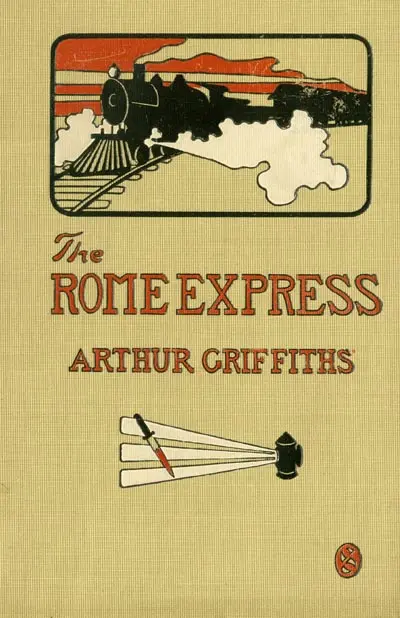
"The Rome Express" by Arthur Griffiths is a mystery novel written in the early 20th century. Set aboard a train speeding towards Paris, the story intricately weaves the lives of its passengers around a shocking murder. The narrative predominantly focuses on the discovery of a dead man in a sleeping compartment, believed to be a victim of foul play. As the plot unfolds, characters such as General Sir Charles Collingham and Countess di Castagneto come under scrutiny, their backgrounds and connections revealing layers of intrigue and suspicion. At the start of "The Rome Express," the train's occupants are roused from their slumber to face the shocking reality of murder when a lifeless body is discovered in one of the sleeping compartments. The atmosphere quickly transforms from the mundane routines of travel into a tension-filled scenario where every passenger becomes a suspect. Early scenes set the stage for the investigation, with detectives arriving to interrogate the passengers and the porter, each detail hinting at complexities within their relationships and pasts. The execution of the protagonist’s search for truth intertwines with the exploration of the human psyche, as characters grapple with fear, guilt, and the implications of their actions in the face of a horrifying crime. The vivid descriptions and suspenseful pacing invite readers to delve deeper into the narrative to uncover the truth.
Introduction adapted from the source catalogue; source summaries may be automatically generated.
Free to read · English · 35,687 words · No account needed
MAKE TIME FOR A GOOD BOOK
On by default. Untick to stop anonymous reading totals. Each page counts after 10 seconds in view. How this works.
Anonymous counting is on unless you have switched it off.
A minute or two more, and he rejoined his colleagues on the ground level, and, rubbing his hands, declared joyously that it was all perfectly clear.
“Dangerous or not, difficult or not, she did it. I have traced her; have seen where she must have lain crouching ever so long, followed her all along the top of the car, to the end where she got down above the little platform exit. Beyond doubt she left the car when it stopped, and by arrangement with her confederate.”
“The Countess?”
“Who else?”
“And at a point near Paris. The English General said the halt was within twenty minutes’ run of the station.”
“Then it is from that point we must commence our search for her. The Italian has gone on the wrong scent.”
“Not necessarily. The maid, we may be sure, will try to communicate
with her mistress.”
“Still, it would be well to secure her before she can do that,” said the Judge. “With all we know now, a sharp interrogation might extract some very damaging admissions from her,” went on the detective, eagerly. “Who is to go? I have sent away both my assistants. Of course I can telephone for another man, or I might go myself.”
“No, no, dear colleague, we cannot spare you just yet. Telephone by all means. I presume you would wish to be present at the rest of the interrogatories?”
“Certainly, you are right. We may elicit more about this maid. Let us call in the porter now. He is said to have had relations with her. Something more may be got out of him.”
The more did not amount to much. Groote, the porter, came in, cringing and wretched, in the abject state of a man who has lately been drugged and is now slowly recovering. Although sharply questioned, he had nothing to add to his first story.
“Speak out,” said the Judge, harshly. “Tell us everything plainly and promptly, or I shall send you straight to gaol. The order is already made out;” and as he spoke, he waved a flimsy bit of paper before him.
“I know nothing,” the porter protested, piteously.
“That is false. We are fully informed and no fools. We are certain that no such catastrophe could have occurred without your knowledge or connivance.”
“Indeed, gentlemen, indeed—”
“You were drinking with this maid at the buffet at Laroche. You had more drink with her, or from her hands, afterwards in the car.”
“No, gentlemen, that is not so. I could not—she was not in the car.”
“We know better. You cannot deceive us. You were her accomplice, and the accomplice of her mistress, also, I have no doubt.”
Your reading position is saved on this browser. Take it to another device with a library code. Reading pages adapt to text, rather than matching a printed edition.
Arthur Griffiths

Arthur Griffiths

Arthur Griffiths
Arthur Griffiths
BEHIND THE BOOK
This eBook is for the use of anyone anywhere in the United States and most other parts of the world at no cost and with almost no restrictions whatsoever. You may copy it, give it away or re-use it under the terms of the Project Gutenberg License included with this eBook or online at www.gutenberg.org. If you are not located in the United States, you will have to check the laws of the country where you are located before using this eBook. Read the source licence.
The original source file, including credits and licence, is retained by this library. Request an original-format copy at no charge. Please include the book title and Project Gutenberg identifier #11451.
KEEP YOUR CURIOSITY GOING
Coulson Kernahan

Maurice Baring
Frances Wright
Cécile Tormay

Frederic Jesup Stimson

W. H. P. (William Henry Pope) Jarvis




