Oriental Prisons Prisons and Crime in India, the Andaman Islands, Burmah, China, Japan, Egypt, Turkey
Arthur Griffiths

THE CLASSIC COLLECTION · 1907
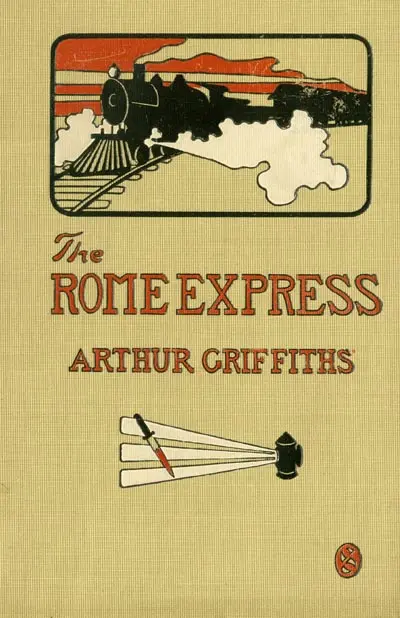
"The Rome Express" by Arthur Griffiths is a mystery novel written in the early 20th century. Set aboard a train speeding towards Paris, the story intricately weaves the lives of its passengers around a shocking murder. The narrative predominantly focuses on the discovery of a dead man in a sleeping compartment, believed to be a victim of foul play. As the plot unfolds, characters such as General Sir Charles Collingham and Countess di Castagneto come under scrutiny, their backgrounds and connections revealing layers of intrigue and suspicion. At the start of "The Rome Express," the train's occupants are roused from their slumber to face the shocking reality of murder when a lifeless body is discovered in one of the sleeping compartments. The atmosphere quickly transforms from the mundane routines of travel into a tension-filled scenario where every passenger becomes a suspect. Early scenes set the stage for the investigation, with detectives arriving to interrogate the passengers and the porter, each detail hinting at complexities within their relationships and pasts. The execution of the protagonist’s search for truth intertwines with the exploration of the human psyche, as characters grapple with fear, guilt, and the implications of their actions in the face of a horrifying crime. The vivid descriptions and suspenseful pacing invite readers to delve deeper into the narrative to uncover the truth.
Introduction adapted from the source catalogue; source summaries may be automatically generated.
Free to read · English · 35,687 words · No account needed
MAKE TIME FOR A GOOD BOOK
On by default. Untick to stop anonymous reading totals. Each page counts after 10 seconds in view. How this works.
Anonymous counting is on unless you have switched it off.
“No, by the other. My brother went back to his berth, but I paused in the corridor to finish my cigarette after the train had gone on. By this time every one but myself had returned to his berth, and I was on the point of lying down again for half an hour, when I distinctly heard the handle turned of the compartment I knew to be vacant all through the run.”
“That was the one with berths 11 and 12?”
“Probably. It was next to the Countess. Not only was the handle turned, but the door partly opened—”
“It was not the porter?”
“Oh, no, he was in his seat,—you know it, at the end of the car,—sound asleep, snoring; I could hear him.”
“Did any one come out of the vacant compartment?”
“No; but I was almost certain, I believe I could swear that I saw the same skirt, just the hem of it, a black skirt, sway forward beyond the door, just for a second. Then all at once the door was closed again fast.”
“What did you conclude from this? Or did you think nothing of it?”
“I thought very little. I supposed it was that the maid wished to be near her mistress as we were approaching Paris, and I had heard from the Countess that the porter had made many difficulties. But you see, after what has happened, that there was a reason for stopping the train.”
“Quite so,” M. Floçon readily admitted, with a scarcely concealed
sneer.
He had quite made up his mind now that it was the Countess who had rung the alarm-bell, in order to allow of the escape of the maid, her confederate and accomplice.
“And you still have an impression that some one—presumably this woman—got off the car, somehow, during the stoppage?” he asked.
“I suggest it, certainly. Whether it was or could be so, I must leave to your superior judgment.”
“What! A woman climb out like that? Bah! Tell that to some one else!”
“You have, of course, examined the exterior of the car, dear
colleague?” now said the Judge.
“Assuredly, once, but I will do it again. Still, the outside is quite smooth, there is no foot-board. Only an acrobat could succeed in thus escaping, and then only at the peril of his life. But a woman—oh, no! it is too absurd.”
“With help she might, I think, get up on to the roof,” quickly remarked Sir Charles. “I have looked out of the window of my compartment. It would be nothing for a man, nor much for a woman if assisted.”
Your reading position is saved on this browser. Take it to another device with a library code. Reading pages adapt to text, rather than matching a printed edition.
Arthur Griffiths

Arthur Griffiths

Arthur Griffiths
Arthur Griffiths
BEHIND THE BOOK
This eBook is for the use of anyone anywhere in the United States and most other parts of the world at no cost and with almost no restrictions whatsoever. You may copy it, give it away or re-use it under the terms of the Project Gutenberg License included with this eBook or online at www.gutenberg.org. If you are not located in the United States, you will have to check the laws of the country where you are located before using this eBook. Read the source licence.
The original source file, including credits and licence, is retained by this library. Request an original-format copy at no charge. Please include the book title and Project Gutenberg identifier #11451.
KEEP YOUR CURIOSITY GOING
Coulson Kernahan

Maurice Baring
Frances Wright
Cécile Tormay

Frederic Jesup Stimson

W. H. P. (William Henry Pope) Jarvis




