Oriental Prisons Prisons and Crime in India, the Andaman Islands, Burmah, China, Japan, Egypt, Turkey
Arthur Griffiths

THE CLASSIC COLLECTION · 1907
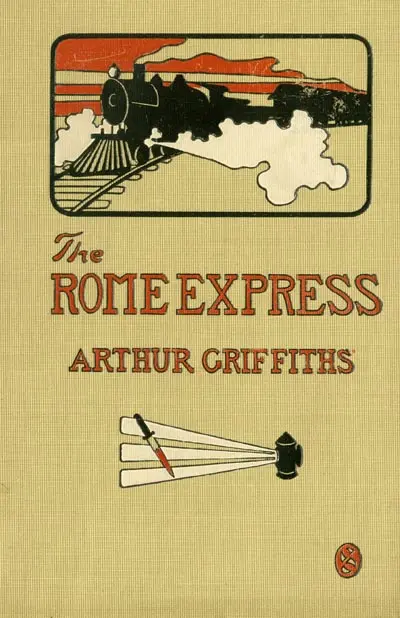
"The Rome Express" by Arthur Griffiths is a mystery novel written in the early 20th century. Set aboard a train speeding towards Paris, the story intricately weaves the lives of its passengers around a shocking murder. The narrative predominantly focuses on the discovery of a dead man in a sleeping compartment, believed to be a victim of foul play. As the plot unfolds, characters such as General Sir Charles Collingham and Countess di Castagneto come under scrutiny, their backgrounds and connections revealing layers of intrigue and suspicion. At the start of "The Rome Express," the train's occupants are roused from their slumber to face the shocking reality of murder when a lifeless body is discovered in one of the sleeping compartments. The atmosphere quickly transforms from the mundane routines of travel into a tension-filled scenario where every passenger becomes a suspect. Early scenes set the stage for the investigation, with detectives arriving to interrogate the passengers and the porter, each detail hinting at complexities within their relationships and pasts. The execution of the protagonist’s search for truth intertwines with the exploration of the human psyche, as characters grapple with fear, guilt, and the implications of their actions in the face of a horrifying crime. The vivid descriptions and suspenseful pacing invite readers to delve deeper into the narrative to uncover the truth.
Introduction adapted from the source catalogue; source summaries may be automatically generated.
Free to read · English · 35,687 words · No account needed
MAKE TIME FOR A GOOD BOOK
On by default. Untick to stop anonymous reading totals. Each page counts after 10 seconds in view. How this works.
Anonymous counting is on unless you have switched it off.
“He was at her house on the very day we all left Rome—in the evening, towards dusk. The Countess had an apartment in the Via Margutta, and when he left her he returned to his own place in the Condotti, entered the bank, stayed half an hour, then came out with one hand-bag and rug, called a cab, and was driven straight to the railway station.”
“And you followed?”
“Of course. When I saw him walk straight to the sleeping-car, and ask the conductor for 7 and 8, I knew that his plans had been laid, and that he was on the point of leaving Rome secretly. When, presently, La Castagneto also arrived, I concluded that she was in his confidence, and that possibly they were eloping together.”
“Why did you not arrest him?”
“I had no authority, even if I had had the time. Although I was ordered to watch the Signor Quadling, I had no warrant for his arrest. But I decided on the spur of the moment what course I should take. It seemed to be the only one, and that was to embark in the same train and stick close to my man.”
“You informed your superiors, I suppose?”
“Pardon me, monsieur,” said the Italian blandly to the Chief, who asked the question, “but have you any right to inquire into my conduct towards my superiors? In all that affects the murder I am at your orders, but in this other matter it is between me and them.”
“Ta, ta, ta! They will tell us if you will not. And you had better be careful, lest you obstruct justice. Speak out, sir, and beware. What did you intend to do?”
“To act according to circumstances. If my suspicions were confirmed—”
“What suspicions?”
“Why—that this banker was carrying off any large sum in cash, notes, securities, as in effect he was.”
“Ah! You know that? How?”
“By my own eyes. I looked into his compartment once and saw him in the act of counting them over, a great quantity, in fact—”
Again the officials looked at each other significantly. They had got at last to a motive for the crime.
“And that, of course, would have justified his arrest?”
“Exactly. I proposed, directly we arrived in Paris, to claim the assistance of your police and take him into custody. But his fate interposed.”
There was a pause, a long pause, for another important point had been reached in the inquiry: the motive for the murder had been made clear, and with it the presumption against the Countess gained terrible strength.
Your reading position is saved on this browser. Take it to another device with a library code. Reading pages adapt to text, rather than matching a printed edition.
Arthur Griffiths

Arthur Griffiths

Arthur Griffiths
Arthur Griffiths
BEHIND THE BOOK
This eBook is for the use of anyone anywhere in the United States and most other parts of the world at no cost and with almost no restrictions whatsoever. You may copy it, give it away or re-use it under the terms of the Project Gutenberg License included with this eBook or online at www.gutenberg.org. If you are not located in the United States, you will have to check the laws of the country where you are located before using this eBook. Read the source licence.
The original source file, including credits and licence, is retained by this library. Request an original-format copy at no charge. Please include the book title and Project Gutenberg identifier #11451.
KEEP YOUR CURIOSITY GOING
Coulson Kernahan

Maurice Baring
Frances Wright
Cécile Tormay

Frederic Jesup Stimson

W. H. P. (William Henry Pope) Jarvis




