Oriental Prisons Prisons and Crime in India, the Andaman Islands, Burmah, China, Japan, Egypt, Turkey
Arthur Griffiths

THE CLASSIC COLLECTION · 1907
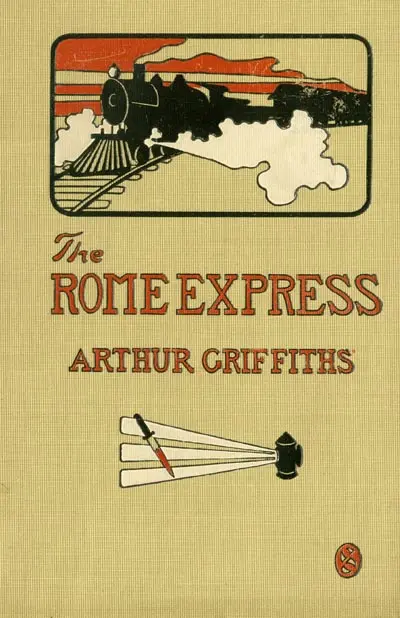
"The Rome Express" by Arthur Griffiths is a mystery novel written in the early 20th century. Set aboard a train speeding towards Paris, the story intricately weaves the lives of its passengers around a shocking murder. The narrative predominantly focuses on the discovery of a dead man in a sleeping compartment, believed to be a victim of foul play. As the plot unfolds, characters such as General Sir Charles Collingham and Countess di Castagneto come under scrutiny, their backgrounds and connections revealing layers of intrigue and suspicion. At the start of "The Rome Express," the train's occupants are roused from their slumber to face the shocking reality of murder when a lifeless body is discovered in one of the sleeping compartments. The atmosphere quickly transforms from the mundane routines of travel into a tension-filled scenario where every passenger becomes a suspect. Early scenes set the stage for the investigation, with detectives arriving to interrogate the passengers and the porter, each detail hinting at complexities within their relationships and pasts. The execution of the protagonist’s search for truth intertwines with the exploration of the human psyche, as characters grapple with fear, guilt, and the implications of their actions in the face of a horrifying crime. The vivid descriptions and suspenseful pacing invite readers to delve deeper into the narrative to uncover the truth.
Introduction adapted from the source catalogue; source summaries may be automatically generated.
Free to read · English · 35,687 words · No account needed
MAKE TIME FOR A GOOD BOOK
On by default. Untick to stop anonymous reading totals. Each page counts after 10 seconds in view. How this works.
Anonymous counting is on unless you have switched it off.
“If they stop us, I shall write to the Times” cried his brother, by profession a man of peace, but with a choleric eye that told of an angry temperament.
“By all means, my dear Silas, when you get the chance. That won’t be just yet, for I tell you we’re in a tight place, and may expect a good deal of worry.” With that he took out his cigarette-case, and his match-box, lighted his cigarette, and calmly watched the smoke rising with all the coolness of an old campaigner accustomed to encounter and face the ups and downs of life. “I only hope to goodness they’ll run straight on to Paris,” he added in a fervent tone, not unmixed with apprehension. “No! By jingo, we’re slackening speed—.”
“Why shouldn’t we? It’s right the conductor, or chief of the train, or whatever you call him, should know what has happened.”
“Why, man, can’t you see? While the train is travelling express, every one must stay on board it; if it slows, it is possible to leave it.”
“Who would want to leave it?”
“Oh, I don’t know,” said the General, rather testily. “Any way, the thing’s done now.”
The train had pulled up in obedience to the signal of alarm given by some one in the sleeping-car, but by whom it was impossible to say. Not by the porter, for he seemed greatly surprised as the conductor came up to him.
“How did you know?” he asked.
“Know! Know what? You stopped me.”
“I didn’t.”
“Who rang the bell, then?”
“I did not. But I’m glad you’ve come. There has been a crime—murder.”
“Good Heavens!” cried the conductor, jumping up on to the car, and entering into the situation at once. His business was only to verify the fact, and take all necessary precautions. He was a burly, brusque, peremptory person, the despotic, self-important French official, who knew what to do—as he thought—and did it without hesitation or apology.
“No one must leave the car,” he said in a tone not to be misunderstood. “Neither now, nor on arrival at the station.”
There was a shout of protest and dismay, which he quickly cut short.
“You will have to arrange it with the authorities in Paris; they can alone decide. My duty is plain: to detain you, place you under surveillance till then. Afterwards, we will see. Enough, gentlemen and madame”—
Your reading position is saved on this browser. Take it to another device with a library code. Reading pages adapt to text, rather than matching a printed edition.
Arthur Griffiths

Arthur Griffiths

Arthur Griffiths
Arthur Griffiths
BEHIND THE BOOK
This eBook is for the use of anyone anywhere in the United States and most other parts of the world at no cost and with almost no restrictions whatsoever. You may copy it, give it away or re-use it under the terms of the Project Gutenberg License included with this eBook or online at www.gutenberg.org. If you are not located in the United States, you will have to check the laws of the country where you are located before using this eBook. Read the source licence.
The original source file, including credits and licence, is retained by this library. Request an original-format copy at no charge. Please include the book title and Project Gutenberg identifier #11451.
KEEP YOUR CURIOSITY GOING
Coulson Kernahan

Maurice Baring
Frances Wright
Cécile Tormay

Frederic Jesup Stimson

W. H. P. (William Henry Pope) Jarvis




