THE CLASSIC COLLECTION✦An outlaw’s diary: the CommuneCLASSIC FREE BOOKS
An outlaw’s diary: the Commune
Cécile Tormay
THE CLASSIC COLLECTION · 1900
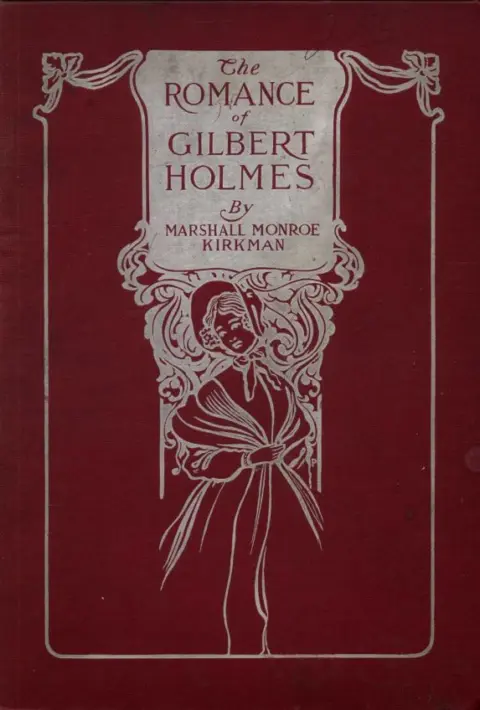
"The Romance of Gilbert Holmes: An Historical Novel" by Marshall M. Kirkman is a historical novel written in the late 19th century. The story centers on the life of Gilbert Holmes, exploring themes of love, loss, and adventure set against the backdrop of early American history. The narrative begins with a tragic event involving Gilbert's parents, setting the tone for his journey and the connections he forms. The opening of the novel introduces a melancholic scene at a New Orleans wharf, where the protagonist reflects on the changing world around him. He encounters a beautiful lady, whose compassion for the convicts marching past captivates him. We soon meet Gilbert, who reminisces about his early life and the deep bond shared with his loving parents. As the narrative unfolds, readers witness Gilbert's early experiences, including a near-fatal ferry accident, the struggles of frontier life, and the kindness of a Native American woman. The stage is set for exploration of Gilbert's adventures and romantic pursuits in a developing America amidst personal and external turmoil.
Introduction adapted from the source catalogue; source summaries may be automatically generated.
Free to read · English · 140,288 words · No account needed
MAKE TIME FOR A GOOD BOOK
On by default. Untick to stop anonymous reading totals. Each page counts after 10 seconds in view. How this works.
Anonymous counting is on unless you have switched it off.
"May it please your honor, I admit all this man may say, not denying anything, and beg that I may be tried here and now, and by the present jury."
To this Judge Douglas demurred, but after reflecting upon it for a while and conferring with the jury, he turned to Moth and said:
"You hear his admission, Mr. Moth? Are you ready to go on with the case, as he suggests? If so, I can see no legal objection."
"It is what I desire above all things, your honor," Moth, answered, in a sober way. "The man should be in the penitentiary, and the sooner he is sent there the better for the community."
"Then the trial may proceed. Bailiff, conduct the prisoner to the bar,"
Judge Douglas ordered.
When this had been done and the jury again sworn, Judge Douglas motioned Moth to proceed. This he did, after taking the oath, recounting at length and with great particularity, the attempt to rob him, and Fox's mishap and final discomfiture and imprisonment. When he had finished, Fox, standing up and declining counsel, turned to the judge, and said:
"What this man says, your honor, is true, save, perhaps, a propensity natural to him to exaggerate. I, however, did not seek to injure him, and at the time he speaks of he was himself striving to unlawfully kidnap this friendless youth, except for whom Rathe would now be at liberty and Mr. Throckmorton a convicted criminal," saying which, Fox stepped back and put his arm about my neck. "This does, not excuse my crime, I know. I only claim Moth was not harmed at my hands, either in body or purse. My former lawless way of life I have abandoned, as I can prove, though it was more foolish than harmful. Folly, your honor, comes natural to me, crime does not. I played robber, and thought I was one, when in fact I was only an ass. No one here or elsewhere has ever been harmed by me. I am no one's enemy but my own. Against my manhood and knowledge of right I sinned, and sinning have paid the penalty by outlawry. Moth's complaint against me is at best a moral one only. I regret it, however, and would undo it if I could, but cannot, though I repent in sackcloth and ashes. Such are the facts, your honor and gentlemen. I do not claim I am what I should be. Nor was this man, a self-confessed kidnaper, and that against the weak and unfriended. Among my sins, your honor, I have not such a one to answer for. I ask you, gentlemen, to judge between us. Look in his face and mine, and say if in your hearts you think him the more honest. If so, then convict me; if not, be lenient. My life is harassed by him beyond endurance, and I cannot mend until I shake him off. The worst I can suffer will be better than the present. He was not robbed by me, nor did I seek to cripple or kill him, either of which things I might have done had I wished. That is all I have to say, your honor, and concluding, I put myself in your hands, craving forgiveness and mercy of all men"; saying which, Fox sat down and buried his face in his hands, overcome by his agitation and shame.
Your reading position is saved on this browser. Take it to another device with a library code. Reading pages adapt to text, rather than matching a printed edition.
BEHIND THE BOOK
This eBook is for the use of anyone anywhere in the United States and most other parts of the world at no cost and with almost no restrictions whatsoever. You may copy it, give it away or re-use it under the terms of the Project Gutenberg License included with this eBook or online at www.gutenberg.org. If you are not located in the United States, you will have to check the laws of the country where you are located before using this eBook. Read the source licence.
The original source file, including credits and licence, is retained by this library. Request an original-format copy at no charge. Please include the book title and Project Gutenberg identifier #53006.
KEEP YOUR CURIOSITY GOING
Cécile Tormay

Moritz Busch
Coulson Kernahan
John L. Ransom

Maurice Baring
Frances Wright