THE CLASSIC COLLECTION✦An outlaw’s diary: the CommuneCLASSIC FREE BOOKS
An outlaw’s diary: the Commune
Cécile Tormay
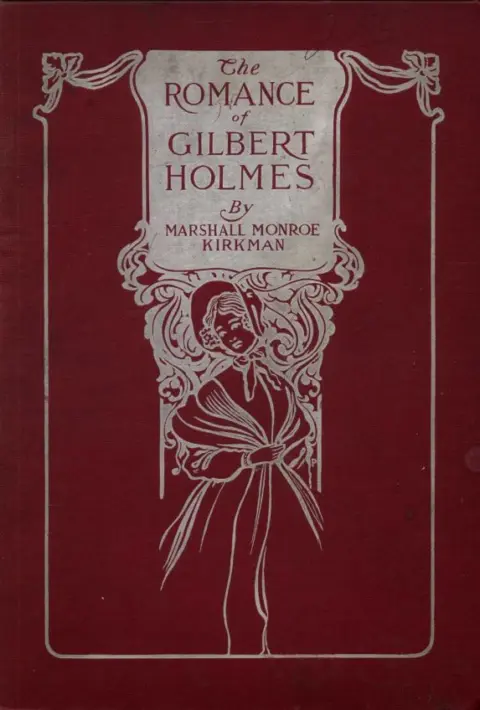
THE CLASSIC COLLECTION · 1900
"The Romance of Gilbert Holmes: An Historical Novel" by Marshall M. Kirkman is a historical novel written in the late 19th century. The story centers on the life of Gilbert Holmes, exploring themes of love, loss, and adventure set against the backdrop of early American history. The narrative begins with a tragic event involving Gilbert's parents, setting the tone for his journey and the connections he forms. The opening of the novel introduces a melancholic scene at a New Orleans wharf, where the protagonist reflects on the changing world around him. He encounters a beautiful lady, whose compassion for the convicts marching past captivates him. We soon meet Gilbert, who reminisces about his early life and the deep bond shared with his loving parents. As the narrative unfolds, readers witness Gilbert's early experiences, including a near-fatal ferry accident, the struggles of frontier life, and the kindness of a Native American woman. The stage is set for exploration of Gilbert's adventures and romantic pursuits in a developing America amidst personal and external turmoil.
Introduction adapted from the source catalogue; source summaries may be automatically generated.
Free to read · English · 140,288 words · No account needed
MAKE TIME FOR A GOOD BOOK
On by default. Untick to stop anonymous reading totals. Each page counts after 10 seconds in view. How this works.
Anonymous counting is on unless you have switched it off.
The luncheon was light, but every way fit for abstemious people, though much unlike what I had been used to at Wild Plum, where there was profusion verging on waste in all such things. However, being hungry, I did not regard it particularly, but ate with great heartiness, paying little attention to what was going on about me. Once indeed, as the meal progressed, happening to glance in Cousin Angeline's direction, I thought I detected some show of uneasiness at the inroads I was making on her bread and butter, but not believing such a thing possible, I gave it no further attention. Nothing of any account was said at the table, except that Cousin Angeline showed much curiosity concerning my old home, and particularly Aunt Jane and her attorney, Moth. This I thought very kind, and answered her inquiries with great fullness, being desirous above all things to please her. Seeing this, she smiled encouragingly, as if much admiring my amiability and frankness of speech.
After luncheon Cousin Rolland did not stop, but bidding me good by hurried away, and this abruptly, as if greatly pressed for time. Being thus left alone with Cousin Angeline, and she seeming to forget I was there, I presently went out to inspect the garden, some glimpses of which I had obtained from the window. Of gravel and cleanliness there was no end, but of flowers no great profusion or variety, and such as there were, I thought, had a stiff, aggressive look, as if challenging me to come near or touch them. Altogether they had the air of soldiers on duty, and because of too strict discipline or for some other good reason, had lost something of the glow and comfort of outdoor life. Of flowers, however, I had never as a youth taken much account, not being able to understand them, nor, indeed, make them thrive, as my mother could without thought. Because of this I was inclined to look on what I now saw as something out of my line, and therefore not to be lightly criticised. In this frame of mind I went on to where a mild-eyed cow stood watching me curiously, as cows will when strangers approach. Not having any morsel with which to tempt her palate, I stroked her face for a while, and then turned to the little colonies of chickens that busied themselves near by. These I saluted as old friends, being much inclined to their cheerful companionship, carried on as it always is with so much small talk and pleasurable excitement. Thus being once more in their company, I fell into an attitude of attention and interest, to which they at once responded by much clucking and diligent search after the small particles of food the yard contained. These old friends I came in time to know very well, and with great liking, because of their simple ways; but of their product, which I looked forward to with interest, as young people of good appetite will, only a small portion ever found its way to the table. The reason of this, as I learned at a later day, was that the greater part was put aside and converted by Cousin Angeline, with other small perquisites of the house, into a secret fund for her own particular behoof and divertisement. This properly enough. However, it did not come fully to light until after Cousin Rolland's death, some years later, when the fund thus laid away came in the nick of time to enable her to live on in great contentment and ease of life. This until one day a clergyman of studious habits coming along and being desirous to marry, yet not having the time to examine the goods he was getting, or being ignorant in respect to such matters, he took her out of hand, as Cousin Rolland had done before him. However, these things being then unknown, as I say, I confidently looked forward to a plentiful supply of butter and eggs, as in the old time at Wild Plum, though mistakenly, as it appeared. When the scantiness of fare in this respect became apparent, I did not much regard it, I am bound to say, being always stout of appetite for such things as fell in my way, thinking little of what was lacking. Indeed, I had heard it said, and wisely, that we were ever inclined to eat more than was good for us. This saying was often on my Aunt Jane's lips, and she, living up to her doctrine, was in everything healthy and well preserved. So that if sometimes on getting up from Cousin Angelina's table I felt that I could have eaten more, remembering my aunt and her rugged health, I was fain to think it for the best. Such reflections of the young, however apt, are more natural to mature folk, being seasoned in the latter case with a philosophy of life that the former lack. So that if abstinence is not always accepted by children with good grace, older people and relatives, however remote, should make allowance for the circumstance.
Your reading position is saved on this browser. Take it to another device with a library code. Reading pages adapt to text, rather than matching a printed edition.
BEHIND THE BOOK
This eBook is for the use of anyone anywhere in the United States and most other parts of the world at no cost and with almost no restrictions whatsoever. You may copy it, give it away or re-use it under the terms of the Project Gutenberg License included with this eBook or online at www.gutenberg.org. If you are not located in the United States, you will have to check the laws of the country where you are located before using this eBook. Read the source licence.
The original source file, including credits and licence, is retained by this library. Request an original-format copy at no charge. Please include the book title and Project Gutenberg identifier #53006.
KEEP YOUR CURIOSITY GOING
Cécile Tormay

Moritz Busch
Coulson Kernahan
John L. Ransom

Maurice Baring
Frances Wright