
Barren Ground
Ellen Anderson Gholson Glasgow
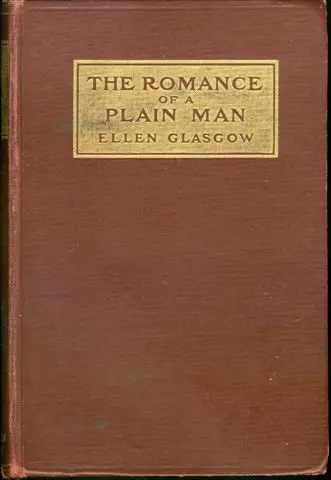
THE CLASSIC COLLECTION · 1909
"The Romance of a Plain Man" by Ellen Glasgow is a novel written in the early 20th century. The story launches the reader into the life of Ben Starr, a young boy from a struggling family in Richmond, as he navigates the challenges of his humble environment and the complexities of childhood, family, and societal class. Through Ben's perspective, the book explores themes of innocence, aspiration, and the longing for beauty and belonging in a world marked by poverty and hardship. The opening portion ushers us into Ben's world during a stormy October evening, where he engages in playful conversation with his father, showcasing their simple family life. As rain lashes against their home, the family dynamics are revealed, highlighting Ben's youthful curiosity and innocence. Soon, a mysterious woman and her daughter, Sally, interrupt their evening, introducing the complexities of social class distinctions that will shape Ben's experiences as he grows. Sally's disdainful use of the term "common" to describe Ben plants the seeds of his yearning to rise above his circumstances, setting the stage for his struggles with identity and aspiration. As the story unfolds, we glimpse the early indicators of how Ben's environment will impact his journey throughout the narrative.
Introduction adapted from the source catalogue; source summaries may be automatically generated.
Free to read · English · 126,677 words · No account needed
MAKE TIME FOR A GOOD BOOK
On by default. Untick to stop anonymous reading totals. Each page counts after 10 seconds in view. How this works.
Anonymous counting is on unless you have switched it off.
Sally was sitting on the hearth, half hidden by the high arms of the chair, and as I closed the door behind me, she rose and stood looking at me with an expression of surprise. So had Miss Mitty and Miss Matoaca looked in the firelight on that November afternoon when Sally and I had gone in together.
"Why, Ben!" she said quietly, "I thought you were in Washington!"
"I got home this morning and found your note. Sally, what is the
trouble?"
"You came after me?"
"I came after you. The General went wild and imagined that there had been an accident, or George had run off with you."
"Then the General sent you?"
"Nobody sent me. I was leaving the house when he found me."
She had not moved toward me, and for some reason, I still stood where I had stopped short in the centre of the room, kept back by the reserve, the detachment in her expression.
"You came believing that George and I had gone off together?" she asked, and there was a faint hostility in her voice.
"Of course I didn't believe it. I'm not a fool if I am an ass. But if I had believed it," I added passionately, "it would have made no difference. I'd have come after you if you'd gone off with twenty Georges."
"Well, there's only one," she said, "and I did go off with him."
"It makes no difference."
"We left Richmond at ten o'clock yesterday, and we've been here ever
since."
"What does that matter?"
"You mean it doesn't matter that I came away with George and spent
twenty-four hours?"
"I mean that nothing matters--not if you'd spent twenty-four years."
"I suppose it doesn't," she responded quietly, and there was a curious remoteness, a hollowness in the sound of the words. "When one comes to see things as they are, nothing really matters. It is all just the same."
Her face looked unsubstantial and wan in the firelight, and so ethereal, so fleshless, appeared her figure, that it seemed to me I could see through it to the shining of the flames before which she stood.
"I can't talk, Sally," I said, "I am not good at words, I believe I'm more than half a fool as George has just told me--but--but--I want you--I've always wanted you--I've never in my heart wanted anything in the world but you--"
"I don't suppose even that matters much," she answered wearily, "but if you care to know, Ben, George and Bonny found me when I was alone and--and very unhappy, and they brought me with them when they came down to hunt. They are hunting now."
Your reading position is saved on this browser. Take it to another device with a library code. Reading pages adapt to text, rather than matching a printed edition.
Ellen Anderson Gholson Glasgow

Ellen Anderson Gholson Glasgow

Ellen Anderson Gholson Glasgow

Ellen Anderson Gholson Glasgow
BEHIND THE BOOK
This eBook is for the use of anyone anywhere in the United States and most other parts of the world at no cost and with almost no restrictions whatsoever. You may copy it, give it away or re-use it under the terms of the Project Gutenberg License included with this eBook or online at www.gutenberg.org. If you are not located in the United States, you will have to check the laws of the country where you are located before using this eBook. Read the source licence.
The original source file, including credits and licence, is retained by this library. Request an original-format copy at no charge. Please include the book title and Project Gutenberg identifier #30299.
KEEP YOUR CURIOSITY GOING
Coulson Kernahan

Maurice Baring
Frances Wright
Cécile Tormay

Frederic Jesup Stimson

W. H. P. (William Henry Pope) Jarvis