
Barren Ground
Ellen Anderson Gholson Glasgow
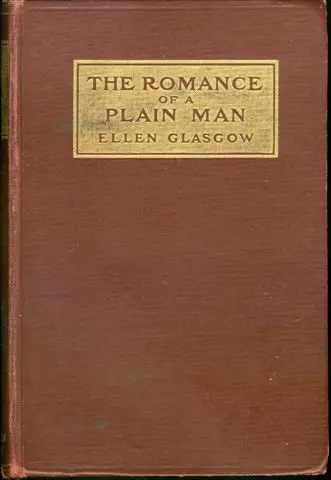
THE CLASSIC COLLECTION · 1909
"The Romance of a Plain Man" by Ellen Glasgow is a novel written in the early 20th century. The story launches the reader into the life of Ben Starr, a young boy from a struggling family in Richmond, as he navigates the challenges of his humble environment and the complexities of childhood, family, and societal class. Through Ben's perspective, the book explores themes of innocence, aspiration, and the longing for beauty and belonging in a world marked by poverty and hardship. The opening portion ushers us into Ben's world during a stormy October evening, where he engages in playful conversation with his father, showcasing their simple family life. As rain lashes against their home, the family dynamics are revealed, highlighting Ben's youthful curiosity and innocence. Soon, a mysterious woman and her daughter, Sally, interrupt their evening, introducing the complexities of social class distinctions that will shape Ben's experiences as he grows. Sally's disdainful use of the term "common" to describe Ben plants the seeds of his yearning to rise above his circumstances, setting the stage for his struggles with identity and aspiration. As the story unfolds, we glimpse the early indicators of how Ben's environment will impact his journey throughout the narrative.
Introduction adapted from the source catalogue; source summaries may be automatically generated.
Free to read · English · 126,677 words · No account needed
MAKE TIME FOR A GOOD BOOK
On by default. Untick to stop anonymous reading totals. Each page counts after 10 seconds in view. How this works.
Anonymous counting is on unless you have switched it off.
"I'll see him in hell, before I'll vote for him!" called out a voice at
my back, in a rage.
The train pulled into the little wayside station of Riverview, and getting out, I started on the walk of two miles through the flat, brown fields to the house. The road was heavy with mud, and it was like ploughing to keep straight on in the single red-clay furrow which the wheels of passing wagons had left. All was desolate, all was deserted, and the only living things I saw between the station and the house were a few lonely sheep browsing beside a stream, and the brown-winged birds that flew, with wet plumage, across the road.
When I reached the ruined gateway of Riverview, the old estate of the Blands', I quickened my pace, and went rapidly up the long drive to the front of the house, where I saw the glimmer of red firelight on the ivied window-panes in the west wing. As I ascended the steps, there was a sound on the gravel, and George Bolingbroke came around the corner of the house, in hunting clothes, with a setter dog at his heels.
"Hello, Ben!" he remarked, half angrily. "So you've turned up, have you? Has there been another panic in the market?"
"Is Sally here?" I asked. "I'm anxious about her."
"Well, it's time you were," he answered. "Yes, she's inside."
He stopped in the centre of the walk, and turning from the door, I came back and faced him in a silence that seemed alive with the beating of innumerable wings in the air.
"Something's wrong, George," I said at last, breaking through my
restraint.
He looked at me with a calm, enquiring gaze while I was speaking, and by that look I understood, in an inspiration, he had condemned me.
"Yes, something's wrong," he answered quietly, "but have you just found
it out?"
"I haven't found it out yet. What is it? What is the matter?"
At the question his calmness deserted him and the dark flush of anger broke suddenly in his face.
"The matter is, Ben," he replied, holding himself in with an effort, "that you've missed being a fool only by being a genius instead."
Then turning away, as if his temper had got the better of him, he strode back through a clump of trees on the lawn, while I went up the steps again, and crossing the cold hall, entered the dismantled drawing-room, where a bright log fire was burning.
Your reading position is saved on this browser. Take it to another device with a library code. Reading pages adapt to text, rather than matching a printed edition.
Ellen Anderson Gholson Glasgow

Ellen Anderson Gholson Glasgow

Ellen Anderson Gholson Glasgow

Ellen Anderson Gholson Glasgow
BEHIND THE BOOK
This eBook is for the use of anyone anywhere in the United States and most other parts of the world at no cost and with almost no restrictions whatsoever. You may copy it, give it away or re-use it under the terms of the Project Gutenberg License included with this eBook or online at www.gutenberg.org. If you are not located in the United States, you will have to check the laws of the country where you are located before using this eBook. Read the source licence.
The original source file, including credits and licence, is retained by this library. Request an original-format copy at no charge. Please include the book title and Project Gutenberg identifier #30299.
KEEP YOUR CURIOSITY GOING
Coulson Kernahan

Maurice Baring
Frances Wright
Cécile Tormay

Frederic Jesup Stimson

W. H. P. (William Henry Pope) Jarvis