
Barren Ground
Ellen Anderson Gholson Glasgow
THE CLASSIC COLLECTION · 1909
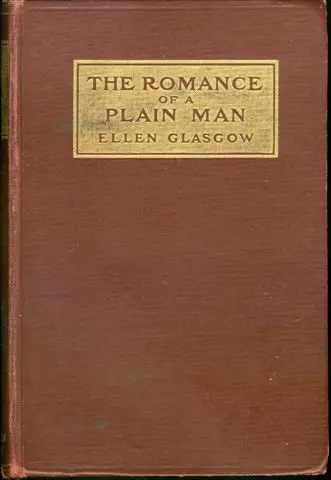
"The Romance of a Plain Man" by Ellen Glasgow is a novel written in the early 20th century. The story launches the reader into the life of Ben Starr, a young boy from a struggling family in Richmond, as he navigates the challenges of his humble environment and the complexities of childhood, family, and societal class. Through Ben's perspective, the book explores themes of innocence, aspiration, and the longing for beauty and belonging in a world marked by poverty and hardship. The opening portion ushers us into Ben's world during a stormy October evening, where he engages in playful conversation with his father, showcasing their simple family life. As rain lashes against their home, the family dynamics are revealed, highlighting Ben's youthful curiosity and innocence. Soon, a mysterious woman and her daughter, Sally, interrupt their evening, introducing the complexities of social class distinctions that will shape Ben's experiences as he grows. Sally's disdainful use of the term "common" to describe Ben plants the seeds of his yearning to rise above his circumstances, setting the stage for his struggles with identity and aspiration. As the story unfolds, we glimpse the early indicators of how Ben's environment will impact his journey throughout the narrative.
Introduction adapted from the source catalogue; source summaries may be automatically generated.
Free to read · English · 126,677 words · No account needed
MAKE TIME FOR A GOOD BOOK
On by default. Untick to stop anonymous reading totals. Each page counts after 10 seconds in view. How this works.
Anonymous counting is on unless you have switched it off.
As I entered the house, the sound of Aunt Euphronasia's crooning fell on my ears, and going into the nursery, I found Sally sitting by the window, with the child on her knees, while the old negress waved a palm-leaf fan back and forth with a slow, rhythmic movement. A night-lamp burned, with lowered wick, on the bureau, and as Sally looked up at me, I saw that her face had grown wan and haggard since I had left her.
"The baby was taken very ill just after you went," she said; "we feared a convulsion, and I sent one of the neighbours' children for the doctor. It may be only the heat, he says, but he is coming again at midnight."
"I had hoped you would be able to get off in the morning."
"No, not now. The baby is too ill. In a few days, perhaps, if he is
better."
Her voice broke, and kneeling beside her, I clasped them both in my arms, while the anguish in my heart rose suddenly like a wild beast to my throat.
"What can I do, Sally?" I asked passionately. "What can I do?"
"Nothing, dear, nothing. Only be quiet."
Only be quiet! Rising to my feet I walked softly to the end of the room, and then turning came back again to the spot where I had knelt. At the moment I longed to knock down something, to strangle something, to pull to earth and destroy as a beast destroys in a rage. Through the open window I could see a full moon shining over a magnolia, and the very softness and quiet of the moonlight appeared, in some strange way, to increase my suffering. A faint breeze, scented with jessamine, blew every now and then from the garden, rising, dying away, and rising again, until it waved the loosened tendrils of hair on Sally's neck. The odour, also, like the moonlight, mingled, while I stood there, and was made one with the anguish in my thoughts. Again I walked the length of the room, and again I turned and came back to the window beside which Sally sat. My foot as I moved stumbled upon something soft and round, and stooping to pick it up, I saw that it was a rubber doll, dropped by little Benjamin when he had grown too ill or too tired to play. I laid it in Sally's work-basket on the table, and then throwing off my coat, flung myself into a chair in one corner. A minute afterwards I rose, and walking gently through the long window, looked on the garden, which lay dim and fragrant under the moonlight. On the porch, twining in and out of the columns, the star jessamine, riotous with its second blooming, swayed back and forth like a curtain; and as I bent over, the small, white, deadly sweet blossoms caressed my face. A white moth whirred by me into the room, and when I entered again, I saw that it was flying swiftly in circles, above the flame of the night-lamp on the bureau. Sally was sitting just as I had left her, her arm under the child's head, her face bent forward as if listening to a distant, almost inaudible sound. She appeared so still, so patient, that I wondered in amazement if she had sat there for hours, unchanged, unheeding, unapproachable? There was in her attitude, in her pensive quiet, something so detached and tragic, that I felt suddenly that I had never really seen her until that minute; and instead of going to her as I had intended, I drew away, and stood on the threshold watching her almost as a stranger might have done. Once the child stirred and cried, lifting his little hands and letting them fall again with the same short cry of distress. The flesh of my heart seemed to tear suddenly asunder, and I sprang forward. Sally looked up at me, shook her head with a slow, quiet movement, and I stopped short as if rooted there by the single step I had taken. After ten years I remember every detail, every glimmer of light, every fitful rise and fall of the breeze, as if, not visual objects only, but scents, sounds, and movements, were photographed indelibly on my brain. I know that the white moth fluttered about my head, and that raising my hand, I caught it in my palm, which closed over it with violence. Then the cry from little Benjamin came again, and opening my palm, I watched the white moth fall dead, with crushed wings, to the floor. When I forget all else in my life, I shall still see Sally sitting motionless, like a painted figure, in the faint, reddish glow of the night-lamp, while above her, and above the little waxen face on her knee, the shadow, of the palm-leaf fan, waved by Aunt Euphronasia, flitted to and fro like the wing of a bat.
Your reading position is saved on this browser. Take it to another device with a library code. Reading pages adapt to text, rather than matching a printed edition.
Ellen Anderson Gholson Glasgow

Ellen Anderson Gholson Glasgow

Ellen Anderson Gholson Glasgow

Ellen Anderson Gholson Glasgow
BEHIND THE BOOK
This eBook is for the use of anyone anywhere in the United States and most other parts of the world at no cost and with almost no restrictions whatsoever. You may copy it, give it away or re-use it under the terms of the Project Gutenberg License included with this eBook or online at www.gutenberg.org. If you are not located in the United States, you will have to check the laws of the country where you are located before using this eBook. Read the source licence.
The original source file, including credits and licence, is retained by this library. Request an original-format copy at no charge. Please include the book title and Project Gutenberg identifier #30299.
KEEP YOUR CURIOSITY GOING
Coulson Kernahan

Maurice Baring
Frances Wright
Cécile Tormay

Frederic Jesup Stimson

W. H. P. (William Henry Pope) Jarvis