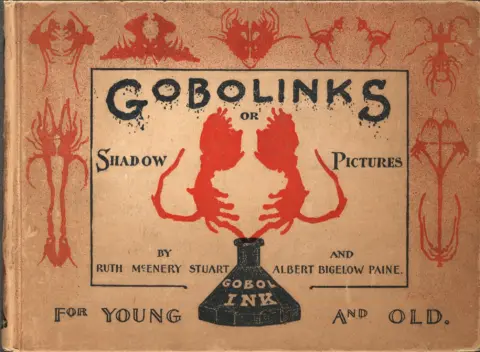
Gobolinks; or, Shadow Pictures for Young and Old
Ruth McEnery Stuart & Albert Bigelow Paine

THE CLASSIC COLLECTION · 1904
"The River's Children: An Idyl of the Mississippi" by Ruth McEnery Stuart is a novel written in the early 20th century. Set against the backdrop of the Mississippi River, the story unfolds during a time of strife and natural disaster, reflecting on themes of love, loss, and resilience through the lives of its characters. The narrative primarily revolves around the relationships and struggles of both the black and white populations living along the river during a period riddled with tension and hardship. At the start of the book, the reader is introduced to the powerful and tumultuous Mississippi River, which is causing havoc and threatening communities and plantations in the area. Amid this turmoil, groups of laborers, primarily African American men, work tirelessly to shore up the riverbanks against flooding, showcasing their resilience and camaraderie through song. The interactions between characters such as Felix and Adolphe highlight not only the immediate dangers they face from the rampaging waters but also the deeper emotional struggles and community bonds formed in times of duress. The novel's opening sets the stage for these intertwined lives, hinting at a weaving of personal and collective stories that reflect a rich tapestry of life along the Mississippi.
Introduction adapted from the source catalogue; source summaries may be automatically generated.
Free to read · English · 26,292 words · No account needed
MAKE TIME FOR A GOOD BOOK
On by default. Untick to stop anonymous reading totals. Each page counts after 10 seconds in view. How this works.
Anonymous counting is on unless you have switched it off.
We have seen how the old wife waited and prayed on the shore; how with her shaded mind she groped, as many a wiser has done, for a comforting, common-sense understanding of faith, that intangible "substance of things hoped for," that elusive "evidence of things not seen."
In a moment after she heard the creaking of the timbers as the skiff chafed the landing, even while she rose, as was her habit, to see who might be coming over so late, she dimly perceived two men approaching, Israel and another; and presently she saw that Israel held the man's hand and that he walked unsteadily.
She started, fearing that her man was hurt; but before she could find voice of fear or question, Israel had drawn the stranger to her and was saying in a broken voice:
"Hannah! Hannah! Heah Mars' Harol'!"
Only a moment before, with her dim eyes fixed upon the sky, she had experienced a realization of faith, and believed herself confidently awaiting her master's coming. And yet, seeing him now in the flesh before her, she exclaimed:
"What foolishness is dis, ole man? Don't practice no jokes on me
to-night, Isrul!"
Her voice was almost gruff, and she drew back as she spoke. But even while she protested, Harold had laid his hand upon her arm.
"Mammy," he whispered huskily, "don't you know your 'indurin' devil'--?" (This had been her last, worst name for her favorite during his mischief period.)
Harold never finished his sentence. The first sound of his voice had identified him, but the shock had confused her. When at last she sobbed "Hush! I say, hush!" her arms were about his knees and she was crying aloud.
"Glo-o-o--oh--glo-o-o--glo-o-ry! Oh, my Gord!" But presently, wiping her eyes, she stammered: "What kep' you so, Baby? Hol' me up, chile--hol' me!"
She was falling, but Harold steadied her with strong arms, pressing her into her chair, but retaining her trembling hand while he sat upon the low table beside her.
He could not speak at once, but, seeing her head drop upon her bosom, he called quickly to Israel. For answer, a clarion note, in no wise muffled by the handkerchief from which it issued, came from the woodpile. Israel was shy of his emotions and had hidden himself.
By the time he appeared, sniffling, Hannah had rallied, and was pressing Harold from her to better study his face at long range.
Your reading position is saved on this browser. Take it to another device with a library code. Reading pages adapt to text, rather than matching a printed edition.
Ruth McEnery Stuart & Albert Bigelow Paine
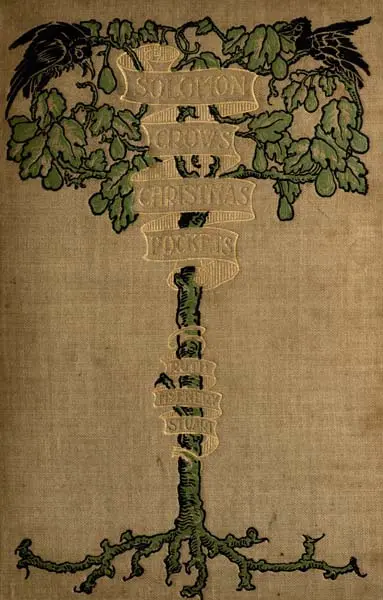
Ruth McEnery Stuart
Ruth McEnery Stuart
Ruth McEnery Stuart
BEHIND THE BOOK
This eBook is for the use of anyone anywhere in the United States and most other parts of the world at no cost and with almost no restrictions whatsoever. You may copy it, give it away or re-use it under the terms of the Project Gutenberg License included with this eBook or online at www.gutenberg.org. If you are not located in the United States, you will have to check the laws of the country where you are located before using this eBook. Read the source licence.
The original source file, including credits and licence, is retained by this library. Request an original-format copy at no charge. Please include the book title and Project Gutenberg identifier #34416.
KEEP YOUR CURIOSITY GOING
Coulson Kernahan

Maurice Baring
Frances Wright
Cécile Tormay

Frederic Jesup Stimson

W. H. P. (William Henry Pope) Jarvis