THE CLASSIC COLLECTION✦The WesternersCLASSIC FREE BOOKS
The Westerners
Stewart Edward White
THE CLASSIC COLLECTION · 1908
"The Riverman" by Stewart Edward White is a novel written during the late 19th century. The story is set in 1872 on a river bend near a dam, focusing on the lives of rivermen who drive logs downstream, emphasizing their rugged lifestyle and camaraderie. The narrative explores the challenges they face, including conflicts with the dam owner, Simeon Reed, as they strive to manage the river's flow and navigate obstacles that threaten their livelihood. The opening of "The Riverman" paints a vivid picture of a bustling camp of rivermen preparing for their daily work on the river. A lively crew of men, diverse in age and character, gathers around fires, exchanging banter as they deal with an unexpected wind that hampers their progress. The central character, Jack Orde, emerges as a capable and humorous leader, attempting to rally his crew to address the issues posed by the dam's sluice-gate. The tension escalates as conflicts arise with Reed, who is staunchly protective of his property. Through detailed descriptions of the camp dynamics and the men's interactions, the narrative sets the stage for a gripping tale of resilience against nature and authority in the rough-and-tumble world of river driving.
Introduction adapted from the source catalogue; source summaries may be automatically generated.
Free to read · English · 103,779 words · No account needed
MAKE TIME FOR A GOOD BOOK
On by default. Untick to stop anonymous reading totals. Each page counts after 10 seconds in view. How this works.
Anonymous counting is on unless you have switched it off.
“You know the conditions here. If such a firm should be organised and should offer to drive the logs for these ten firms at so much a thousand, do you suppose it would get the business?”
“It would depend on the driving firm,” said Orde. “You see, mill men have got to have their logs. They can't afford to take chances. It wouldn't pay.”
“Then that's all right,” agreed Newmark, with a gleam of satisfaction across his thin face. “Would you form a partnership with me having such an object in view?”
Orde threw back his head and laughed with genuine amusement.
“I guess you don't realise the situation,” said he. “We'd have to have a few little things like distributing booms, and tugs, and a lot of tools and supplies and works of various kinds.”
“Well, we'd get them.”
It was now Orde's turn to ask questions.
“How much are you worth?” he inquired bluntly.
“About twenty thousand dollars,” replied Newmark.
“Well, if I raise very much more than twenty thousand cents, I'm lucky
just now.”
“How much capital would we have to have?” asked Newmark.
Orde thought for several minutes, twisting the petal of an old apple-blossom between his strong, blunt fingers.
“Somewhere near seventy-five thousand dollars,” he estimated at last.
“That's easy,” cried Newmark. “We'll make a stock company--say a hundred thousand shares. We'll keep just enough between us to control the company--say fifty-one thousand. I'll put in my pile, and you can pay for yours out of the earnings of the company.”
“That doesn't sound fair,” objected Orde.
“You pay interest,” explained Newmark. “Then we'll sell the rest of the stock to raise the rest of the money.”
“If we can,” interjected Orde.
“I think we can,” asserted Newmark.
Orde fell into a brown study, occasionally throwing a twig or a particle of earth at the offending lump in the turf. Overhead the migratory warblers balanced right-side up or up-side down, searching busily among the new leaves, uttering their simple calls. The air was warm and soft and still, the sky bright. Fat hens clucked among the grasses. A feel of Sunday was in the air.
“I must have something to live on,” said he thoughtfully at last.
“So must I,” said Newmark. “We'll have to pay ourselves salaries, of course, but the smaller the better at first. You'll have to take charge of the men and the work and all the rest of it--I don't know anything about that. I'll attend to the incorporating and the routine, and I'll try to place the stock. You'll have to see, first of all, whether you can get contracts from the logging firms to drive the logs.”
Your reading position is saved on this browser. Take it to another device with a library code. Reading pages adapt to text, rather than matching a printed edition.
Stewart Edward White
Stewart Edward White
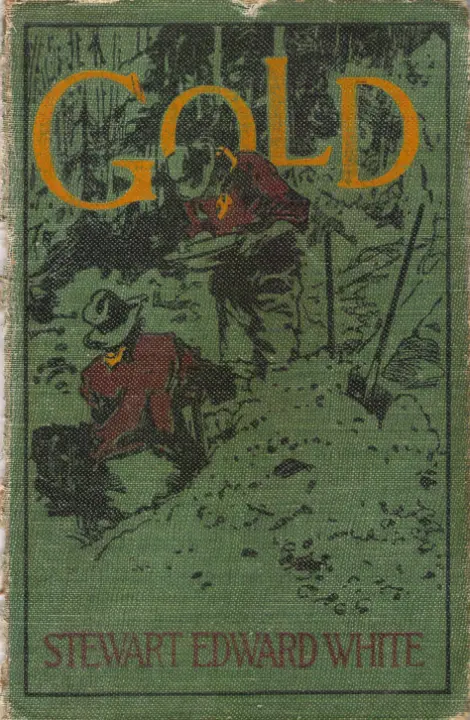
Stewart Edward White
Stewart Edward White
BEHIND THE BOOK
This eBook is for the use of anyone anywhere in the United States and most other parts of the world at no cost and with almost no restrictions whatsoever. You may copy it, give it away or re-use it under the terms of the Project Gutenberg License included with this eBook or online at www.gutenberg.org. If you are not located in the United States, you will have to check the laws of the country where you are located before using this eBook. Read the source licence.
The original source file, including credits and licence, is retained by this library. Request an original-format copy at no charge. Please include the book title and Project Gutenberg identifier #1099.
KEEP YOUR CURIOSITY GOING
Coulson Kernahan

Maurice Baring
Frances Wright
Cécile Tormay

Frederic Jesup Stimson

W. H. P. (William Henry Pope) Jarvis