THE CLASSIC COLLECTION✦The WesternersCLASSIC FREE BOOKS
The Westerners
Stewart Edward White
THE CLASSIC COLLECTION · 1908
"The Riverman" by Stewart Edward White is a novel written during the late 19th century. The story is set in 1872 on a river bend near a dam, focusing on the lives of rivermen who drive logs downstream, emphasizing their rugged lifestyle and camaraderie. The narrative explores the challenges they face, including conflicts with the dam owner, Simeon Reed, as they strive to manage the river's flow and navigate obstacles that threaten their livelihood. The opening of "The Riverman" paints a vivid picture of a bustling camp of rivermen preparing for their daily work on the river. A lively crew of men, diverse in age and character, gathers around fires, exchanging banter as they deal with an unexpected wind that hampers their progress. The central character, Jack Orde, emerges as a capable and humorous leader, attempting to rally his crew to address the issues posed by the dam's sluice-gate. The tension escalates as conflicts arise with Reed, who is staunchly protective of his property. Through detailed descriptions of the camp dynamics and the men's interactions, the narrative sets the stage for a gripping tale of resilience against nature and authority in the rough-and-tumble world of river driving.
Introduction adapted from the source catalogue; source summaries may be automatically generated.
Free to read · English · 103,779 words · No account needed
MAKE TIME FOR A GOOD BOOK
On by default. Untick to stop anonymous reading totals. Each page counts after 10 seconds in view. How this works.
Anonymous counting is on unless you have switched it off.
In the meantime Newmark had closed his desk, picked his hat from the nail, and marched precisely down the street to Heinzman's office. He found the little German in. Newmark demanded a private interview, and without preliminary plunged into the business that had brought him. He had long since taken Heinzman's measure, as, indeed, he had taken the measure of every other man with whom he did or was likely to do business.
“Heinzman,” said he abruptly, “my partner wants to raise seventy-five thousand dollars for his personal use. I have agreed to get him that money from the firm.”
Heinzman sat immovable, his round eyes blinking behind his big
spectacles.
“Proceed,” said he shrewdly.
“As security in case he cannot pay the notes the firm will have to give, he has signed an agreement to turn over to me his undivided one-half interest in our enterprises.”
“Vell? You vant to borrow dot money of me?” asked Heinzman. “I could not
raise it.”
“I know that perfectly well,” replied Newmark coolly. “You are going to have difficulty meeting your July notes, as it is.”
Heinzman hardly seemed to breathe, but a flicker of red blazed in his
eye.
“Proceed,” he repeated non-committally, after a moment. “I intend,” went on Newmark, “to furnish this money myself. It must, however, seem to be loaned by another. I want you to lend this money on mortgage.”
“What for?” asked Heinzman.
“For a one tenth of Orde's share in case he does not meet those notes.”
“But he vill meet the notes,” objected Heinzman. “You are a prosperous concern. I know somethings of YOUR business, also.”
“He thinks he will,” rejoined Newmark grimly. “I will merely point out to you that his entire income is from the firm, and that from this income he must save twenty-odd thousand a year.
“If the firm has hard luck--” said Heinzman.
“Exactly,” finished Newmark.
“Vy you come to me?” demanded Heinzman at length.
“Well, I'm offering you a chance to get even with Orde. I don't imagine
you love him?”
“Vat's de matter mit my gettin' efen with you, too?” cried Heinzman. “Ain't you beat me out at Lansing?”
Newmark smiled coldly under his clipped moustache.
“I'm offering you the chance of making anywhere from thirty to fifty
thousand dollars.”
“Perhaps. And suppose this liddle scheme don't work out?”
“And,” pursued Newmark calmly, “I'll carry you over in your present obligations.” He suddenly hit the arm of his chair with his clenched fist. “Heinzman, if you don't make those July payments, what's to become of you? Where's your timber and your mills and your new house--and that pretty daughter of yours?”
Heinzman winced visibly.
Your reading position is saved on this browser. Take it to another device with a library code. Reading pages adapt to text, rather than matching a printed edition.
Stewart Edward White
Stewart Edward White
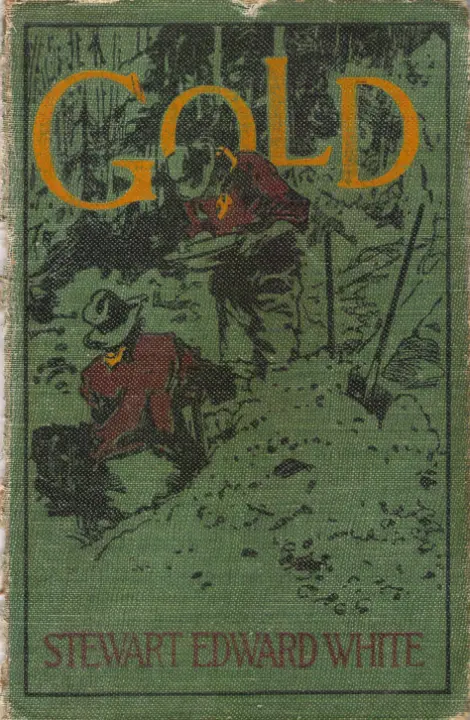
Stewart Edward White
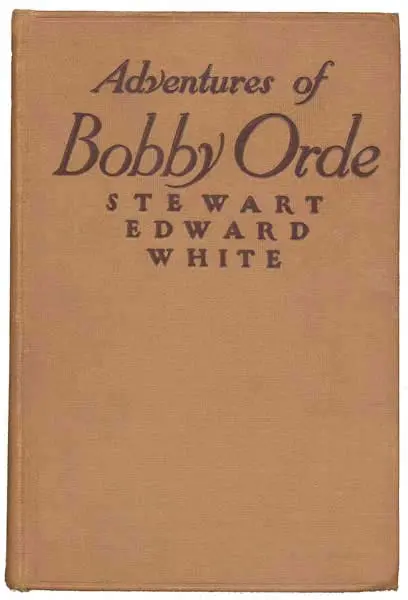
Stewart Edward White
BEHIND THE BOOK
This eBook is for the use of anyone anywhere in the United States and most other parts of the world at no cost and with almost no restrictions whatsoever. You may copy it, give it away or re-use it under the terms of the Project Gutenberg License included with this eBook or online at www.gutenberg.org. If you are not located in the United States, you will have to check the laws of the country where you are located before using this eBook. Read the source licence.
The original source file, including credits and licence, is retained by this library. Request an original-format copy at no charge. Please include the book title and Project Gutenberg identifier #1099.
KEEP YOUR CURIOSITY GOING
Coulson Kernahan

Maurice Baring
Frances Wright
Cécile Tormay

Frederic Jesup Stimson

W. H. P. (William Henry Pope) Jarvis