THE CLASSIC COLLECTION✦The WesternersCLASSIC FREE BOOKS
The Westerners
Stewart Edward White
THE CLASSIC COLLECTION · 1908
"The Riverman" by Stewart Edward White is a novel written during the late 19th century. The story is set in 1872 on a river bend near a dam, focusing on the lives of rivermen who drive logs downstream, emphasizing their rugged lifestyle and camaraderie. The narrative explores the challenges they face, including conflicts with the dam owner, Simeon Reed, as they strive to manage the river's flow and navigate obstacles that threaten their livelihood. The opening of "The Riverman" paints a vivid picture of a bustling camp of rivermen preparing for their daily work on the river. A lively crew of men, diverse in age and character, gathers around fires, exchanging banter as they deal with an unexpected wind that hampers their progress. The central character, Jack Orde, emerges as a capable and humorous leader, attempting to rally his crew to address the issues posed by the dam's sluice-gate. The tension escalates as conflicts arise with Reed, who is staunchly protective of his property. Through detailed descriptions of the camp dynamics and the men's interactions, the narrative sets the stage for a gripping tale of resilience against nature and authority in the rough-and-tumble world of river driving.
Introduction adapted from the source catalogue; source summaries may be automatically generated.
Free to read · English · 103,779 words · No account needed
MAKE TIME FOR A GOOD BOOK
On by default. Untick to stop anonymous reading totals. Each page counts after 10 seconds in view. How this works.
Anonymous counting is on unless you have switched it off.
“I see,” said Newmark, after a pause. “Then you think there's more future to that sort of thing than the sort of thing the rest of your friends go in for--law, and wholesale groceries, and banking and the rest of it?”
“There is for me,” replied Orde simply.
“Yet you're merely river-driving on a salary at thirty.”
Orde flushed slowly, and shifted his position.
“Exactly so--Mr. District Attorney,” he said drily.
Newmark started from his absorption in his questioning and shifted his
unlighted cigar.
“Does sound like it,” he admitted; “but I'm not asking all this out of idle curiosity. I've got a scheme in my head that I think may work out big for us both.”
“Well,” assented Orde reservedly, “in that case--I'm foreman on this drive because my outfit went kerplunk two years ago, and I'm making a fresh go at it.”
“Failed?” inquired Newmark.
“Partner skedaddled,” replied Orde. “Now, if you're satisfied with my family history, suppose you tell me what the devil you're driving at.”
He was plainly restive under the cross-examination to which he had been
subjected.
“Look here,” said Newmark, abruptly changing the subject, “you know that rapids up river flanked by shallows, where the logs are always going aground?”
“I do,” replied Orde, still grim.
“Well, why wouldn't it help to put a string of piers down both sides, with booms between them to hold the logs in the deeper water?”
“It would,” said Orde.
“Why isn't it done, then?”
“Who would do it?” countered Orde, leaning back more easily in the interest of this new discussion. “If Daly did it, for instance, then all the rest of the drivers would get the advantage of it for nothing.”
“Get them to pay their share.”
Orde grinned. “I'd like to see you get any three men to agree to
anything on this river.”
“And a sort of dam would help at that Spruce Rapids?”
“Sure! If you improved the river for driving, she'd be easier to drive. That goes without saying.”
“How many firms drive logs on this stream?”
“Ten,” replied Orde, without hesitation.
“How many men do they employ?”
“Driving?” asked Orde.
“Driving.”
“About five hundred; a few more or less.”
“Now suppose,” Newmark leaned forward impressively, “suppose a firm should be organised to drive ALL the logs on the river. Suppose it improved the river with necessary piers, dams, and all the rest of it, so that the driving would be easier. Couldn't it drive with less than five hundred men, and couldn't it save money on the cost of driving?”
“It might,” agreed Orde.
Your reading position is saved on this browser. Take it to another device with a library code. Reading pages adapt to text, rather than matching a printed edition.
Stewart Edward White
Stewart Edward White
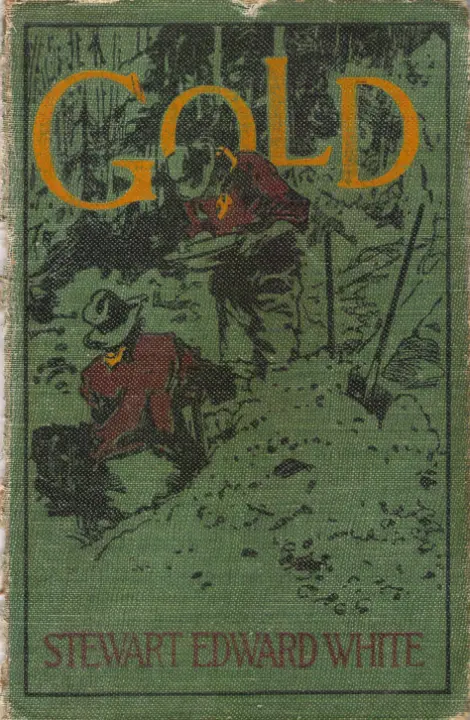
Stewart Edward White
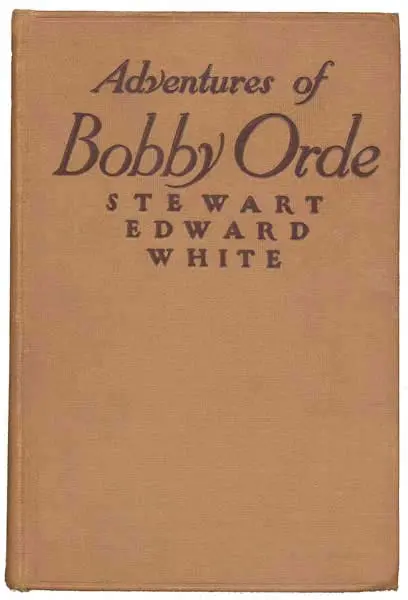
Stewart Edward White
BEHIND THE BOOK
This eBook is for the use of anyone anywhere in the United States and most other parts of the world at no cost and with almost no restrictions whatsoever. You may copy it, give it away or re-use it under the terms of the Project Gutenberg License included with this eBook or online at www.gutenberg.org. If you are not located in the United States, you will have to check the laws of the country where you are located before using this eBook. Read the source licence.
The original source file, including credits and licence, is retained by this library. Request an original-format copy at no charge. Please include the book title and Project Gutenberg identifier #1099.
KEEP YOUR CURIOSITY GOING
Coulson Kernahan

Maurice Baring
Frances Wright
Cécile Tormay

Frederic Jesup Stimson

W. H. P. (William Henry Pope) Jarvis