THE CLASSIC COLLECTION✦ToleranceCLASSIC FREE BOOKS
Tolerance
Hendrik Willem Van Loon
THE CLASSIC COLLECTION · 1915
"The Rise of the Dutch Kingdom, 1795-1813" by Hendrik Willem van Loon is a historical account written in the early 20th century. The work explores the emergence of the modern Kingdom of the Netherlands, highlighting its tumultuous transformation during the late 18th and early 19th centuries. The narrative likely delves into significant events like the fall of the old Republic, the impact of the French Revolution, and the eventual establishment of the Dutch monarchy. At the start of the book, the author sets the stage for the upheaval facing the Netherlands in 1795 amidst the backdrop of the French Revolution. The last Stadholder, William V, grapples with the decline of his authority as popular movements against his regime gain momentum, and the French armies advance into Dutch territory. In the prologue, van Loon introduces key players and political factions, showcasing the failures and eventual flight of the Stadholder. The ensuing chaos leads to the establishment of a provisional government, which is charged with constructing a new order amidst the complexity of revolutionary zeal and its accompanying challenges. This opening portion presents a rich tableau of historical context, setting the stage for a broader exploration of the Dutch national identity reborn amidst revolution and foreign influence.
Introduction adapted from the source catalogue; source summaries may be automatically generated.
Free to read · English · 49,830 words · No account needed
MAKE TIME FOR A GOOD BOOK
On by default. Untick to stop anonymous reading totals. Each page counts after 10 seconds in view. How this works.
Anonymous counting is on unless you have switched it off.
Citizen Eykenbroek was in the gin business--an excellent and profitable business which needs close watching, otherwise your workmen will drink the result of their handiwork and all the profits will be lost. Citizen Eykenbroek had not watched. Citizen Eykenbroek had failed. Wherefore, since he had a wife and children, it behooved him to look for another means of livelihood. Citizen Eykenbroek became a speculator in army provisions. Again a profitable business, but not a success as a course in applied ethics. However that be, or perhaps because of all that, Citizen Eykenbroek was the appointed man to act as intermediary between the grumbling Dutch Patriots and the French radicals who held sway in Paris. Armed with credentials given him by the Jacobin Club of Amsterdam, this honourable citizen, with two fellow-conspirators, hastened to Paris.
Since as a speculator in army requisitions he often made the trip to the French capital, his disappearance caused no surprise; and although the Batavian minister in Paris heard of one shabby individual's arrival, he saw no occasion to pay any attention to it. Citizen Eykenbroek, who had not expired when he had told his first lie, did not mind telling a few fibs, and at once he was very successful with the French radicals. His first offer of four hundred thousand good Dutch guilders as a reward for a suitable revolution which would bring all power into the hands of the unionists he gradually increased until it reached the sum of eight hundred thousand. Since no one in Holland had given him the right to offer any monetary reward for the French services, he might easily have made it a few millions. Having paved the way by creating such visions of wealth, Eykenbroek set to work. The great grief of the Dutch Jacobins was the French minister in The Hague. This dignitary, Noel by name, was not in the least a radical. He understood that in this complacent republic little could be gained by decapitational measures, but very much by moderation, the encouragement of trade, the promotion of commerce; and like his friend Cochon, a year or so before, he strongly advised against killing the goose that might again lay so many golden eggs. The Batavian Republic as a thriving commercial commonwealth was a much better asset to the French Republic than the same republic playing a game of revolution, which was very distasteful to the richer classes of the nation. And upon several occasions Noel had firmly reminded his patriotic Dutch friends that, come what may, he would not stand for any works of violence. "Remove Noel," therefore, was one of the most important instructions which Citizen Eykenbroek had taken to Paris upon his memorable voyage. And behold! the promise of half a million in cash at once did its work. The French Directorate suddenly remembered that Citizen Noel had married a Dutch lady. It was not good for France to be represented by a minister who was attached to the republic through such tender bonds of personal affection. Therefore, exit Citizen Noel and his Dutch wife. His successor was a former French minister of foreign affairs. This worthy gentleman, Delacroix by name, cared little for Holland or for its imbecile politics. He regarded his post as a mere stepping-stone to something better (a place in the Directorate perhaps), and fully decided not to interfere in Dutch politics so long as the republic paid its debts and strictly obeyed the orders which were issued from Paris. And since he did not intend to spend too many months in the abominable climate of the low countries, he left Madame Delacroix at home and merely brought his secretary, an individual by the name of Ducagne, who as a spy, a tutor, a newspaper correspondent, and army contractor knew the republic from one end to the other and could help the minister pull the necessary strings. The couple appeared in The Hague during the first part of the year 1797, and their arrival meant that the coast was clear and that the Patriots could go ahead and perform the somersault which was to land the republic upon a pair of unionistic feet. It is an ill defeat which brings nobody any good. The destruction of the Dutch fleet at Camperdown had brought a sudden succour to the unionists. "They had predicted this right along." That most delightful remark, profoundest consolation of all commonplace souls, became their war cry.
Your reading position is saved on this browser. Take it to another device with a library code. Reading pages adapt to text, rather than matching a printed edition.
Hendrik Willem Van Loon
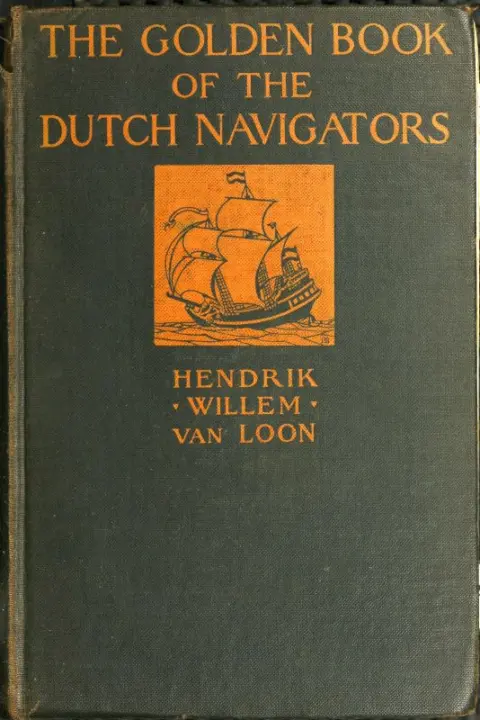
Hendrik Willem Van Loon
Hendrik Willem Van Loon
Hendrik Willem Van Loon
BEHIND THE BOOK
This eBook is for the use of anyone anywhere in the United States and most other parts of the world at no cost and with almost no restrictions whatsoever. You may copy it, give it away or re-use it under the terms of the Project Gutenberg License included with this eBook or online at www.gutenberg.org. If you are not located in the United States, you will have to check the laws of the country where you are located before using this eBook. Read the source licence.
The original source file, including credits and licence, is retained by this library. Request an original-format copy at no charge. Please include the book title and Project Gutenberg identifier #38595.
KEEP YOUR CURIOSITY GOING
Cécile Tormay

Moritz Busch
John L. Ransom
Frances Wright
Cécile Tormay

Mabel Potter Daggett