THE CLASSIC COLLECTION✦ToleranceCLASSIC FREE BOOKS
Tolerance
Hendrik Willem Van Loon
THE CLASSIC COLLECTION · 1915
"The Rise of the Dutch Kingdom, 1795-1813" by Hendrik Willem van Loon is a historical account written in the early 20th century. The work explores the emergence of the modern Kingdom of the Netherlands, highlighting its tumultuous transformation during the late 18th and early 19th centuries. The narrative likely delves into significant events like the fall of the old Republic, the impact of the French Revolution, and the eventual establishment of the Dutch monarchy. At the start of the book, the author sets the stage for the upheaval facing the Netherlands in 1795 amidst the backdrop of the French Revolution. The last Stadholder, William V, grapples with the decline of his authority as popular movements against his regime gain momentum, and the French armies advance into Dutch territory. In the prologue, van Loon introduces key players and political factions, showcasing the failures and eventual flight of the Stadholder. The ensuing chaos leads to the establishment of a provisional government, which is charged with constructing a new order amidst the complexity of revolutionary zeal and its accompanying challenges. This opening portion presents a rich tableau of historical context, setting the stage for a broader exploration of the Dutch national identity reborn amidst revolution and foreign influence.
Introduction adapted from the source catalogue; source summaries may be automatically generated.
Free to read · English · 49,830 words · No account needed
MAKE TIME FOR A GOOD BOOK
On by default. Untick to stop anonymous reading totals. Each page counts after 10 seconds in view. How this works.
Anonymous counting is on unless you have switched it off.
There was no glory abroad. Naval battles have often been described. Sometimes they are inspiring through the suggestion of superior courage or ability. Frequently they are very dull. Then they belong in a handbook on naval tactics, but not in a popular history. We shall try to make our readers happy by practising the utmost brevity. Paulus was dead, and the new leaders of the navy department were inefficient. They did their best, but private citizens are not changed into successful managers of a navy over night. On paper (patient paper of the eighteenth century, which had contained so many imaginary fleets) there were over sixty Dutch men-of-war. Salaries were officially paid to 17,000 sailors and officers. Of those not more than a score knew their business. The old higher officers were all gone. They were sailing under a Russian flag. They were fighting under the British cross or eking out a penurious half-pay life in little Brunswick, near their old commander-in-chief. As for the sailors, they had had no way of escaping their fate. Poverty had forced them to stay where they were or starve, and they had been obliged to take the new oath of allegiance to support their families. Their quarterdeck now was beautiful with the new legend of Fraternity, Equality, and Liberty painted in big golden letters. Their masts still flew the old glorious flag of red, white, and blue, but now adorned with a gaudy picture of the goddess in whose name war was being waged upon the greater part of the civilized world. At times the men could not stand it. Many a morning it was discovered that the flag had been ruined over night. A hasty knife had cut the divinity out of her corner and had thrown her overboard. But cloth was cheap. A new flag was soon provided, and the goddess of liberty was sewn in once more. To find the culprit was impossible, for upon such occasions the whole fleet was likely to come forward and confess itself guilty. So there the fleet lay, with mutiny averted by the near presence of a French army, and forced to inactivity by the blockade of the British fleet. The admiral of the Dutch squadron was the same Brigadier General de Winter who the year before had tried in vain to reach the ocean. If you look him up in the French biographical dictionary you will find him as Count of Huissen and Marshal of the Empire. In plain Dutch, he was just Jan Willem de Winter and an ardent believer in the most extreme revolutionary doctrines. He had had a little experience at sea, but he had never commanded a ship. Personally brave beyond suspicion, but not in the least prepared for the work which he had been called to do, he had again assumed the command with the cheerfulness with which revolutionary people will undertake any sort of an impossible task. His instructions were secret, or as secret as anything could be which during a number of weeks had been carefully threshed out in all the leading patriotic clubs. The whole plan of this expedition of which Admiral de Winter was to be the head was of that fantastic nature so dearly loved by those who are going to change the world over night. England, of course, the stronghold of all anti-revolutionary forces, was to be the enemy. And, by the way, what a provoking enemy this island proved to be! The churches of the Kremlin could be made into stables for the French cavalry; the domes of Portugal might be turned into pigstys; the palaces of Venice could be used as powder magazines; the storehouses of Holland might be changed into hospitals for French invalids; where French infantry could march or French cavalry could trot, there the influence of France and the ideas of the French could penetrate; but England, with many miles of broad sea for its protection, was the one country which was impregnable. French engineers could do much, but they could not build a bridge across the Channel. French artillery could at times perform wonders of marksmanship, but its guns could not carry across the North Sea. French cavalry had captured a frozen Dutch fleet, but the sea around England never froze. And French infantry, which held the record for long distance marches, could not swim sixty miles of salt water. The fleet, and the fleet alone, could here do the work. At first there had been talk of a concerted action by the French, the Spanish, and the Batavian fleets. But the Patriots would not hear of this plan. Single-handed the Dutch fleet must show that the spirit of de Ruyter and Tromp continued to animate the breasts of all good Batavianites. On the 6th of October, 1797, the fleet sailed proudly away from the roads of Texel. The Brutus and the Equality, the Liberty, the Batavian, the Mars, the Jupiter, the Ajax, and the Vigilant, twenty-six ships in all, ranging from eighteen to seventy-four cannon, set sail for the English coast. For five days this mythological squadron was kept near the Dutch coast by a western wind. Then it met the British fleet under Admiral Adam Duncan. The British fleet was of equal strength--sixteen ships of the line and ten frigates. But whereas the Batavian fleet was commanded by new officers and manned by disgruntled sailors, the British had the advantage of superior guns, superior marksmanship, better leadership, and a thorough belief in the cause which their country upheld. Off the little village of Camperdown, on the coast of the Department of North Holland, the battle took place. It lasted four hours. After the first fifty minutes the Dutch line had been broken. After the second hour the victory of the British was certain. Two hours more, for the glory of their reputation, the Dutch commanders continued to fight. Vice-Admiral Bloys van Treslong, descendant of the man who conducted the victorious water-beggars to the relief of Leyden in 1574, lost his arm, but continued to defend the Brutus until his ship could only be kept afloat by pumping. Captain Hingst of the Defender was killed on the bridge. The Equality suffered sixty killed and seventy wounded out of a total of one hundred and ninety men. The Hercules, set on fire by grapeshot, continued to fight until her commander had been mortally wounded and the flames had reached the powder-house, forcing the men to throw their ammunition overboard. The Medemblik, rammed by one of her sister ships, lost fifty men killed and sixty wounded, lost its mast, and was generally shot to pieces before the fight had lasted two hours. And so on through the whole list. Personal bravery could avail little against bad equipment and an indifferent spirit. Ten vessels fell into British hands. One ship, with all its men, perished during the storm which followed the battle. Another one, on the way home, was thrown upon the Dutch coast and was pounded to timber by the waves. All in all, 727 men had been killed and 674 wounded. A few ships, after suffering terribly, reached Dutch harbours.
Your reading position is saved on this browser. Take it to another device with a library code. Reading pages adapt to text, rather than matching a printed edition.
Hendrik Willem Van Loon
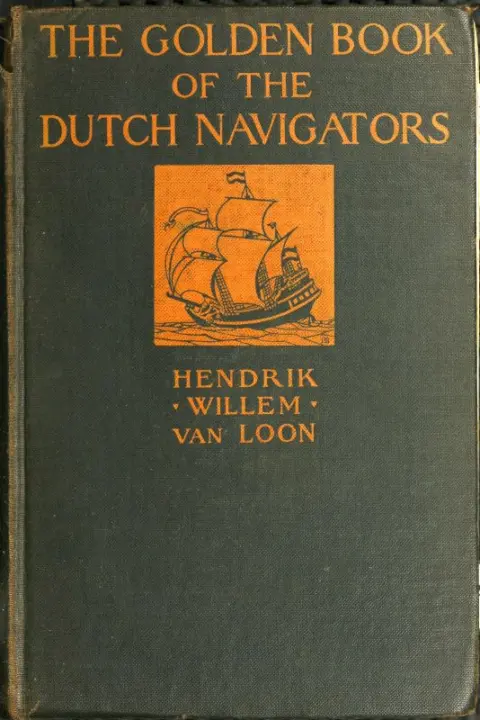
Hendrik Willem Van Loon
Hendrik Willem Van Loon
Hendrik Willem Van Loon
BEHIND THE BOOK
This eBook is for the use of anyone anywhere in the United States and most other parts of the world at no cost and with almost no restrictions whatsoever. You may copy it, give it away or re-use it under the terms of the Project Gutenberg License included with this eBook or online at www.gutenberg.org. If you are not located in the United States, you will have to check the laws of the country where you are located before using this eBook. Read the source licence.
The original source file, including credits and licence, is retained by this library. Request an original-format copy at no charge. Please include the book title and Project Gutenberg identifier #38595.
KEEP YOUR CURIOSITY GOING
Cécile Tormay

Moritz Busch
John L. Ransom
Frances Wright
Cécile Tormay

Mabel Potter Daggett