THE CLASSIC COLLECTION✦A dead man’s diaryCLASSIC FREE BOOKS
A dead man’s diary
Coulson Kernahan
THE CLASSIC COLLECTION · 1909
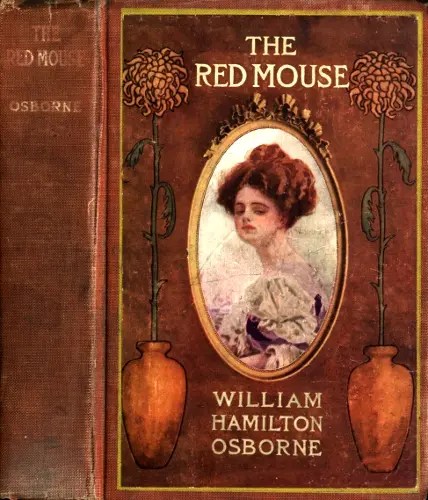
"The Red Mouse: A Mystery Romance" by William Hamilton Osborne is a fictional work written in the early 20th century. The novel revolves around Miriam Challoner, a woman grappling with the shame and heartbreak caused by her husband, Lawrence Challoner, whose reckless behavior and gambling have led him into an irresponsible and disgraceful life. The story examines themes of marital discord, societal judgment, and the depths of personal despair. At the start of the tale, we are introduced to Miriam Challoner, who is painfully aware of her husband's undoing and the whispers circulating in their social circle about his moral decline. A pivotal moment occurs when Miriam learns of her husband's reckless return home after a night of debauchery, which she witnesses through interactions with others and their judgmental comments. This sets the stage for an emotional confrontation between them, revealing the increasing tension in their marriage as Miriam struggles to maintain her dignity while coming to terms with the reality of her husband's actions. The beginning dives deep into the complexity of relationships, the impact of societal expectations, and the personal turmoil experienced by those entangled in scandal.
Introduction adapted from the source catalogue; source summaries may be automatically generated.
Free to read · English · 68,534 words · No account needed
MAKE TIME FOR A GOOD BOOK
On by default. Untick to stop anonymous reading totals. Each page counts after 10 seconds in view. How this works.
Anonymous counting is on unless you have switched it off.
On the morning after Challoner's arrest the prosecutor of the pleas was sitting at his desk in his private office in the court-house when Mixley and McGrath entered.
"You've done as I instructed? You've got Challoner outside?" the
prosecutor asked.
The men replied in the affirmative.
"Bring him in," commanded Murgatroyd.
In a few minutes they returned with the prisoner. Challoner looked better than he had the night before. In a thoroughly impersonal way, curtly but not unpleasantly, Murgatroyd addressed him.
"Good-morning! How do you feel?"
The prisoner, still half man, growled:--
"Better. I got some sleep, but I'm still tired as thunder."
"I sent for you this morning," went on the prosecutor, "because of what you said last night. I am not sure that you meant all you said--indeed whether you remember it?"
This interrogation evidently struck Challoner as amusingly superfluous, for he laughed aloud; but the laughter had a note of aching bravado.
"Of course, I remember it," he said presently, and pointing with a steady forefinger to a weapon on the prosecutor's desk, "I shot him with that gun there."
Murgatroyd could not restrain a movement of surprise at Challoner's Sang Froid; neither could those trained witnesses, Mixley and McGrath, leaning well forward lest they should miss a word.
"Most decidedly, then," continued the prosecutor, "you do not recall that I told you that anything you might say would----"
"I heard all you said," the prisoner broke in, shrugging his shoulders, "but what's the use--it had to come--I knew it. I was getting tired of hiding in out-of-the-way places, and never having a wink of sleep. Besides, I knew that Pemmican--Cradlebaugh's man--saw the whole affair. There was no sense in trying to escape."
Murgatroyd's face adequately expressed his approval of the prisoner's point of view. His voice, however, was distinctly non-committal in tone when he observed easily:--
"Pemmican saw it all, then?"
"Certainly he did," Challoner volunteered.
There was a short pause, in which the prosecutor turned over some papers lying on his desk; when he spoke again he did so without looking up from the documents he was scanning.
"I haven't examined Pemmican--my men have, though," he said. "I've got him under lock and key; he's in the house of detention; and he'll have to stay there until----"
Challoner moistened his lips.
"Until my trial, I suppose," he interposed. "Poor devil! That's hard
lines!"
The prosecutor ignored the comment, but he reminded the prisoner again that he must be careful not to say anything that could be used against him, concluding with:--
"You came here from the jail quite willingly this morning?"
Your reading position is saved on this browser. Take it to another device with a library code. Reading pages adapt to text, rather than matching a printed edition.
BEHIND THE BOOK
This eBook is for the use of anyone anywhere in the United States and most other parts of the world at no cost and with almost no restrictions whatsoever. You may copy it, give it away or re-use it under the terms of the Project Gutenberg License included with this eBook or online at www.gutenberg.org. If you are not located in the United States, you will have to check the laws of the country where you are located before using this eBook. Read the source licence.
The original source file, including credits and licence, is retained by this library. Request an original-format copy at no charge. Please include the book title and Project Gutenberg identifier #36247.
KEEP YOUR CURIOSITY GOING
Coulson Kernahan

Maurice Baring
Frances Wright
Cécile Tormay

Frederic Jesup Stimson

W. H. P. (William Henry Pope) Jarvis