THE CLASSIC COLLECTION✦A dead man’s diaryCLASSIC FREE BOOKS
A dead man’s diary
Coulson Kernahan
THE CLASSIC COLLECTION · 1909
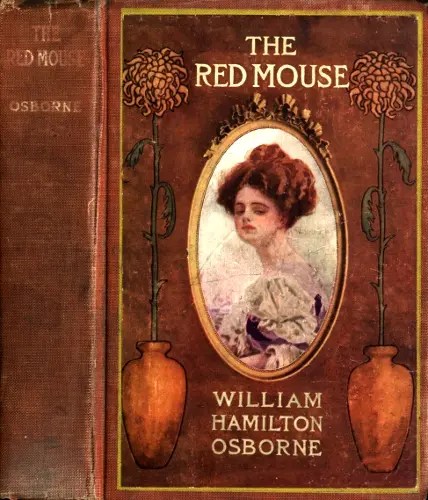
"The Red Mouse: A Mystery Romance" by William Hamilton Osborne is a fictional work written in the early 20th century. The novel revolves around Miriam Challoner, a woman grappling with the shame and heartbreak caused by her husband, Lawrence Challoner, whose reckless behavior and gambling have led him into an irresponsible and disgraceful life. The story examines themes of marital discord, societal judgment, and the depths of personal despair. At the start of the tale, we are introduced to Miriam Challoner, who is painfully aware of her husband's undoing and the whispers circulating in their social circle about his moral decline. A pivotal moment occurs when Miriam learns of her husband's reckless return home after a night of debauchery, which she witnesses through interactions with others and their judgmental comments. This sets the stage for an emotional confrontation between them, revealing the increasing tension in their marriage as Miriam struggles to maintain her dignity while coming to terms with the reality of her husband's actions. The beginning dives deep into the complexity of relationships, the impact of societal expectations, and the personal turmoil experienced by those entangled in scandal.
Introduction adapted from the source catalogue; source summaries may be automatically generated.
Free to read · English · 68,534 words · No account needed
MAKE TIME FOR A GOOD BOOK
On by default. Untick to stop anonymous reading totals. Each page counts after 10 seconds in view. How this works.
Anonymous counting is on unless you have switched it off.
In the prosecutor's office, to which they had access at all hours of the day, were Mixley and McGrath, the latter occupying a strategic position, in that he held in his hand the latest edition of the Morning Mail.
"How's the joint ballot?" called Mixley from across the room.
"Oh, it's hot, I tell you--both houses up all night!" returned the other from over his paper. "The hands of the clock moved back about ten times, and still going it. Still in session."
Again Mixley called:--
"Let's see the extra!"
McGrath tossed it over to him. Across its face, in huge letters, appeared the single significant word:
"Oh, but it's Murgatroyd that gives them the fight!" exclaimed Mixley,
with enthusiasm.
McGrath smiled.
"Sure," he answered. "He's holdin' 'em, but that's all he's doin'. But what of that? He's got nothin' to hold 'em on. Why, everybody knows that he hasn't any money. It's my opinion," declared McGrath, "that the job goes to Thorne!"
Mixley read the first page of the Morning Mail with care. After a
while he read:--
"I guess you're right. Thorne will be the next Senator, all right. Hang
the luck!"
"How can it be helped?" reasoned McGrath. "Look at them brewers putting up maybe a quarter of a million to help Thorne out! I say, what do you think the votes of the 'wise' assemblymen were quoted at--on the market last night?"
"I don't know. I wish I was an assemblyman at that," sighed Mixley.
"Twenty-five thousand dollars apiece, and a rising market growing stronger every minute," answered McGrath. "And them brewers'll pay it, too. One fellow wanted fifty thousand--an' he'll get it--see if he don't."
"I wish I was an assemblyman," repeated Mixley wistfully.
"If you were, and there was Thorne and twenty-five thousand on one side for you, and Murgatroyd without a dollar on the other, who would you vote for? Come, now, answer!"
Mixley waved his hand.
"You'd vote for Murgatroyd," yelled McGrath, "you know you would--you
couldn't help yourself."
Mixley sighed again.
"But I ain't an assemblyman," he answered; and in the next breath he added: "There's somebody at that there door."
McGrath crossed to the door and opened it; and Challoner, Mrs. Challoner and Shirley Bloodgood entered.
McGrath, who remembered them well, and who knew Challoner especially well since the hospital investigation, bowed low, and announced that the prosecutor was out.
Shirley stepped forward and said determinedly:--
"But we must see him."
"He's expected any moment," said Mixley from across the room.
"We'll wait," chorused the three visitors.
McGrath bowed again and went back to his seat near the window.
Your reading position is saved on this browser. Take it to another device with a library code. Reading pages adapt to text, rather than matching a printed edition.
BEHIND THE BOOK
This eBook is for the use of anyone anywhere in the United States and most other parts of the world at no cost and with almost no restrictions whatsoever. You may copy it, give it away or re-use it under the terms of the Project Gutenberg License included with this eBook or online at www.gutenberg.org. If you are not located in the United States, you will have to check the laws of the country where you are located before using this eBook. Read the source licence.
The original source file, including credits and licence, is retained by this library. Request an original-format copy at no charge. Please include the book title and Project Gutenberg identifier #36247.
KEEP YOUR CURIOSITY GOING
Coulson Kernahan

Maurice Baring
Frances Wright
Cécile Tormay

Frederic Jesup Stimson

W. H. P. (William Henry Pope) Jarvis