THE CLASSIC COLLECTION✦A dead man’s diaryCLASSIC FREE BOOKS
A dead man’s diary
Coulson Kernahan
THE CLASSIC COLLECTION · 1909
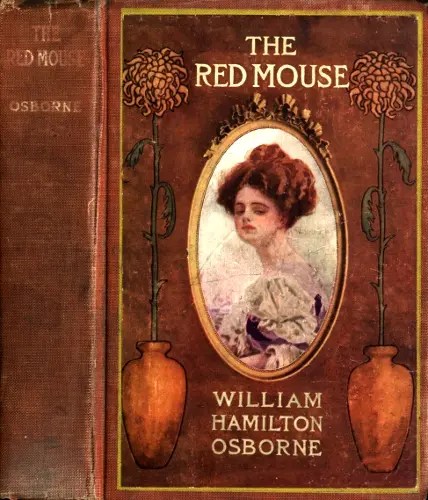
"The Red Mouse: A Mystery Romance" by William Hamilton Osborne is a fictional work written in the early 20th century. The novel revolves around Miriam Challoner, a woman grappling with the shame and heartbreak caused by her husband, Lawrence Challoner, whose reckless behavior and gambling have led him into an irresponsible and disgraceful life. The story examines themes of marital discord, societal judgment, and the depths of personal despair. At the start of the tale, we are introduced to Miriam Challoner, who is painfully aware of her husband's undoing and the whispers circulating in their social circle about his moral decline. A pivotal moment occurs when Miriam learns of her husband's reckless return home after a night of debauchery, which she witnesses through interactions with others and their judgmental comments. This sets the stage for an emotional confrontation between them, revealing the increasing tension in their marriage as Miriam struggles to maintain her dignity while coming to terms with the reality of her husband's actions. The beginning dives deep into the complexity of relationships, the impact of societal expectations, and the personal turmoil experienced by those entangled in scandal.
Introduction adapted from the source catalogue; source summaries may be automatically generated.
Free to read · English · 68,534 words · No account needed
MAKE TIME FOR A GOOD BOOK
On by default. Untick to stop anonymous reading totals. Each page counts after 10 seconds in view. How this works.
Anonymous counting is on unless you have switched it off.
"Hargraves," he began with sinister familiarity, "you have ten thousand dollars in your pocket, I believe?"
Colonel Hargraves repressed a movement of impatience with difficulty. He nodded, and unconsciously took the attitude of the counterfeit presentment in the apartment of Letty Love.
"Ten thousand dollars," repeated Challoner with provoking coolness, as he likewise planted both elbows on the table, and added somewhat ominously: "And I'm broke!"
There was a pause in which the men looked straight into each other's eyes; then Challoner rose, walked over to the table, half filled two glasses, and placing them on the table, leaned far over it, declaring:--
"And yet, Colonel Hargraves, you and I are going to sit in a ten
thousand dollar game to-night!"
Challoner drained his glass; his example, however, was not followed by the Colonel. Instead, he put his arms akimbo, his fists resting on his hips, and tilting back his head, he said with an air of contempt:--
"Indeed! What with?"
"With your ten thousand!" It was well said. Challoner's cool,
passionless voice gave to the declaration the character of
infallibility.
"And you--" Hargraves muttered in a puzzled way.
"Not a dollar," admitted Challoner.
Colonel Hargraves rose; he threw into his glance all his knowledge of
Challoner's past.
"You must take me for a fool!" he burst out, and started for the door.
But he had gone only a few steps when he felt Challoner's clutch; turning, he felt the power of Challoner's eyes; and presently under their compelling influence he found himself once more taking his seat. He made no attempt to analyse his sensations, but he realised that Challoner had made a new impression. In all the eventualities he had foreseen, he calculated on Challoner's being a weakling, a wreck. But to his astonishment he saw within those eyes nothing but success. Challoner had become a man not to be disregarded--a man of strength.
"My proposition is a perfectly fair one," went on Challoner. "You put up
ten thousand cash----"
"And then--go on----"
Challoner lifted his arm and pointed silently in the direction of the
"Drelincourt."
Incredulity shone in the eyes of Hargraves; his scorn found vent in an
attempt at levity.
"Rather like putting up something that doesn't belong to you, eh,
Challoner?"
Challoner was not feazed; it was the answer he expected.
"It looks that way, Hargraves," and suddenly thrusting himself forward, "but I can make it uncommonly disagreeable for the other claimant. You don't know me--I'm an uncertain quantity--and women are blamed queer. If I win, I keep the ten thousand--and my chances."
"And if you don't win?" a bit breathlessly.
Your reading position is saved on this browser. Take it to another device with a library code. Reading pages adapt to text, rather than matching a printed edition.
BEHIND THE BOOK
This eBook is for the use of anyone anywhere in the United States and most other parts of the world at no cost and with almost no restrictions whatsoever. You may copy it, give it away or re-use it under the terms of the Project Gutenberg License included with this eBook or online at www.gutenberg.org. If you are not located in the United States, you will have to check the laws of the country where you are located before using this eBook. Read the source licence.
The original source file, including credits and licence, is retained by this library. Request an original-format copy at no charge. Please include the book title and Project Gutenberg identifier #36247.
KEEP YOUR CURIOSITY GOING
Coulson Kernahan

Maurice Baring
Frances Wright
Cécile Tormay

Frederic Jesup Stimson

W. H. P. (William Henry Pope) Jarvis