THE CLASSIC COLLECTION✦The Countess FannyCLASSIC FREE BOOKS
The Countess Fanny
Marjorie Bowen
THE CLASSIC COLLECTION · 1912
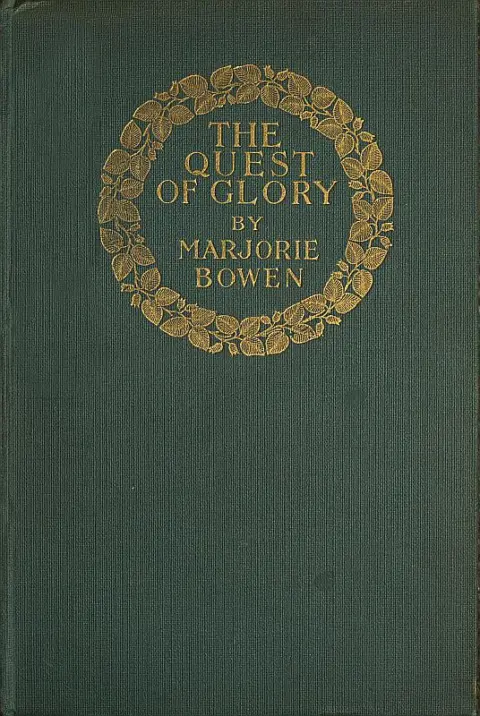
"The Quest of Glory" by Marjorie Bowen is a historical novel written in the early 20th century. Set against the backdrop of the tumultuous events of the War of the Austrian Succession in the 18th century, the story explores themes of ambition, honor, and the quest for glory through its characters. The narrative follows several French officers, particularly the passionate young lieutenant Georges d’Espagnac, as they navigate the complexities of war, aspirations, and personal relationships while stationed in Prague. The opening of "The Quest of Glory" introduces us to the bleak atmosphere of Prague during a harsh winter siege in December 1742. We meet a group of French officers, each representative of different views on honor and the meaning of glory amidst their mundane and perilous military circumstances. As they share their thoughts, the youthful idealism of Georges d'Espagnac shines through. He is fervently dedicated to the pursuit of glory for France, even as the realities of war weigh heavily on him. The story's initial chapters set the stage for the unfolding drama, emphasizing the struggles and allegiances of the characters in a setting marked by both longing for valor and the bitter hardships of war.
Introduction adapted from the source catalogue; source summaries may be automatically generated.
Free to read · English · 87,825 words · No account needed
MAKE TIME FOR A GOOD BOOK
On by default. Untick to stop anonymous reading totals. Each page counts after 10 seconds in view. How this works.
Anonymous counting is on unless you have switched it off.
“Then,” she said, in great agitation, “you must not come. Think of Mademoiselle de Séguy.”
“She would bid me go,” smiled Luc. “And we make much out of nothing--maybe it is not the plague.”
He took her hand gently from his reins and rode across to the tent.
By the time he had dismounted and fastened his horse to a little broken elm tree she was on foot also and beside him, leading her horse.
“If you were to ride into the town, could you not find some one who
would come?” she asked.
“Many,” he answered; “but why should I? This has come my way. Do you
ride on, Madame.”
“O God!” cried Carola desperately, “supposing it is the plague?”
Luc lifted the tent flap and entered. The air was heavy and foul; it was completely dark. Luc stepped cautiously; he could hear nothing.
He began to think Carola had been mistaken, and that the tent was empty, when she appeared behind him with the lantern from her saddle, lit, in her hand. The beautiful beams disclosed the sagging canvas, the tipping centre pole, a confusion of articles, clothes, cooking utensils, stools, and paper hats and crowns cast over the ground.
Carola held the lantern higher.
In one corner a child lay along a pile of garments, staring at the light with glazed eyes; her face was white and disfigured with purple stains like bruises, her lips were covered with blood. Seeing these two looking at her, she began to wail incoherently.
Both Luc and Carola recognized her by her apple-green bodice and red
and white skirts: she was the little dancer on the tight-rope at the
fête.
Luc made a step forward, but Carola caught his arm.
“It is the smallpox!” she whispered. “What are we going to do?”
Luc looked at her.
“You should not be here,” he said.
The child began to talk in some kind of patois.
“She is saying her prayers,” said Luc, who knew the dialect of the district. He shook his arm free from Carola, went to the humble bed, and took the small, cold, heavy hand of the sick child in his. “What is the matter, eh?” he asked, in a tone of great tenderness. “You are not alone now.”
“You have done a mad thing,” said Carola, in a quivering voice. “You cannot return to Aix now.”
He lifted his calm, beautiful face, round which the soft locks of
hazel hair had loosened.
“No,” he said, very gravely--“not until I know if this is the smallpox
or not.”
Your reading position is saved on this browser. Take it to another device with a library code. Reading pages adapt to text, rather than matching a printed edition.
Marjorie Bowen
Marjorie Bowen
Marjorie Bowen
Marjorie Bowen
BEHIND THE BOOK
This eBook is for the use of anyone anywhere in the United States and most other parts of the world at no cost and with almost no restrictions whatsoever. You may copy it, give it away or re-use it under the terms of the Project Gutenberg License included with this eBook or online at www.gutenberg.org. If you are not located in the United States, you will have to check the laws of the country where you are located before using this eBook. Read the source licence.
The original source file, including credits and licence, is retained by this library. Request an original-format copy at no charge. Please include the book title and Project Gutenberg identifier #48767.
KEEP YOUR CURIOSITY GOING
Cécile Tormay

Moritz Busch
Coulson Kernahan
John L. Ransom

Maurice Baring
Frances Wright