THE CLASSIC COLLECTION✦The Countess FannyCLASSIC FREE BOOKS
The Countess Fanny
Marjorie Bowen
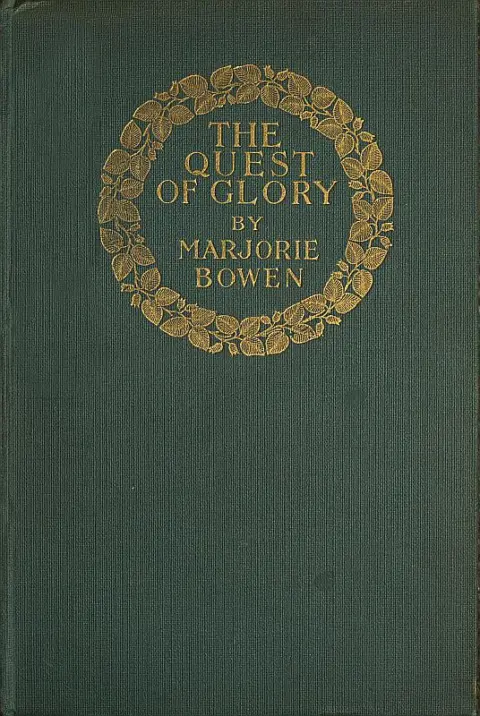
THE CLASSIC COLLECTION · 1912
"The Quest of Glory" by Marjorie Bowen is a historical novel written in the early 20th century. Set against the backdrop of the tumultuous events of the War of the Austrian Succession in the 18th century, the story explores themes of ambition, honor, and the quest for glory through its characters. The narrative follows several French officers, particularly the passionate young lieutenant Georges d’Espagnac, as they navigate the complexities of war, aspirations, and personal relationships while stationed in Prague. The opening of "The Quest of Glory" introduces us to the bleak atmosphere of Prague during a harsh winter siege in December 1742. We meet a group of French officers, each representative of different views on honor and the meaning of glory amidst their mundane and perilous military circumstances. As they share their thoughts, the youthful idealism of Georges d'Espagnac shines through. He is fervently dedicated to the pursuit of glory for France, even as the realities of war weigh heavily on him. The story's initial chapters set the stage for the unfolding drama, emphasizing the struggles and allegiances of the characters in a setting marked by both longing for valor and the bitter hardships of war.
Introduction adapted from the source catalogue; source summaries may be automatically generated.
Free to read · English · 87,825 words · No account needed
MAKE TIME FOR A GOOD BOOK
On by default. Untick to stop anonymous reading totals. Each page counts after 10 seconds in view. How this works.
Anonymous counting is on unless you have switched it off.
It was the imploring, weak wail of a child rising out of the empty dusk. They both listened, and it was repeated.
“O God!” cried Carola, with sudden passion. “I have heard that cry in
dreams!”
“Some child is lost,” said Luc.
“And in pain,” she added quickly.
He turned his horse’s head, and went back with her along the way he had come, across the worn grass of the fair ground, which was strewn with confetti, torn paper, and ragged muslin roses.
The crying continued. It sounded near, yet very feeble; it could scarcely rise above the sound of the horses’ hoofs or the jingle of the harness.
The twilight seemed to have descended very rapidly; it was now almost dark, but the clouds were breaking above a rising moon, and the last glow of daylight was mingled with a cold, unearthly radiance. Luc felt chilly even beneath his riding mantle; the memory of the march from Prague seemed to linger in the faintly bitter air.
Carola paused and looked over her shoulder at the man, who was a
little behind her.
“Stop,” she said. “You had better ride home, Monsieur.”
“What do you mean?”
“Have you not heard about the plague?”
“The plague?”
“The smallpox,” she said intensely. “They say it will be bad in Provence this winter. They wish to keep it from the towns. I was told, at my inn, that they suspected it among the players, and had ordered them away suddenly.”
“Well?” questioned Luc keenly.
Carola pointed her whip towards the corner of the field where the
solitary tent stood.
“The crying comes from there,” she said. “They have left somebody
behind.”
“Ah!” cried Luc, “some one infected--some one ill!”
“I think so--at least it is possible.”
Luc had heard of such things often enough. The smallpox was the dread and the scourge of the country; his father had earned recognition from the Court by his heroic fight with an epidemic in Aix many years ago. Luc had heard him speak of how the sick and dying had been cast out by their own kin.
“I will see if there is anyone abandoned in the tent,” he said.
Carola laid her hand on his bridle.
“No,” she cried, with energy. “Return home, Monsieur. You have others to think of--remember, reflect. You must not risk it.”
Luc smiled.
“Am I to watch you go--and then ride away?”
“Ah,” she answered, “what does it matter about me? There is a maison de Dieu at my convent; the nuns would take in the sick.”
“Madame, simply because there may be some danger, I cannot leave you.”
“You have never had the smallpox?”
“No.”
Your reading position is saved on this browser. Take it to another device with a library code. Reading pages adapt to text, rather than matching a printed edition.
Marjorie Bowen
Marjorie Bowen
Marjorie Bowen
Marjorie Bowen
BEHIND THE BOOK
This eBook is for the use of anyone anywhere in the United States and most other parts of the world at no cost and with almost no restrictions whatsoever. You may copy it, give it away or re-use it under the terms of the Project Gutenberg License included with this eBook or online at www.gutenberg.org. If you are not located in the United States, you will have to check the laws of the country where you are located before using this eBook. Read the source licence.
The original source file, including credits and licence, is retained by this library. Request an original-format copy at no charge. Please include the book title and Project Gutenberg identifier #48767.
KEEP YOUR CURIOSITY GOING
Cécile Tormay

Moritz Busch
Coulson Kernahan
John L. Ransom

Maurice Baring
Frances Wright