Fortune
J. C. (John Collis) Snaith
THE CLASSIC COLLECTION · 1912
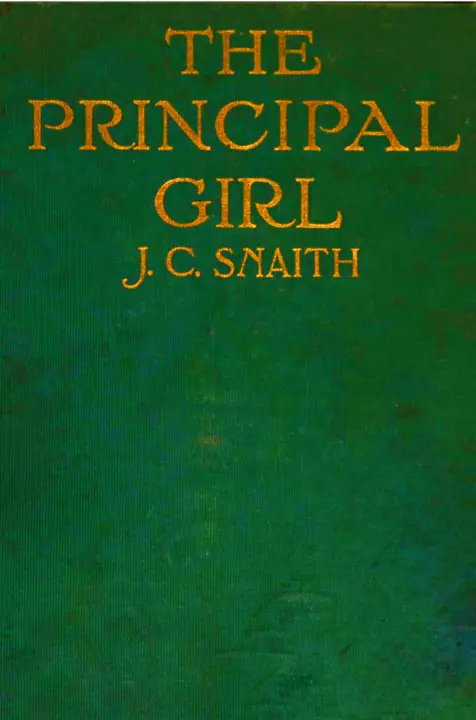
"The Principal Girl" by J. C. Snaith is a novel written in the early 20th century. The story is set in the context of British high society, focusing on themes of class distinction, societal expectations, and romantic entanglements. The narrative's primary character is the young heir to a barony, Philip Shelmerdine, who becomes entangled with the ambitious and talented actress Mary Caspar, who plays the titular role of Cinderella in a pantomime. The opening of the novel introduces readers to Philip Shelmerdine, who is described as the quintessential upper-class young gentleman, navigating the complexities of societal expectations and his own desires amidst the backdrop of London's elite circles. The first chapter establishes the setting in Grosvenor Square, introducing the character of Shelmerdine and his connection to the public through a controversial letter regarding dog privileges, which leads to his social unpopularity. As he struggles with his newfound role as a public figure and grapples with personal relationships, notably with the charismatic Mary Caspar, the stage is set for a humorous yet poignant exploration of love, social standing, and personal identity in a rapidly transforming society.
Introduction adapted from the source catalogue; source summaries may be automatically generated.
Free to read · English · 65,960 words · No account needed
MAKE TIME FOR A GOOD BOOK
On by default. Untick to stop anonymous reading totals. Each page counts after 10 seconds in view. How this works.
Anonymous counting is on unless you have switched it off.
“I beg your pardon, Mr. Vandeleur, it does nothing of the kind,” said a very significant factor in the dynasty.
“Metaphorically, of course, Lady Shelmerdine. I speak in metaphor. The dynasty trembles because a bombshell has been thrown in the country--nothing less than a bombshell, as I unhesitatingly affirm--and to avert ruin one course only appears to be open to it.”
“What is that course, Mr. Vandeleur?” said Lady Shelmerdine.
“To compose this internecine quarrel, and avert a further sanguinary conflict,” said Mr. Vandeleur.
A great man had spoken. Consols fell habitually at his Obiter Dicta. French Rentes and Russia Fours lost a whole point when he tore up his card in a medal round. No wonder that his outline of Imperial policy received the most respectful attention.
“Let the Family receive her, and pray let us have no more of it,” said Caledonia’s blunt daughter.
A suggestion of a great man in the interests of international comity is one thing; but untimely interference from one who has no locus standi beyond the fact that she has three addresses and more diamonds than are good for her, is quite another. Mother’s eyes sparkled with the light of battle.
“Will it really make any difference to the Party, Mr. Vandeleur, his standing for Blackhampton?”
“Bound to convey an unfortunate impression, Lady Shelmerdine.”
“But he can’t possibly get in.”
“One is glad to know that. But, being the son of his father, think of the weight he will carry with the Rags!”
The compliment was a little double-edged, perhaps, to some minds, but happily only one aspect of it was visible except to the Cynical, with whom, of course, this narrative has nothing to do.
“Why can’t he possibly get in?” inquired the Hostess.
“No brains,” said Father.
“At least, not many,” corrected Mother.
“All the more likely to be returned as a Rag by Blackhampton,” said Caledonia’s daughter. “Don’t you think so, Mr. Vandeleur?”
Mr. Vandeleur being a wise statesman, and the question being rather technical, he ignored it blandly.
“Shelmerdine, I think you ought to realize that we can’t have him standing for Blackhampton as a Rag in any case, when we have barely enough candidates of our own to go round.”
“Yes, I do realize that, my dear Vandeleur. I realize it most fully. Steps shall be taken. Steps shall be taken at once.”
“Receive the girl in the Family--a nice girl, too, I’m told--and let us hear no more of it,” said the Hostess to Mother, who would not have been averse from striking her for her effrontery.
What a pity it is that diamonds in excess are so demoralizing.
Your reading position is saved on this browser. Take it to another device with a library code. Reading pages adapt to text, rather than matching a printed edition.
J. C. (John Collis) Snaith
J. C. (John Collis) Snaith
J. C. (John Collis) Snaith

J. C. (John Collis) Snaith
BEHIND THE BOOK
This eBook is for the use of anyone anywhere in the United States and most other parts of the world at no cost and with almost no restrictions whatsoever. You may copy it, give it away or re-use it under the terms of the Project Gutenberg License included with this eBook or online at www.gutenberg.org. If you are not located in the United States, you will have to check the laws of the country where you are located before using this eBook. Read the source licence.
The original source file, including credits and licence, is retained by this library. Request an original-format copy at no charge. Please include the book title and Project Gutenberg identifier #68069.
KEEP YOUR CURIOSITY GOING
Coulson Kernahan

Maurice Baring
Frances Wright
Cécile Tormay

Frederic Jesup Stimson

W. H. P. (William Henry Pope) Jarvis