Fortune
J. C. (John Collis) Snaith
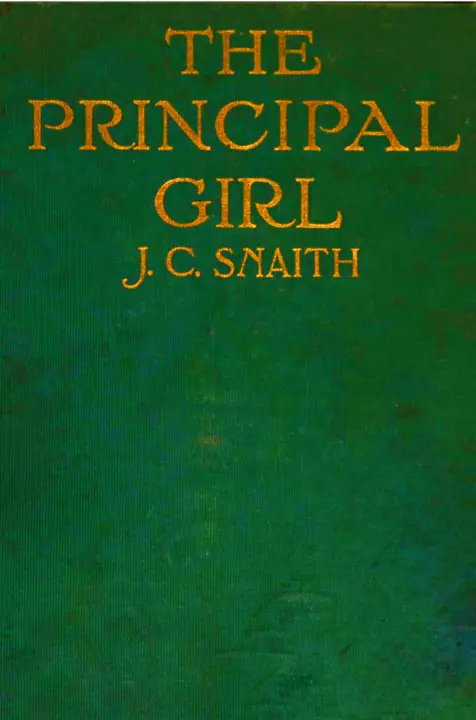
THE CLASSIC COLLECTION · 1912
"The Principal Girl" by J. C. Snaith is a novel written in the early 20th century. The story is set in the context of British high society, focusing on themes of class distinction, societal expectations, and romantic entanglements. The narrative's primary character is the young heir to a barony, Philip Shelmerdine, who becomes entangled with the ambitious and talented actress Mary Caspar, who plays the titular role of Cinderella in a pantomime. The opening of the novel introduces readers to Philip Shelmerdine, who is described as the quintessential upper-class young gentleman, navigating the complexities of societal expectations and his own desires amidst the backdrop of London's elite circles. The first chapter establishes the setting in Grosvenor Square, introducing the character of Shelmerdine and his connection to the public through a controversial letter regarding dog privileges, which leads to his social unpopularity. As he struggles with his newfound role as a public figure and grapples with personal relationships, notably with the charismatic Mary Caspar, the stage is set for a humorous yet poignant exploration of love, social standing, and personal identity in a rapidly transforming society.
Introduction adapted from the source catalogue; source summaries may be automatically generated.
Free to read · English · 65,960 words · No account needed
MAKE TIME FOR A GOOD BOOK
On by default. Untick to stop anonymous reading totals. Each page counts after 10 seconds in view. How this works.
Anonymous counting is on unless you have switched it off.
“I can only attribute it to a mental aberration,” said S. of P.
Mr. Everard Vandeleur shook his Jesuitical gray curls.
“Shelmerdine, my dear fellow,” he said in tones vibrant with emotion, “I would rather have lost five seats in the country than this should have occurred.”
“I had rather you had done so, Vandeleur, than that this should have
taken place.”
“Can you impose no check?” said Mr. Vandeleur. “Can you not refuse
supply?”
“Unfortunately, no. The young scoundrel has a private income. But I hold his wife responsible for this.”
“His wife?” said Mr. Vandeleur.
“The root of an evil,” said the Husband of the Hostess, who, to be sure, was right at the other end of the mahogany.
“Your boy has married a wife, has he?” said Mr. Vandeleur, with the air of one who asks politely for information.
And who do you think, my lords and gentlemen, was seated opposite the Great Man? No less an individual than his Britannic Majesty’s former Ambassador to Persia.
Not a living soul saw the glance that may or may not have passed
between them.
“A great deal of marrying and giving in marriage these days, apparently,” mused Mr. Everard Vandeleur.
“Your turn next, Van,” said a Privileged Individual, whose brilliant sally, of course, set the table in a roar.
“Married a wife, has he?” mused Mr. Everard Vandeleur. “Good for the state, although not always good for the state of Denmark. And she has brought him to this. Well, well.”
“It is revenge, of course,” said S. of P.
A word so sinister caused the whole table to cock its ears.
“Revenge, Lord Shelmerdine!” said Caledonia’s daughter.
“She is not received in the Family at present, and we get this stab in the back in consequence.”
Two persons round the opposition mahogany were as grim as griffins. One was Father and the other was Mother. For the rest of the company it would be unsafe to answer.
“Why isn’t she received in the Family?” said Caledonia’s daughter, as blunt a woman as you would find in a long day’s journey.
“He married contrary to the wishes of his parents,” said Mother, preening her plumage at the hostess in a way which said quite clearly that she would thank her to be careful, as the ground was rather delicate. “Old-fashioned ideas, perhaps, but such marriages can only end in a general weakening of responsibility.”
“I am out of my depth,” said the plaintive Mr. Vandeleur. “But the position as I envisage it, is this: Your son’s wife, out of favor at Court, plots against the dynasty. The dynasty trembles--”
Your reading position is saved on this browser. Take it to another device with a library code. Reading pages adapt to text, rather than matching a printed edition.
J. C. (John Collis) Snaith

J. C. (John Collis) Snaith

J. C. (John Collis) Snaith

J. C. (John Collis) Snaith
BEHIND THE BOOK
This eBook is for the use of anyone anywhere in the United States and most other parts of the world at no cost and with almost no restrictions whatsoever. You may copy it, give it away or re-use it under the terms of the Project Gutenberg License included with this eBook or online at www.gutenberg.org. If you are not located in the United States, you will have to check the laws of the country where you are located before using this eBook. Read the source licence.
The original source file, including credits and licence, is retained by this library. Request an original-format copy at no charge. Please include the book title and Project Gutenberg identifier #68069.
KEEP YOUR CURIOSITY GOING
Coulson Kernahan

Maurice Baring
Frances Wright
Cécile Tormay

Frederic Jesup Stimson

W. H. P. (William Henry Pope) Jarvis