
Europe and elsewhere
Mark Twain
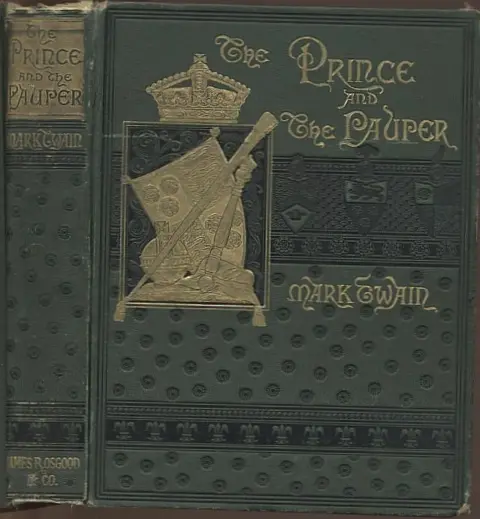
THE CLASSIC COLLECTION · 1881
"The Prince and the Pauper" by Mark Twain is a novel first published in 1881. Two identical boys—Prince Edward Tudor and pauper Tom Canty—meet by chance and swap clothes, only to find themselves trapped in each other's lives. As Edward experiences the brutal reality of poverty and injustice firsthand, Tom struggles to maintain the royal charade. This tale of mistaken identity explores class inequality and the harsh English judicial system, while both boys discover what it truly means to walk in another's shoes.
Introduction adapted from the source catalogue; source summaries may be automatically generated.
Free to read · English · 70,649 words · No account needed
MAKE TIME FOR A GOOD BOOK
On by default. Untick to stop anonymous reading totals. Each page counts after 10 seconds in view. How this works.
Anonymous counting is on unless you have switched it off.
“The Lady Elizabeth, my sister, is fourteen, and the Lady Jane Grey, my cousin, is of mine own age, and comely and gracious withal; but my sister the Lady Mary, with her gloomy mien and--Look you: do thy sisters forbid their servants to smile, lest the sin destroy their souls?”
“They? Oh, dost think, sir, that they have servants?”
The little prince contemplated the little pauper gravely a moment, then
said--
“And prithee, why not? Who helpeth them undress at night? Who attireth them when they rise?”
“None, sir. Would’st have them take off their garment, and sleep without--like the beasts?”
“Their garment! Have they but one?”
“Ah, good your worship, what would they do with more? Truly they have not two bodies each.”
“It is a quaint and marvellous thought! Thy pardon, I had not meant to laugh. But thy good Nan and thy Bet shall have raiment and lackeys enow, and that soon, too: my cofferer shall look to it. No, thank me not; ’tis nothing. Thou speakest well; thou hast an easy grace in it. Art learned?”
“I know not if I am or not, sir. The good priest that is called Father Andrew taught me, of his kindness, from his books.”
“Know’st thou the Latin?”
“But scantly, sir, I doubt.”
“Learn it, lad: ’tis hard only at first. The Greek is harder; but neither these nor any tongues else, I think, are hard to the Lady Elizabeth and my cousin. Thou should’st hear those damsels at it! But tell me of thy Offal Court. Hast thou a pleasant life there?”
“In truth, yes, so please you, sir, save when one is hungry. There be Punch-and-Judy shows, and monkeys--oh such antic creatures! and so bravely dressed!--and there be plays wherein they that play do shout and fight till all are slain, and ’tis so fine to see, and costeth but a farthing--albeit ’tis main hard to get the farthing, please your worship.”
“Tell me more.”
“We lads of Offal Court do strive against each other with the cudgel, like to the fashion of the ‘prentices, sometimes.”
The prince’s eyes flashed. Said he--
“Marry, that would not I mislike. Tell me more.”
“We strive in races, sir, to see who of us shall be fleetest.”
“That would I like also. Speak on.”
“In summer, sir, we wade and swim in the canals and in the river, and each doth duck his neighbour, and splatter him with water, and dive and shout and tumble and--”
“‘Twould be worth my father’s kingdom but to enjoy it once! Prithee go
on.”
Your reading position is saved on this browser. Take it to another device with a library code. Reading pages adapt to text, rather than matching a printed edition.
BEHIND THE BOOK
This eBook is for the use of anyone anywhere in the United States and most other parts of the world at no cost and with almost no restrictions whatsoever. You may copy it, give it away or re-use it under the terms of the Project Gutenberg License included with this eBook or online at www.gutenberg.org. If you are not located in the United States, you will have to check the laws of the country where you are located before using this eBook. Read the source licence.
The original source file, including credits and licence, is retained by this library. Request an original-format copy at no charge. Please include the book title and Project Gutenberg identifier #1837.
KEEP YOUR CURIOSITY GOING
Cécile Tormay

Moritz Busch
Coulson Kernahan
John L. Ransom

Maurice Baring
Frances Wright


