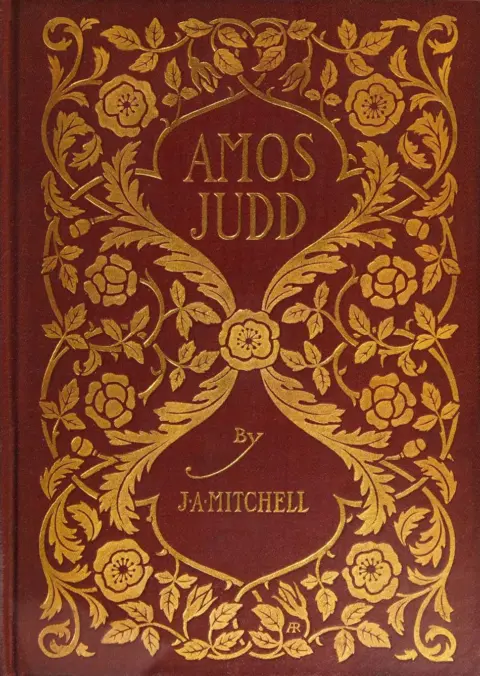
Amos Judd
John Ames Mitchell
THE CLASSIC COLLECTION · 1901
"The Pines of Lory" by John Ames Mitchell is a novel written in the early 20th century. The story introduces an intriguing connection between two main characters, Patrick Boyd, a man returning from Africa, and Elinor Marshall, an orphan with a generous heart. Their adventure begins when they find themselves passengers on a steamer bound for Boyd's Island, but soon they encounter unexpected circumstances that challenge their understanding of each other and compel them to confront deeper themes of love, virtue, and destiny. At the start of the novel, readers are introduced to the atmosphere aboard the steamer as the characters prepare for their journey. Boyd bears the scars of his recent past, still recovering physically and emotionally from his experiences in Africa. The narrative invites readers to witness his playful banter with his friend Billy Townsend, as well as the magnetic charm of Elinor, who is set to visit the Boyds’ house. Tension escalates amidst the humorous and social exchanges when the steamer unexpectedly lands at the wrong location, leaving both characters stranded in an isolated wilderness without someone to guide them. The initial light-heartedness gives way to a gripping tale intertwined with themes of romance and existential contemplation, as both characters are forced to confront their own vulnerabilities amidst unforeseen trials.
Introduction adapted from the source catalogue; source summaries may be automatically generated.
Free to read · English · 39,693 words · No account needed
MAKE TIME FOR A GOOD BOOK
On by default. Untick to stop anonymous reading totals. Each page counts after 10 seconds in view. How this works.
Anonymous counting is on unless you have switched it off.
"Then he is Dutch."
"Yes. He was the property of four officers, and each owner bestowed a
portion of his name."
"What do you call him for short?"
"Solomon."
"Solomon!"
"At first we called him Jan, but the other three sponsors objected. They said it was favoritism. So we all agreed on Solomon for every day use."
"And he never resented it?"
"No. He understood it as a tribute to his extraordinary wisdom."
She seemed amused. "Is he so very remarkable?"
"Well," said Pats, laying down his knife and fork, and giving his whole attention to the subject, "as to general intelligence, foresight, logic, and a knowledge of human nature, he is a wonder, even for a dog. And when it comes to dignity and tact, ease of manner and freedom from personal vanity, why--the other Solomon was a beginner."
She nodded and smiled approval. "I know something of dogs and men, and I can easily believe it. Certain men exist, however, who are mentally superior to dogs. But it's the moral gulf between the two species that is so disheartening."
"All owing to the fatal power of speech."
"Possibly."
"I am sure of it. If dogs could talk, they would abuse the power, as humans do, and soon descend to the human level. They would lose the dignity that silence alone bestows, and become bores--like the rest of us." With a deferential movement of his head toward the priest, he added, "Except as they apply to myself, these remarks are in no way personal."
As Father Burke, with a perfunctory smile, bowed acknowledgment, the
girl at his side inquired, with a serious face, "Well, what can be
done?"
Pats, with equal seriousness, replied, "How would it do to establish an institute for the propagation of silence?"
"The millennium would be in sight!" she exclaimed.
"And instead of rhetoric and declamation teach economy in words; show the pupils by illustration and example how much better they look when their mouths are not open."
"A very sensible idea! And award medals to those who attain the highest
flights of silence."
"The very thought is restful," said Pats. "And would you mind if I offered Solomon a professorship?"
"Not at all! It would look rather well in the catalogue, 'Solomon Boyd, Instructor in Moral Philosophy and Deportment.'"
With a glance at the mirthless face of the reverend gentleman beside her, she added, "And on the dome of the college shall be a colossal statue of Father Burke, in solid gold. He has not uttered a word in half an hour."
Your reading position is saved on this browser. Take it to another device with a library code. Reading pages adapt to text, rather than matching a printed edition.
John Ames Mitchell
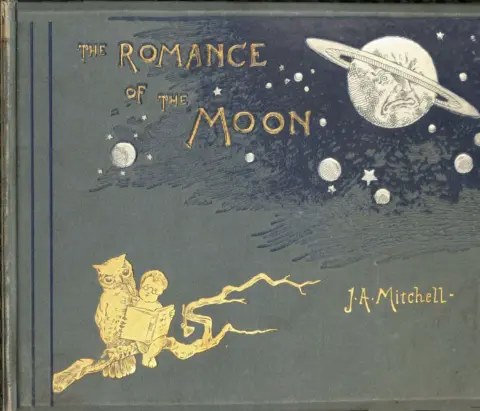
John Ames Mitchell

Francis Davis Millet & W. Hamilton (William Hamilton) Gibson & Will H. (Will Hicok) Low & John Ames Mitchell & Francis Hopkinson Smith
John Ames Mitchell
BEHIND THE BOOK
This eBook is for the use of anyone anywhere in the United States and most other parts of the world at no cost and with almost no restrictions whatsoever. You may copy it, give it away or re-use it under the terms of the Project Gutenberg License included with this eBook or online at www.gutenberg.org. If you are not located in the United States, you will have to check the laws of the country where you are located before using this eBook. Read the source licence.
The original source file, including credits and licence, is retained by this library. Request an original-format copy at no charge. Please include the book title and Project Gutenberg identifier #30600.
KEEP YOUR CURIOSITY GOING
Coulson Kernahan

Maurice Baring
Frances Wright
Cécile Tormay

Frederic Jesup Stimson

W. H. P. (William Henry Pope) Jarvis