THE CLASSIC COLLECTION✦The Jerusalem Sinner Saved; or, Good News for the Vilest of MenCLASSIC FREE BOOKS
The Jerusalem Sinner Saved; or, Good News for the Vilest of Men
John Bunyan
THE CLASSIC COLLECTION · 1909
"The Pilgrim's Progress" by John Bunyan is a religious allegory written in the late 17th century. The narrative chronicles the journey of a character named Christian as he seeks salvation and navigates the challenges of life, symbolized by his passage from the City of Destruction to the Celestial City. This work serves as a discourse on the Christian faith, presenting themes such as redemption, perseverance, and the struggle against sin. The opening of the story introduces us to Christian, who is depicted as a man in turmoil, burdened by the weight of sin and the fear of impending judgment. As he reads a book, presumably the Bible, he becomes increasingly distressed about his fate and confides in his family, who largely regard his concerns with disbelief. As Christian sets out on his pilgrimage, he encounters a character named Evangelist, who guides him towards the wicket gate, marking the beginning of his journey to seek salvation. This portion effectively sets the stage for Christian's struggles and the allegorical nature of his quest as he faces various temptations and obstacles along his path.
Introduction adapted from the source catalogue; source summaries may be automatically generated.
Free to read · English · 99,876 words · No account needed
MAKE TIME FOR A GOOD BOOK
On by default. Untick to stop anonymous reading totals. Each page counts after 10 seconds in view. How this works.
Anonymous counting is on unless you have switched it off.
I saw then in my dream that Hopeful looked back, and saw Ignorance, whom they had left behind, coming after. "Look," said he to Christian, "how far yonder youngster loitereth behind."
CHRIS. Ay, ay, I see him: he careth not for our company.
HOPE. But I think it would not have hurt him, had he kept pace with us
hitherto.
CHRIS. That is true; but I warrant you he thinks otherwise.
HOPE. That I think he doth; but, however, let us tarry for him. So they
did.
CHRIS. Then Christian said to him, "Come away, man; why do you stay so
behind?"
IGNOR. I take my pleasure in walking alone, even more a great deal than in company, unless I like it the better.
Then said Christian to Hopeful (but softly), "Did I not tell you he cared not for our company? But, however," said he, "come up, and let us talk away the time in this solitary place." Then, directing his speech to Ignorance, he said, "Come how do you? How stands it between God and your soul now?"
IGNOR. I hope well; for I am always full of good thoughts, that come into my mind to comfort me as I walk.
CHRIS. What good motions? pray tell us.
IGNOR. Why, I think of God and heaven.
CHRIS. So do the devils and lost souls.
IGNOR. But I think of them and desire them.
CHRIS. So do many that are never like to come there. "The soul of the sluggard desireth and hath nothing."
IGNOR. But I think of them, and leave all for them.
CHRIS. That I doubt, for leaving of all is a very hard matter; yea, a harder matter than many are aware of. But why, or by what, art thou persuaded that thou hast left all for God and heaven?
IGNOR. My heart tells me so.
CHRIS. The Wise Man says, "He that trusteth in his own heart is a fool."
IGNOR. This is spoken of an evil heart; but mine is a good one.
CHRIS. But how dost thou prove that?
IGNOR. It comforts me in the hopes of heaven.
CHRIS. That may be through its deceitfulness; for a man's heart may minister comfort to him in the hopes of that thing for which he has yet no ground to hope.
IGNOR. But my heart and life agree together; and therefore my hope is
well grounded.
CHRIS. Who told thee that thy heart and life agree together?
IGNOR. My heart tells me so.
CHRIS. Ask my fellow if I be a thief! Thy heart tells thee so! Except the Word of God telleth thee in this matter, other testimony is of no value.
Your reading position is saved on this browser. Take it to another device with a library code. Reading pages adapt to text, rather than matching a printed edition.
John Bunyan
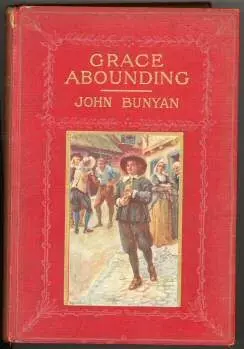
John Bunyan
John Bunyan
BEHIND THE BOOK
This eBook is for the use of anyone anywhere in the United States and most other parts of the world at no cost and with almost no restrictions whatsoever. You may copy it, give it away or re-use it under the terms of the Project Gutenberg License included with this eBook or online at www.gutenberg.org. If you are not located in the United States, you will have to check the laws of the country where you are located before using this eBook. Read the source licence.
The original source file, including credits and licence, is retained by this library. Request an original-format copy at no charge. Please include the book title and Project Gutenberg identifier #39452.
KEEP YOUR CURIOSITY GOING

David Patterson (Spirit) Hatch

David Patterson (Spirit) Hatch

David Patterson (Spirit) Hatch
Coulson Kernahan

Maurice Baring
Frances Wright