THE CLASSIC COLLECTION✦The Jerusalem Sinner Saved; or, Good News for the Vilest of MenCLASSIC FREE BOOKS
The Jerusalem Sinner Saved; or, Good News for the Vilest of Men
John Bunyan
THE CLASSIC COLLECTION · 1909
"The Pilgrim's Progress" by John Bunyan is a religious allegory written in the late 17th century. The narrative chronicles the journey of a character named Christian as he seeks salvation and navigates the challenges of life, symbolized by his passage from the City of Destruction to the Celestial City. This work serves as a discourse on the Christian faith, presenting themes such as redemption, perseverance, and the struggle against sin. The opening of the story introduces us to Christian, who is depicted as a man in turmoil, burdened by the weight of sin and the fear of impending judgment. As he reads a book, presumably the Bible, he becomes increasingly distressed about his fate and confides in his family, who largely regard his concerns with disbelief. As Christian sets out on his pilgrimage, he encounters a character named Evangelist, who guides him towards the wicket gate, marking the beginning of his journey to seek salvation. This portion effectively sets the stage for Christian's struggles and the allegorical nature of his quest as he faces various temptations and obstacles along his path.
Introduction adapted from the source catalogue; source summaries may be automatically generated.
Free to read · English · 99,876 words · No account needed
MAKE TIME FOR A GOOD BOOK
On by default. Untick to stop anonymous reading totals. Each page counts after 10 seconds in view. How this works.
Anonymous counting is on unless you have switched it off.
IGNOR. But is it not a good heart that hath good thoughts? and is not that a good life that is according to God's commandments?
CHRIS. Yes, that is a good heart that hath good thoughts, and that is a good life that is according to God's commandments; but it is one thing, indeed, to have these, and another thing only to think so.
IGNOR. Pray, what count you good thoughts, and a life according to God's
commandments?
CHRIS. There are good thoughts of many kinds: some respecting ourselves, some God, some Christ, and some other things.
IGNOR. You go so fast, I cannot keep pace with you. Do you go on before: I must stay awhile behind.
Then they said:
"Well, Ignorance, wilt thou yet foolish be,
To slight good counsel, ten times given thee?
And if thou yet refuse it, thou shalt know,
Ere long, the evil of thy doing so.
Remember, man, in time; stoop, do not fear;
Good counsel, taken well, saves; therefore hear:
But, if thou yet shalt slight it, thou wilt be
The loser, Ignorance, I'll warrant thee."
Then Christian addressed himself thus to his fellow:
CHRIS. Well, come, my good Hopeful; I perceive that thou and I must
walk by ourselves again.
[Sidenote: THE TWO PILGRIMS PROCEED]
So I saw in my dream that they went on apace before, and Ignorance he came hobbling after. Then said Christian to his companion, "It pities me much for this poor man: it will certainly go ill with him at last."
HOPE. Alas! there are abundance in our town in his condition, whole families, yea, whole streets, and that of pilgrims, too; and if there be so many in our parts, how many, think you, must there be in the place where he was born?
CHRIS. Indeed, the Word saith, "He hath blinded their eyes, lest they
should see."
HOPE. Well said; I believe you have said the truth. Are we now almost got past the Enchanted Ground?
CHRIS. Why, art thou weary of our talking?
HOPE. No, verily; but that I would know where we are.
CHRIS. We have not now above two miles farther to go thereon. Well, we will leave at this time our neighbor Ignorance by himself, and fall upon another subject.
HOPE. With all my heart; but you shall still begin.
CHRIS. Well, then, did you not know, about ten years ago, one Temporary in your parts, who was a forward man in religion then?
HOPE. Know him! yes; he dwelt in Graceless, a town about two miles off of Honesty, and he dwelt next door to one Turnback.
Your reading position is saved on this browser. Take it to another device with a library code. Reading pages adapt to text, rather than matching a printed edition.
John Bunyan
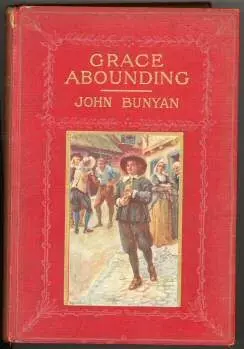
John Bunyan
John Bunyan
BEHIND THE BOOK
This eBook is for the use of anyone anywhere in the United States and most other parts of the world at no cost and with almost no restrictions whatsoever. You may copy it, give it away or re-use it under the terms of the Project Gutenberg License included with this eBook or online at www.gutenberg.org. If you are not located in the United States, you will have to check the laws of the country where you are located before using this eBook. Read the source licence.
The original source file, including credits and licence, is retained by this library. Request an original-format copy at no charge. Please include the book title and Project Gutenberg identifier #39452.
KEEP YOUR CURIOSITY GOING

David Patterson (Spirit) Hatch

David Patterson (Spirit) Hatch

David Patterson (Spirit) Hatch
Coulson Kernahan

Maurice Baring
Frances Wright