THE CLASSIC COLLECTION✦Lost DiariesCLASSIC FREE BOOKS
Lost Diaries
Maurice Baring
THE CLASSIC COLLECTION · 1914
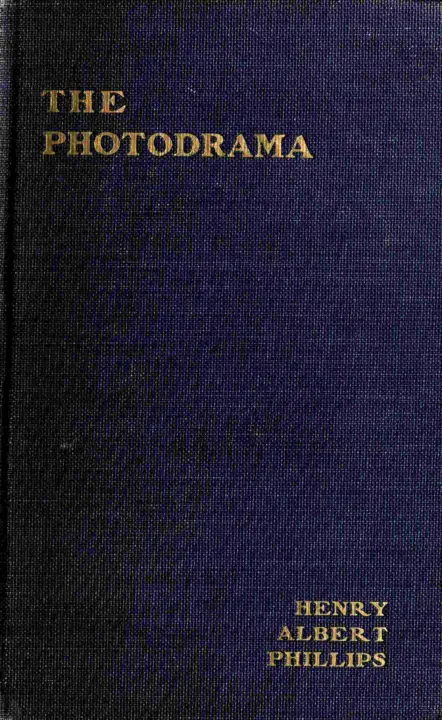
"The Photodrama: The Philosophy of Its Principles, the Nature of Its Plot, Its Dramatic Construction and Technique Illuminated by Copious Examples" by Henry Albert Phillips is a practical treatise focusing on the emerging art of photoplaywriting written in the early 20th century. The work explores the intersection of literature and cinema, detailing the techniques required to effectively craft photoplays—an innovative storytelling medium that combines visual and emotional elements to engage audiences. Phillips emphasizes the necessity of understanding not just the mechanics but also the artistic demands of this new form of dramatic expression. The opening of the book introduces the concept of the photodrama as an artistic medium distinct from traditional forms of literature and theater, advocating for the recognition of its potential to convey complex emotions and narratives through visual storytelling. Phillips elaborates on the importance of technique, asserting that successful photoplays must prioritize direct action and visual engagement over dialogue and literary prose. He invites readers to appreciate the unique challenges and creative opportunities presented by silent cinema, promoting a deeper understanding of how to evoke emotional responses through carefully structured scenes and character interactions.
Introduction adapted from the source catalogue; source summaries may be automatically generated.
Free to read · English · 38,413 words · No account needed
MAKE TIME FOR A GOOD BOOK
On by default. Untick to stop anonymous reading totals. Each page counts after 10 seconds in view. How this works.
Anonymous counting is on unless you have switched it off.
Multiple Reel--(See LONG PLAY.)
Manuscript--The written form of the playwright, containing Synopsis, Cast, Scene-Plot, Remarks and Scenario.
Pantomime--Sign language and inter-communication between characters.
Punch--An effective Climax; the effect upon the audience of the
Climax.
Plot--The organized dramatic material upon which the Play is
elaborated.
Properties--All articles necessary for the effective staging of a
play.
Reel--1,000 feet of film; length of a Short Play; the spool upon
which the film is wound.
Register--The method of visualizing sounds by showing the reflex
action of recipient.
Release--To place a Play upon the market; the Play so released.
Screen--The framed surface upon which the Play is projected; the act
of projecting.
Spectacle--A Scene or Play or series showing daring deeds, gorgeous settings or dynamic force or numbers; not necessarily dramatic.
Set--Specific Scene artificially constructed.
Short Play--A one-reel, one-part Play; comparable to the Short
Story, or One-act Play.
Setting--The scenic environment in which the action takes place.
Scenario--The Action of a Play laid out in progressive Scenes with
appropriate Business.
Synopsis--A condensed version of the play in story form and present
tense.
Script--(Slang, by which nothing is gained but ill-repute.) See
MANUSCRIPT.
Sequence--Logical order of succession of events; a connected series
of incidents.
Serio-Comic--Comedy written in vein of seriousness that makes it
ridiculous.
Split Reel--A subject, or Play, occupying less than one reel.
Scene--All the Action in one Setting taken without moving or stopping the camera; a Scene broken by any form of Insert is “continued,” technically unbroken after the interruption.
Stage--The Cinema stage never exceeds in limits the range of the
camera.
Sub-Title--(A secondary title, as: “St. Valentine’s Day, or The Fair Maid of Perth,” “The Fair Maid of Perth” being the sub-title to “St. Valentine’s Day.”) See CAPTION.
Title--The name by which the Play is called and known.
Technique--The science of giving established and effective photoplay form to the dramatic Plot.
Theme--The main line of Plot development; the subject-idea of the
Play.
Tint--To color the scene to represent moonlight, lamplight,
firelight.
Unity--The agreement and appropriateness of the elements that
constitute a Play.
Visualize--To interpret the playwright’s ideas in such a way that the audience will see and understand them.
Vision--The screening of some remembered or contemplated action bearing on the play that is passing thru the mind of a character; picturing a dream.
THE PLOT of the SHORT STORY
Your reading position is saved on this browser. Take it to another device with a library code. Reading pages adapt to text, rather than matching a printed edition.
BEHIND THE BOOK
This eBook is for the use of anyone anywhere in the United States and most other parts of the world at no cost and with almost no restrictions whatsoever. You may copy it, give it away or re-use it under the terms of the Project Gutenberg License included with this eBook or online at www.gutenberg.org. If you are not located in the United States, you will have to check the laws of the country where you are located before using this eBook. Read the source licence.
The original source file, including credits and licence, is retained by this library. Request an original-format copy at no charge. Please include the book title and Project Gutenberg identifier #70937.
KEEP YOUR CURIOSITY GOING
Maurice Baring
W. B. (William Butler) Yeats
Edward Martyn

John Brougham & Charlotte Brontë
Marguerite Merington
Leonid Andreyev