THE CLASSIC COLLECTION✦Lost DiariesCLASSIC FREE BOOKS
Lost Diaries
Maurice Baring
THE CLASSIC COLLECTION · 1914
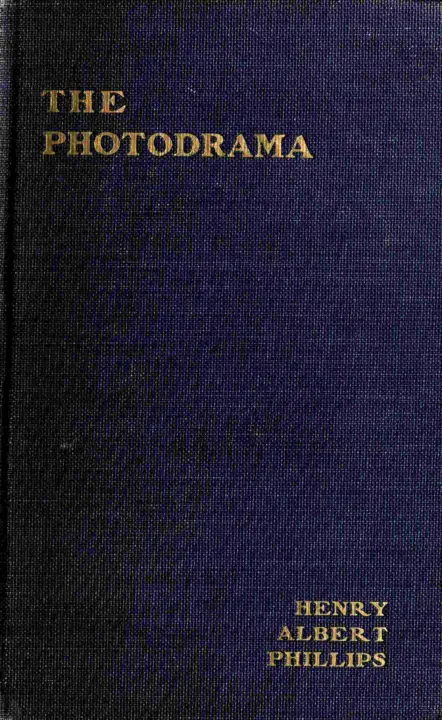
"The Photodrama: The Philosophy of Its Principles, the Nature of Its Plot, Its Dramatic Construction and Technique Illuminated by Copious Examples" by Henry Albert Phillips is a practical treatise focusing on the emerging art of photoplaywriting written in the early 20th century. The work explores the intersection of literature and cinema, detailing the techniques required to effectively craft photoplays—an innovative storytelling medium that combines visual and emotional elements to engage audiences. Phillips emphasizes the necessity of understanding not just the mechanics but also the artistic demands of this new form of dramatic expression. The opening of the book introduces the concept of the photodrama as an artistic medium distinct from traditional forms of literature and theater, advocating for the recognition of its potential to convey complex emotions and narratives through visual storytelling. Phillips elaborates on the importance of technique, asserting that successful photoplays must prioritize direct action and visual engagement over dialogue and literary prose. He invites readers to appreciate the unique challenges and creative opportunities presented by silent cinema, promoting a deeper understanding of how to evoke emotional responses through carefully structured scenes and character interactions.
Introduction adapted from the source catalogue; source summaries may be automatically generated.
Free to read · English · 38,413 words · No account needed
MAKE TIME FOR A GOOD BOOK
On by default. Untick to stop anonymous reading totals. Each page counts after 10 seconds in view. How this works.
Anonymous counting is on unless you have switched it off.
Co-Incidence--A chance incident, meeting or discovery that
conveniently helps out the plot and is obviously unconvincing to the
audience.
Crisis--The instant that follows the “planting” of a Situation and precedes the Solution; the turning-point when something must happen.
Characters--What the actors should become in the eyes of the
audience.
Cast--The list of names, parts and required characteristics of the characters (in some cases includes names of actors taking the parts).
Dissolve--To dissolve one scene or character gradually into another.
Director--The person or persons who translate the playwright’s manuscript into action, setting and effects by directing the production of the play, which is simultaneously photographed.
Discover--Means to find a character already upon a scene when it is thrown upon the screen: “Douglas discovered at window.”
Denouement--That part of the Plot left after the Climax; the part of the play following the culmination, when “just deserts” are meted out as a result of the foregoing action.
Dynamic--The visible exercise of force, violence and physical effects, as opposed to visualized emotion.
Enter--Said of a character as he enters a scene: “Enter Douglas.”
Exit--(Plural EXEUNT.) Said of a character as he leaves a scene:
“Exit Douglas.”
Establish--To make certain the relationship of a character with
other characters and with his surroundings, or to make known his
identity.
Episode--An isolated incident not bearing upon the climax which has
no place in the Play.
Editor--Person who reads manuscripts to determine their availability, and possibly edits, revises and rebuilds promising manuscripts to practicability.
Exterior--A scene laid actually or presumably in the open-air.
Film--The celluloid strip upon which the photographs are to be--or have been--portrayed. (FILM as a verb seems almost eligible because of usage.)
Fade--To cause a scene to fade gradually into blackness.
Flash--(Variously used by different Companies.) Accurately, when
referring to a scene fragment that is flashed for a second on the
screen.
Farce--Extravagant Comedy.
Harmony--The perfect agreement, consistency and balance of all the parts with the whole in a complete, artistic and gratifying effect.
Insert--Any matter that breaks the continuity of a scene; printed matter, letters, inscriptions, captions, dialog, close-views, visions and devices other than action.
Interior--A scene laid under the roof and within the four walls of
any structure.
Jump--A gap, not merely in the continuity, but in the progressive
action of the Play.
Leader--(Prominent editorial in a newspaper.) See CAPTION.
Lead--One of the “star” actors having the leading part in a Play.
Locale--The combined Settings for the main theme of the Play,
including Atmosphere.
Long Play--A Play occupying more than one Reel.
Your reading position is saved on this browser. Take it to another device with a library code. Reading pages adapt to text, rather than matching a printed edition.
BEHIND THE BOOK
This eBook is for the use of anyone anywhere in the United States and most other parts of the world at no cost and with almost no restrictions whatsoever. You may copy it, give it away or re-use it under the terms of the Project Gutenberg License included with this eBook or online at www.gutenberg.org. If you are not located in the United States, you will have to check the laws of the country where you are located before using this eBook. Read the source licence.
The original source file, including credits and licence, is retained by this library. Request an original-format copy at no charge. Please include the book title and Project Gutenberg identifier #70937.
KEEP YOUR CURIOSITY GOING
Maurice Baring
W. B. (William Butler) Yeats
Edward Martyn

John Brougham & Charlotte Brontë
Marguerite Merington
Leonid Andreyev