Oriental Prisons Prisons and Crime in India, the Andaman Islands, Burmah, China, Japan, Egypt, Turkey
Arthur Griffiths

THE CLASSIC COLLECTION · 1906
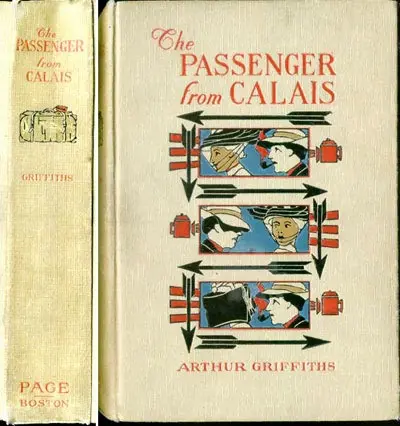
"The Passenger from Calais" by Arthur Griffiths is a novel written in the early 20th century. Set against the backdrop of early 1900s European travel, the story explores themes of intrigue, deception, and the complexities of human relationships. The plot centers around Colonel Basil Annesley, who finds himself embroiled in the mysterious circumstances surrounding a woman named Mrs. Blair, who has a troubled past. The opening of the book introduces Colonel Annesley as he embarks on a seemingly routine train journey from Calais to Basle. He quickly becomes aware of a peculiar situation in the train where he is the only passenger, soon joined by Mrs. Blair, who arrives with a child and her maid. The tension builds as her nervousness about traveling with just a few people, including Annesley, hints at a dark secret tied to her past. Annesley is drawn to Mrs. Blair but is also troubled by the ambiguous nature of her character, which raises questions about her true intentions. As the narrative unfolds, the presence of a sinister figure, Domenico Falfani, introduces an additional layer of conflict, setting the stage for a thrilling exploration of crime and morality along their journey.
Introduction adapted from the source catalogue; source summaries may be automatically generated.
Free to read · English · 57,623 words · No account needed
MAKE TIME FOR A GOOD BOOK
On by default. Untick to stop anonymous reading totals. Each page counts after 10 seconds in view. How this works.
Anonymous counting is on unless you have switched it off.
But the moment I looked into her face I saw a very distinct difference, not in outward feature, but in the inward character that is revealed by the eyes, the lines of the mouth, the shape of the lower jaw. In Lady Claire the first were steady and spoke of high courage, of firm, fixed purpose; the mouth, as perfectly curved as Cupid's bow, was resolute and determined, the well-shaped, rounded chin was held erect, and might easily become defiant, even aggressive.
Lady Henriette was evidently cast in another mould. Her eyes, of the same violet blue, were pretty, pleading, soft in expression, but often downcast and deprecating; the mouth and chin were weak and irresolute. It was the same lovely face as Lady Claire's, and to some might seem the sweeter, indicating the tender, clinging, yielding nature that commonly appeals to the stronger sex; but to me she lost in every respect by comparison with her more energetic, self-reliant sister.
I heard the explanation, such as it was, without the smallest surprise; it was very much what I expected now when I was permitted to know and appreciate her better.
"What shall I say, Colonel Annesley, and what will you think of me?" she began plaintively, almost piteously. "But the moment I found I had to part with my child my courage broke down. I became incapable of doing anything. I seemed quite paralyzed. I am not brave, you know, like my dearest Claire, or strong-minded, and I quite collapsed."
"But I hope and trust you have made the exchange. Lady Claire has little Lord Aspdale and has left you the dummy? Tell me, I beg."
"Oh, yes, yes, we made the exchange," she replied, in such a faltering, undecided voice that I doubted, and yet could not bring myself to believe that she was not telling the truth.
"So much depends upon it, you see. Everything indeed. It would be a very serious matter if--if--"
"The contrary was the case," I wanted to say, yet how could I? I should be charging her directly with wilfully misleading me, and deceiving me in this moment of extreme peril.
"But what will happen now?" she said, her voice faltering, her eyes filling, and seemingly on the very verge of hysterics. "What if Blackadder should find that I am here, and--and--"
"He can do nothing to you unless he has a right to act, unless," I answered unhesitatingly and a little cruelly perhaps, regardless of the scared look in her face, "you have good reason to dread his interference. Lady Henriette, you have not been quite straight with me, I fear. Where is little Lord Aspdale?"
Your reading position is saved on this browser. Take it to another device with a library code. Reading pages adapt to text, rather than matching a printed edition.
Arthur Griffiths

Arthur Griffiths

Arthur Griffiths
Arthur Griffiths
BEHIND THE BOOK
This eBook is for the use of anyone anywhere in the United States and most other parts of the world at no cost and with almost no restrictions whatsoever. You may copy it, give it away or re-use it under the terms of the Project Gutenberg License included with this eBook or online at www.gutenberg.org. If you are not located in the United States, you will have to check the laws of the country where you are located before using this eBook. Read the source licence.
The original source file, including credits and licence, is retained by this library. Request an original-format copy at no charge. Please include the book title and Project Gutenberg identifier #16339.
KEEP YOUR CURIOSITY GOING
Coulson Kernahan

Maurice Baring
Frances Wright
Cécile Tormay

Frederic Jesup Stimson

W. H. P. (William Henry Pope) Jarvis




