Oriental Prisons Prisons and Crime in India, the Andaman Islands, Burmah, China, Japan, Egypt, Turkey
Arthur Griffiths

THE CLASSIC COLLECTION · 1906
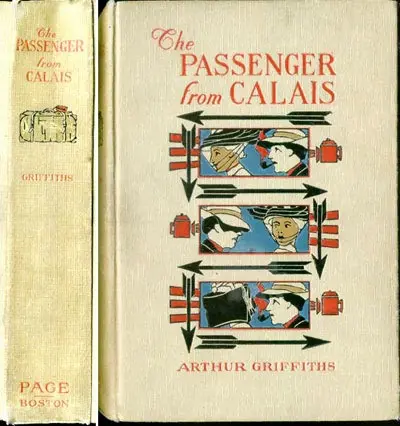
"The Passenger from Calais" by Arthur Griffiths is a novel written in the early 20th century. Set against the backdrop of early 1900s European travel, the story explores themes of intrigue, deception, and the complexities of human relationships. The plot centers around Colonel Basil Annesley, who finds himself embroiled in the mysterious circumstances surrounding a woman named Mrs. Blair, who has a troubled past. The opening of the book introduces Colonel Annesley as he embarks on a seemingly routine train journey from Calais to Basle. He quickly becomes aware of a peculiar situation in the train where he is the only passenger, soon joined by Mrs. Blair, who arrives with a child and her maid. The tension builds as her nervousness about traveling with just a few people, including Annesley, hints at a dark secret tied to her past. Annesley is drawn to Mrs. Blair but is also troubled by the ambiguous nature of her character, which raises questions about her true intentions. As the narrative unfolds, the presence of a sinister figure, Domenico Falfani, introduces an additional layer of conflict, setting the stage for a thrilling exploration of crime and morality along their journey.
Introduction adapted from the source catalogue; source summaries may be automatically generated.
Free to read · English · 57,623 words · No account needed
MAKE TIME FOR A GOOD BOOK
On by default. Untick to stop anonymous reading totals. Each page counts after 10 seconds in view. How this works.
Anonymous counting is on unless you have switched it off.
"Already dressed? What luck! There is not a moment to lose. Come along. I've a fiacre at the door below."
He gave the etablissement as the address, and we were soon tearing down the hill. As we drove along l'Echelle told me the news.
"It's come, that satanic telegram, and just what he wanted, I'm prepared to swear. He simply jumped for joy when he read it."
"But what was the message? Go on, go on, out with it!" I shouted
almost mad with excitement.
"I can't tell you that, for I haven't seen it yet."
"Are you making a fool of me?"
"How could I see it? He put it straight into his pocket. But I mean to see it pretty soon, and so shall you."
"You mean to abstract it somehow--pick his pocket, or what?"
"Simplest thing in the world. You see he's gone to have his bath, he likes to be early, and he's undergoing the douche at this very moment, which means naturally that he's taken off his clothes, and they are waiting in the dressing-room for me to take home. I shall have a good quarter of an hour and more to spare before they carry him back to the hotel in his blankets and get him to bed."
"Ha!" I said, "that's a brilliant idea. How do you mean to work it
out?"
"Take the telegram out of his waistcoat pocket, read it, or bring it
to you."
"Bring it; that will be best," I interrupted, feeling a tinge of
suspicion.
"But I must put it straight back," continued l'Echelle, "for he is sure to ask for it directly he returns to the hotel."
Within a few minutes he had gone in and out again, carrying now one of the black linen bags used by valets de chambres to carry their masters' clothes in. He winked at me as he passed, and we walked together to a shady, retired spot in the little square where the cab-stand is, and sat in the newspaper kiosk on a couple of straw-bottomed chairs of the Central cafe.
"Read that," he said triumphantly, as he handed me the familiar scrap
of blue paper.
"Have got safely so far with nurse and baby--entreat you to follow
with all possible speed--dying to get on.--CLAIRE, Hotel
Cavour, Milan."
"Excellent!" I cried, slapping my thigh. "This settles all doubts. So much for that fool Tiler. My lord will be very grateful to you," and I handed him back the telegram, having first copied it word for word in my note-book.
"It means, I suppose," suggested l'Echelle, "that you will make for
Milan, too?"
Your reading position is saved on this browser. Take it to another device with a library code. Reading pages adapt to text, rather than matching a printed edition.
Arthur Griffiths

Arthur Griffiths

Arthur Griffiths
Arthur Griffiths
BEHIND THE BOOK
This eBook is for the use of anyone anywhere in the United States and most other parts of the world at no cost and with almost no restrictions whatsoever. You may copy it, give it away or re-use it under the terms of the Project Gutenberg License included with this eBook or online at www.gutenberg.org. If you are not located in the United States, you will have to check the laws of the country where you are located before using this eBook. Read the source licence.
The original source file, including credits and licence, is retained by this library. Request an original-format copy at no charge. Please include the book title and Project Gutenberg identifier #16339.
KEEP YOUR CURIOSITY GOING
Coulson Kernahan

Maurice Baring
Frances Wright
Cécile Tormay

Frederic Jesup Stimson

W. H. P. (William Henry Pope) Jarvis




