THE CLASSIC COLLECTION✦My diaries, being a personal narrative of events 1888-1914, Part 2 (1900-1914)CLASSIC FREE BOOKS
My diaries, being a personal narrative of events 1888-1914, Part 2 (1900-1914)
Wilfrid Scawen Blunt
THE CLASSIC COLLECTION · 1904
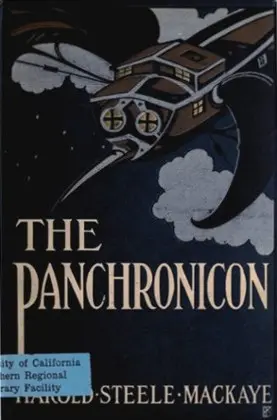
"The Panchronicon" by Harold Steele MacKaye is a fictional novel written in the early 20th century. The story revolves around two sisters, Rebecca and Phoebe Wise, who find themselves entangled in the eccentric ideas of Copernicus Droop, a village reprobate with a fantastical theory about time travel. As the narrative unfolds, the characters explore themes of ambition, the passage of time, and the desire for second chances, set against the backdrop of whimsical science fiction. The opening portion of the book introduces the two sisters at their home in Peltonville Center, New Hampshire, where they engage in ordinary tasks and daily life. Rebecca, the older sister, is practical and nurturing, while Phoebe, the younger, is filled with curiosity and ambition, especially regarding her Shakespeare class. Their interactions are light yet revealing, setting the stage for the arrival of Copernicus Droop, who proposes a ludicrous plan to travel back in time using a machine he calls the Panchronicon. As their conversation unfolds, humor and absurdity intertwine, foreshadowing the extraordinary journey the characters are about to embark on. The combination of everyday life with the extraordinary speed of time travel creates a fascinating tension right from the start.
Introduction adapted from the source catalogue; source summaries may be automatically generated.
Free to read · English · 76,361 words · No account needed
MAKE TIME FOR A GOOD BOOK
On by default. Untick to stop anonymous reading totals. Each page counts after 10 seconds in view. How this works.
Anonymous counting is on unless you have switched it off.
"Why the lands sakes do you suppose these London folks dump weeds on their floors?" she asked. "An' look there at those two beds, still unmade and all tumbled disgraceful!"
"Why, there's where we slept last night, Rebecca," said Phoebe, laughing as she dropped into a chair. "As for the floors," she continued, "they're always that way when folks ain't mighty rich. The lords and all have carpets and rugs."
Rebecca, stepping very high to avoid stumbling in the rushes, moved over to the dressing-table and proceeded to remove her outer wraps, having first deposited her bag and umbrella on a chair.
"I don't see how in gracious you know so much about it," she remarked, querulously. "'Pon my word, you acted with that young jackanapes an' that fat old lady downstairs jest's ef you'd allus known em."
"Well, so I have," Phoebe replied, smiling. "I knew them all nearly three hundred years before you were born, Rebecca Wise."
Rebecca dropped into a chair and looked helplessly at her sister with her arms hanging at her sides.
"Phoebe Wise--" she began.
"No, not now!" Phoebe exclaimed, stopping her sister with a gesture. "You must call me Mistress Mary. I'm Mary Burton, daughter of Isaac Burton, soon to be Sir Isaac Burton, of Burton Hall. You are my dear old tiring-woman--my sometime nurse--and thou must needs yield me the respect and obedience as well as the love thou owest, thou fond old darling!"
The younger woman threw her arms about the other's neck and kissed her
repeatedly.
Rebecca sat mute and impassive, making no return.
"Seems as though I ought to wake up soon now," she muttered, weakly.
"Come, Rebecca," Phoebe exclaimed, briskly, stepping to a high, carved wardrobe beside her bed, "this merry-making habit wearies me. Let us don a fitter attire. Come--lend a hand, dearie--be quick!"
Rebecca sat quite still, watching her sister as she proceeded to change her garments, taking from wardrobe and tiring chest her wide skirts, long-sleeved jacket, and striped under-vest with a promptitude and readiness that showed perfect familiarity with her surroundings.
"There," thought Rebecca, "I have it! She's been reading those old letters and looking at that ivory picture so long she thinks that she's the girl in the picture herself, now. Yes, that's it. Mary Burton was the name!"
When Phoebe was new-dressed, her sister could not but acknowledge inwardly that the queer clothes were mightily becoming. She appeared the beau ideal of a merry, light-hearted, healthy girl from the country.
On one point, however, Rebecca could not refrain from expostulating.
Your reading position is saved on this browser. Take it to another device with a library code. Reading pages adapt to text, rather than matching a printed edition.
BEHIND THE BOOK
This eBook is for the use of anyone anywhere in the United States and most other parts of the world at no cost and with almost no restrictions whatsoever. You may copy it, give it away or re-use it under the terms of the Project Gutenberg License included with this eBook or online at www.gutenberg.org. If you are not located in the United States, you will have to check the laws of the country where you are located before using this eBook. Read the source licence.
The original source file, including credits and licence, is retained by this library. Request an original-format copy at no charge. Please include the book title and Project Gutenberg identifier #27682.
KEEP YOUR CURIOSITY GOING
Wilfrid Scawen Blunt
Wilfrid Scawen Blunt

E. W. (Edgar Watson) Howe
Coulson Kernahan

Maurice Baring
Frances Wright