THE CLASSIC COLLECTION✦My diaries, being a personal narrative of events 1888-1914, Part 2 (1900-1914)CLASSIC FREE BOOKS
My diaries, being a personal narrative of events 1888-1914, Part 2 (1900-1914)
Wilfrid Scawen Blunt
THE CLASSIC COLLECTION · 1904
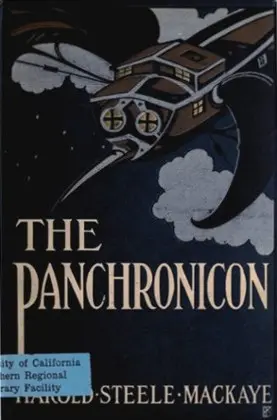
"The Panchronicon" by Harold Steele MacKaye is a fictional novel written in the early 20th century. The story revolves around two sisters, Rebecca and Phoebe Wise, who find themselves entangled in the eccentric ideas of Copernicus Droop, a village reprobate with a fantastical theory about time travel. As the narrative unfolds, the characters explore themes of ambition, the passage of time, and the desire for second chances, set against the backdrop of whimsical science fiction. The opening portion of the book introduces the two sisters at their home in Peltonville Center, New Hampshire, where they engage in ordinary tasks and daily life. Rebecca, the older sister, is practical and nurturing, while Phoebe, the younger, is filled with curiosity and ambition, especially regarding her Shakespeare class. Their interactions are light yet revealing, setting the stage for the arrival of Copernicus Droop, who proposes a ludicrous plan to travel back in time using a machine he calls the Panchronicon. As their conversation unfolds, humor and absurdity intertwine, foreshadowing the extraordinary journey the characters are about to embark on. The combination of everyday life with the extraordinary speed of time travel creates a fascinating tension right from the start.
Introduction adapted from the source catalogue; source summaries may be automatically generated.
Free to read · English · 76,361 words · No account needed
MAKE TIME FOR A GOOD BOOK
On by default. Untick to stop anonymous reading totals. Each page counts after 10 seconds in view. How this works.
Anonymous counting is on unless you have switched it off.
"All one--all one," said Dame Goldsmith, laughing as she held out her hand to Phoebe. "My good man hath a homily prepared for you, mistress, and the substance of it runneth on the folly of early rising on a May-day morning."
Phoebe held forth her hand to the knight, who kissed it with a
flourish, hat in hand.
"Shall I hear from thee soon?" she said, in an undertone.
"Forthwith, most fairly beautiful--most gracious rare!" he replied.
Then, leaping on his horse, he dashed down the street at a mad gallop, followed closely by his groom.
Rebecca stood stupefied, gazing first at one and then at the other, till she was rudely brought to her senses by no other than Dame Goldsmith herself.
"What, Rebecca!" she exclaimed. "Hast breakfasted, woman--what?"
"Ay, aunt," Phoebe broke in, hurriedly. "Rebecca must to my chamber to tire me ere I see mine uncle. Prithee temper the fury of his homily, sweet aunt."
Taking the dame's extended hand, she suffered herself to be led within, followed by Rebecca, too amazed to speak.
On entering the street door they found themselves in a large hall, at the farther end of which a bright wood fire was burning, despite the season. A black oak table was on one side of the room against the wall, upon which were to be seen a number of earthen beakers and a great silver jug or tankard. A carved and cushioned settle stood against the opposite wall, and besides two comfortable arm-chairs at the two chimney-corners there were two or three heavy chairs of antique pattern standing here and there. The floor was covered with newly gathered fresh-smelling rushes.
A wide staircase led to the right, and to this Phoebe turned at once as though she had always lived there.
"Hast heard from my father yet?" she asked, pausing upon the first stair and addressing Dame Goldsmith.
"Nay, girl. Not so much as a word. I trow he'll have but little to say to me. Ay--ay--a humorous limb, thy father, lass."
She swept out of the room with a toss of the head, and Phoebe smiled as she turned to climb the stairs. Immediately she turned again and held out one hand to Rebecca.
"Come along, Rebecca. Let's run 'long up," she said, relapsing into her
old manner.
She led the way without hesitation to a large, light bedroom, the front of which hung over the street. Here, too, the floor was covered with sweet rushes, a fact which Rebecca seemed to resent.
Your reading position is saved on this browser. Take it to another device with a library code. Reading pages adapt to text, rather than matching a printed edition.
BEHIND THE BOOK
This eBook is for the use of anyone anywhere in the United States and most other parts of the world at no cost and with almost no restrictions whatsoever. You may copy it, give it away or re-use it under the terms of the Project Gutenberg License included with this eBook or online at www.gutenberg.org. If you are not located in the United States, you will have to check the laws of the country where you are located before using this eBook. Read the source licence.
The original source file, including credits and licence, is retained by this library. Request an original-format copy at no charge. Please include the book title and Project Gutenberg identifier #27682.
KEEP YOUR CURIOSITY GOING
Wilfrid Scawen Blunt
Wilfrid Scawen Blunt

E. W. (Edgar Watson) Howe
Coulson Kernahan

Maurice Baring
Frances Wright