THE CLASSIC COLLECTION✦My diaries, being a personal narrative of events 1888-1914, Part 2 (1900-1914)CLASSIC FREE BOOKS
My diaries, being a personal narrative of events 1888-1914, Part 2 (1900-1914)
Wilfrid Scawen Blunt
THE CLASSIC COLLECTION · 1904
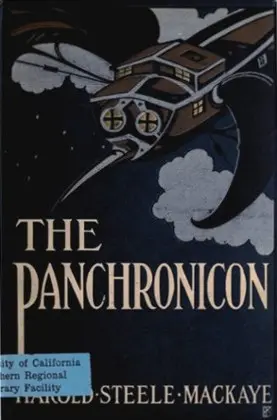
"The Panchronicon" by Harold Steele MacKaye is a fictional novel written in the early 20th century. The story revolves around two sisters, Rebecca and Phoebe Wise, who find themselves entangled in the eccentric ideas of Copernicus Droop, a village reprobate with a fantastical theory about time travel. As the narrative unfolds, the characters explore themes of ambition, the passage of time, and the desire for second chances, set against the backdrop of whimsical science fiction. The opening portion of the book introduces the two sisters at their home in Peltonville Center, New Hampshire, where they engage in ordinary tasks and daily life. Rebecca, the older sister, is practical and nurturing, while Phoebe, the younger, is filled with curiosity and ambition, especially regarding her Shakespeare class. Their interactions are light yet revealing, setting the stage for the arrival of Copernicus Droop, who proposes a ludicrous plan to travel back in time using a machine he calls the Panchronicon. As their conversation unfolds, humor and absurdity intertwine, foreshadowing the extraordinary journey the characters are about to embark on. The combination of everyday life with the extraordinary speed of time travel creates a fascinating tension right from the start.
Introduction adapted from the source catalogue; source summaries may be automatically generated.
Free to read · English · 76,361 words · No account needed
MAKE TIME FOR A GOOD BOOK
On by default. Untick to stop anonymous reading totals. Each page counts after 10 seconds in view. How this works.
Anonymous counting is on unless you have switched it off.
In the inner chamber, Elizabeth was seated at a small table, at the opposite end of which sat Rebecca. Burleigh, Nottingham, and two or three other great lords stood near at hand, while one dish after another was brought in from the outer room by maids of honor.
Standing to the right of the Queen's chair was a dark man of foreign aspect, wearing the robes of a Doctor of Laws. In his hand was Rebecca's copy of the New York World, which he was perusing with an expression of the utmost perplexity.
"Well, Master Guido," said the Queen, "what make you of it?"
"Maesta eccellentissima--" the scholar began.
"Nay--nay. Speak good plain English, man," said the Queen. "The Lady
Rebecca hath no Italian."
Messer Guido bowed and began again, speaking with a scarcely perceptible
accent.
"Most Excellent Majesty, I have but begun perusal of this document. It promiseth matter for ten good years' research in the comparison of parts, interpretation of phrases, identifying customs, manners, dress, and the like."
"Nay, then," said the Queen, "with the help of the Lady Rebecca, 'twill be no weighty task, methinks. My lady, why partake you not of the pasty?" she said, turning to Rebecca. "Hath it not a very proper savor?"
"My, yes," Rebecca replied; "it's mighty good pie! Somehow, though, pie don't lay very good with me these days. Ye don't happen to have any tea, do ye?"
"Tea!"
"If I may venture--" said Guido, eagerly.
"Speak, Messer Guido."
"Why, it would appear, your Majesty, that tea is a sort of stuff for
dresses--silk, belike."
"Stuff for dresses!" said Rebecca. "Stuff and nonsense! Why, tea's a
drink!"
"A beverage! Then how explain you this?" the Italian cried, triumphantly. Lifting the newspaper, he read from it the following passage: "The illustration shows a charming tea-gown, a creation of Mme. Decollete."
"You see, Maesta--your Majesty--it is clear. A 'tea-gown' is shown in the drawing--a gown made of tea."
Rebecca had opened her mouth to overwhelm the poor savant with the truth when a page entered and stood before the Queen.
"Well, sirrah," said Elizabeth, "what is your message?"
"Sir Percevall Hart craves an audience, your Majesty, for himself and his American friend and client."
"Another American!" exclaimed the Queen.
"Copernicus Droop!" cried Rebecca.
"Know you Sir Percevall's friend, Lady Rebecca?" asked Elizabeth.
"Why, yes, your Majesty. He and I came over together from Peltonville. I believe he's after a patent."
"A patent? What mean you? Doth he ask for a patent of nobility--a title? Can this be the suit of the fat knight?"
"I don't know," said Rebecca. "'Tain't nothin' 'bout nobility, I'm sure, though. It's a patent on a phonograph, I b'lieve."
Your reading position is saved on this browser. Take it to another device with a library code. Reading pages adapt to text, rather than matching a printed edition.
BEHIND THE BOOK
This eBook is for the use of anyone anywhere in the United States and most other parts of the world at no cost and with almost no restrictions whatsoever. You may copy it, give it away or re-use it under the terms of the Project Gutenberg License included with this eBook or online at www.gutenberg.org. If you are not located in the United States, you will have to check the laws of the country where you are located before using this eBook. Read the source licence.
The original source file, including credits and licence, is retained by this library. Request an original-format copy at no charge. Please include the book title and Project Gutenberg identifier #27682.
KEEP YOUR CURIOSITY GOING
Wilfrid Scawen Blunt
Wilfrid Scawen Blunt

E. W. (Edgar Watson) Howe
Coulson Kernahan

Maurice Baring
Frances Wright