THE CLASSIC COLLECTION✦My diaries, being a personal narrative of events 1888-1914, Part 2 (1900-1914)CLASSIC FREE BOOKS
My diaries, being a personal narrative of events 1888-1914, Part 2 (1900-1914)
Wilfrid Scawen Blunt
THE CLASSIC COLLECTION · 1904
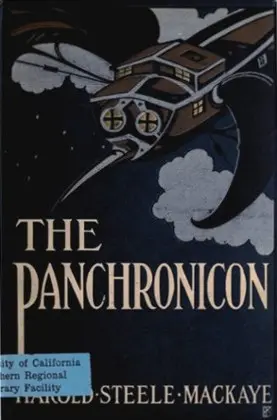
"The Panchronicon" by Harold Steele MacKaye is a fictional novel written in the early 20th century. The story revolves around two sisters, Rebecca and Phoebe Wise, who find themselves entangled in the eccentric ideas of Copernicus Droop, a village reprobate with a fantastical theory about time travel. As the narrative unfolds, the characters explore themes of ambition, the passage of time, and the desire for second chances, set against the backdrop of whimsical science fiction. The opening portion of the book introduces the two sisters at their home in Peltonville Center, New Hampshire, where they engage in ordinary tasks and daily life. Rebecca, the older sister, is practical and nurturing, while Phoebe, the younger, is filled with curiosity and ambition, especially regarding her Shakespeare class. Their interactions are light yet revealing, setting the stage for the arrival of Copernicus Droop, who proposes a ludicrous plan to travel back in time using a machine he calls the Panchronicon. As their conversation unfolds, humor and absurdity intertwine, foreshadowing the extraordinary journey the characters are about to embark on. The combination of everyday life with the extraordinary speed of time travel creates a fascinating tension right from the start.
Introduction adapted from the source catalogue; source summaries may be automatically generated.
Free to read · English · 76,361 words · No account needed
MAKE TIME FOR A GOOD BOOK
On by default. Untick to stop anonymous reading totals. Each page counts after 10 seconds in view. How this works.
Anonymous counting is on unless you have switched it off.
He put on his shoes again, for something made him nervous and he wished
to walk up and down.
The first thing he did after his shoes were donned was to gaze at
himself in the mirror.
"Don't look any younger," he thought, "but I feel so." He walked across
the room once or twice.
"Shucks!" he exclaimed. "Couldn't expect to look younger in these old duds, an' at this time o' night, too--tired like I am."
For some time he walked up and down, keeping his eyes resolutely from the date indicator. Finally he threw himself down in the chair again and closed his eyes, nervous and exhausted. He did not feel sleepy, but he must have dozed, for the next time he looked at the clock it was half-past one.
He put out the light and crossed to a settle. Here he lay at full length courting sleep. When he awoke, he thought, refreshed and alert, he would show his youth unmistakably.
But sleep would not return. He tried every position, every trick for propitiating Morpheus. All in vain.
At length he rose again and turned on the light. It was two-fifteen. This time he could not resist looking at the date indicator.
It said September 30, 1889.
Again he looked into the glass.
"My, but I'm nervous!" he thought as he turned away, disappointed. "I
look older than ever!"
As he paced the floor there all alone, he began to doubt for the first time the success of his plan.
"It must work right!" he said aloud. "Didn't I go back five weeks with that future man? Didn't he----"
A fearful thought struck him. Had he perhaps made a mistake? Had they been cutting meridians the wrong way?
But no; the indicator could not be wrong, and that registered a
constantly earlier date.
"Ah, I know!" he suddenly exclaimed. "I'll ask Cousin Phoebe."
He reflected a moment. Yes--the idea was a good one. She would be only fifteen years old by this time, and must certainly have changed to an extent of which he was at his age incapable. Besides, she had been asleep, and nervous insomnia could not be responsible for retarding the evidences of youth in her case. His agony of dread lest this great experiment fail made him bold.
He walked directly to Phoebe's door and knocked--first softly, then
more loudly.
"Cousin Phoebe--Cousin Phoebe," he said.
After a few calls and knockings, there came a sleepy reply from within.
"Well--what--who is it?"
"It's Cousin Copernicus," he said. "Please tell me. Hev ye shrunk any
yet?"
"What--how?" The tones were very sleepy indeed.
Your reading position is saved on this browser. Take it to another device with a library code. Reading pages adapt to text, rather than matching a printed edition.
BEHIND THE BOOK
This eBook is for the use of anyone anywhere in the United States and most other parts of the world at no cost and with almost no restrictions whatsoever. You may copy it, give it away or re-use it under the terms of the Project Gutenberg License included with this eBook or online at www.gutenberg.org. If you are not located in the United States, you will have to check the laws of the country where you are located before using this eBook. Read the source licence.
The original source file, including credits and licence, is retained by this library. Request an original-format copy at no charge. Please include the book title and Project Gutenberg identifier #27682.
KEEP YOUR CURIOSITY GOING
Wilfrid Scawen Blunt
Wilfrid Scawen Blunt

E. W. (Edgar Watson) Howe
Coulson Kernahan

Maurice Baring
Frances Wright