THE CLASSIC COLLECTION✦My diaries, being a personal narrative of events 1888-1914, Part 2 (1900-1914)CLASSIC FREE BOOKS
My diaries, being a personal narrative of events 1888-1914, Part 2 (1900-1914)
Wilfrid Scawen Blunt
THE CLASSIC COLLECTION · 1904
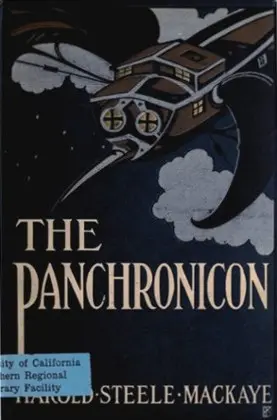
"The Panchronicon" by Harold Steele MacKaye is a fictional novel written in the early 20th century. The story revolves around two sisters, Rebecca and Phoebe Wise, who find themselves entangled in the eccentric ideas of Copernicus Droop, a village reprobate with a fantastical theory about time travel. As the narrative unfolds, the characters explore themes of ambition, the passage of time, and the desire for second chances, set against the backdrop of whimsical science fiction. The opening portion of the book introduces the two sisters at their home in Peltonville Center, New Hampshire, where they engage in ordinary tasks and daily life. Rebecca, the older sister, is practical and nurturing, while Phoebe, the younger, is filled with curiosity and ambition, especially regarding her Shakespeare class. Their interactions are light yet revealing, setting the stage for the arrival of Copernicus Droop, who proposes a ludicrous plan to travel back in time using a machine he calls the Panchronicon. As their conversation unfolds, humor and absurdity intertwine, foreshadowing the extraordinary journey the characters are about to embark on. The combination of everyday life with the extraordinary speed of time travel creates a fascinating tension right from the start.
Introduction adapted from the source catalogue; source summaries may be automatically generated.
Free to read · English · 76,361 words · No account needed
MAKE TIME FOR A GOOD BOOK
On by default. Untick to stop anonymous reading totals. Each page counts after 10 seconds in view. How this works.
Anonymous counting is on unless you have switched it off.
"Nothin'," Phoebe replied, with a toss of her chin.
She crossed the room and held out her hand to Droop.
"Good-night, Mr. Droop," she said.
Surprised at this sudden demonstration of friendship, he took her hand and tipped his head to one side as he looked into her face.
"Next time you see me, I don't suppose you'll know me, I'll be so little," she said, trying to laugh.
"I--I wish't you'd call me Cousin Copernicus," he said, coaxingly.
"Well, p'raps I will when I see ye again," she replied, freeing her hand
with a slight effort.
Rebecca retired shortly after her sister and Copernicus was once more left alone. He rubbed his hands slowly, with a sense of satisfaction, and glanced at the date dial.
"July 2, 1892," he said to himself. "I'm only thirty-four years old. Don't feel any older than that, either."
He walked deliberately to the shutters, closed them and turned on the electric light. Surrounded thus by the wonted conditions of night, it was not long before he began to yawn. He removed his coat and shoes and lay back in an easy chair to meditate at ease. He faced toward the pole so that the "side weight" would tend to press him gently backward into his chair and therefore not annoy him by calling for constant opposing effort.
He soon dozed off and was whisked through a quick succession of fantastic dreams. Then he awoke suddenly, and as though someone had spoken to him. Listening intently, he only heard the low murmur of the machinery below and the ticking of the many clocks and indicators all about him.
He closed his eyes, intending to take up that last dream where he had been interrupted. He recollected that he had been on the very point of some delightful consummation, but just what it was he could not recall.
Sleep evaded him, however. His mind reverted to the all-important question of the recovered years. He began to plan again.
This time he should not make his former mistakes. No--he would not only make immense wealth promptly with the great inventions, he would give up liquor forever. It would be so easy in 1876, for he had never taken up the unfortunate habit until 1888.
Then--rich, young, sober, he would seek out a charming, rosy, good-natured girl--something of the type of Phoebe, for instance. They would be married and----
He got up at this and looked at the clock. It was after midnight. He looked at the date indicator. It said October 9, 1890.
"Well, come!" he thought. "The old Panchronicon is a steady vessel.
She's keepin' right on."
Your reading position is saved on this browser. Take it to another device with a library code. Reading pages adapt to text, rather than matching a printed edition.
BEHIND THE BOOK
This eBook is for the use of anyone anywhere in the United States and most other parts of the world at no cost and with almost no restrictions whatsoever. You may copy it, give it away or re-use it under the terms of the Project Gutenberg License included with this eBook or online at www.gutenberg.org. If you are not located in the United States, you will have to check the laws of the country where you are located before using this eBook. Read the source licence.
The original source file, including credits and licence, is retained by this library. Request an original-format copy at no charge. Please include the book title and Project Gutenberg identifier #27682.
KEEP YOUR CURIOSITY GOING
Wilfrid Scawen Blunt
Wilfrid Scawen Blunt

E. W. (Edgar Watson) Howe
Coulson Kernahan

Maurice Baring
Frances Wright