THE CLASSIC COLLECTION✦My diaries, being a personal narrative of events 1888-1914, Part 2 (1900-1914)CLASSIC FREE BOOKS
My diaries, being a personal narrative of events 1888-1914, Part 2 (1900-1914)
Wilfrid Scawen Blunt
THE CLASSIC COLLECTION · 1904
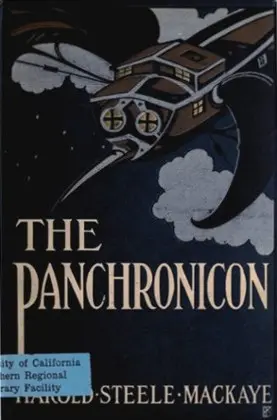
"The Panchronicon" by Harold Steele MacKaye is a fictional novel written in the early 20th century. The story revolves around two sisters, Rebecca and Phoebe Wise, who find themselves entangled in the eccentric ideas of Copernicus Droop, a village reprobate with a fantastical theory about time travel. As the narrative unfolds, the characters explore themes of ambition, the passage of time, and the desire for second chances, set against the backdrop of whimsical science fiction. The opening portion of the book introduces the two sisters at their home in Peltonville Center, New Hampshire, where they engage in ordinary tasks and daily life. Rebecca, the older sister, is practical and nurturing, while Phoebe, the younger, is filled with curiosity and ambition, especially regarding her Shakespeare class. Their interactions are light yet revealing, setting the stage for the arrival of Copernicus Droop, who proposes a ludicrous plan to travel back in time using a machine he calls the Panchronicon. As their conversation unfolds, humor and absurdity intertwine, foreshadowing the extraordinary journey the characters are about to embark on. The combination of everyday life with the extraordinary speed of time travel creates a fascinating tension right from the start.
Introduction adapted from the source catalogue; source summaries may be automatically generated.
Free to read · English · 76,361 words · No account needed
MAKE TIME FOR A GOOD BOOK
On by default. Untick to stop anonymous reading totals. Each page counts after 10 seconds in view. How this works.
Anonymous counting is on unless you have switched it off.
"Now, your Majesty can graciously gaze on this wax cylinder," he said. "On here we hev scrawled--written--a tune played by a cornet. It is 'Home, Sweet Home.' Ye've heerd it, no doubt?"
"Nay, the title is not familiar," said the Queen, looking about her. With one accord, the courtiers shook their heads in corroboration.
"Is that so? Well, well! Why, every boy and gal in America knows that
tune well!" said Droop.
He adjusted the cylinder and a small brass megaphone, and, having wound the motor, pressed the starting-button. Almost at once a stentorian voice rang through the apartment:
"Home, Sweet Home--Cornet Solo--By Signor Paolo Morituri--Edison
Record."
The sudden voice, issuing from the dead revolving cylinder, was so unexpected and startling that several of the ladies screamed and at least one gentleman pensioner put his hand to his sword-hilt. Elizabeth herself started bolt upright and turned pale under her rouge as she clutched the arms of her chair. Before she could express her feelings the cornet solo began, and the entire audience gradually resumed its wonted serenity before the close of the air.
"Marvellous beyond telling!" exclaimed Elizabeth, in delight. "Why, this contrivance of yours, Master Droop, shall make your name and fortune throughout our realm. Have you many such ingenious gentlemen in your kingdom, Lady Rebecca?"
"Oh, dear me, yes!" said Rebecca, somewhat contemptuously. "Copernicus Droop ain't nobody in America."
Droop glanced reproachfully at his compatriot, but concluded not to give expression to his feelings. Accordingly, he very quickly substituted another cylinder, and turned again to the Queen.
"Now, your Majesty," said he, "here's a comic monologue. I tell you, verily, it's a side-splitter!"
"What may a side-splitter be, Master Droop?"
"Why, in sooth, somethin' almighty funny, you know--make a feller laugh,
you wot."
Elizabeth nodded and, with a smile of anticipation, which was copied by all present, prepared to be amused.
Alas! The monologue was an account of how a farmer got the best of a bunco steerer in New York City, and was delivered in the esoteric dialect of the Bowery. It was not long before willing smiles gave place to long-drawn faces of comic bewilderment, and, although Copernicus set his best example by artificial grins and pretended inward laughter, he could evoke naught but silence and bored looks.
"Marry, sir," said Elizabeth, when the monologue was at an end, "this needs be some speech of an American empire other than that you come from. Could you make aught of it, Lady Rebecca?"
"Nothin' on airth!" was the reply. "Only a word now an' then about a farmer--an' somethin' about hayseed."
"Now, here's a reg'lar bird!" said Droop, hastily, as he put in a new
cylinder.
Your reading position is saved on this browser. Take it to another device with a library code. Reading pages adapt to text, rather than matching a printed edition.
BEHIND THE BOOK
This eBook is for the use of anyone anywhere in the United States and most other parts of the world at no cost and with almost no restrictions whatsoever. You may copy it, give it away or re-use it under the terms of the Project Gutenberg License included with this eBook or online at www.gutenberg.org. If you are not located in the United States, you will have to check the laws of the country where you are located before using this eBook. Read the source licence.
The original source file, including credits and licence, is retained by this library. Request an original-format copy at no charge. Please include the book title and Project Gutenberg identifier #27682.
KEEP YOUR CURIOSITY GOING
Wilfrid Scawen Blunt
Wilfrid Scawen Blunt

E. W. (Edgar Watson) Howe
Coulson Kernahan

Maurice Baring
Frances Wright