THE CLASSIC COLLECTION✦My diaries, being a personal narrative of events 1888-1914, Part 2 (1900-1914)CLASSIC FREE BOOKS
My diaries, being a personal narrative of events 1888-1914, Part 2 (1900-1914)
Wilfrid Scawen Blunt
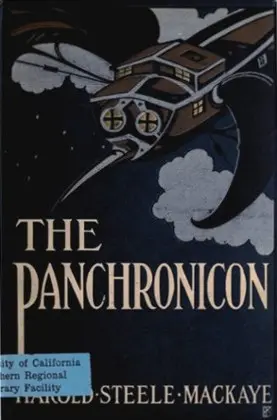
THE CLASSIC COLLECTION · 1904
"The Panchronicon" by Harold Steele MacKaye is a fictional novel written in the early 20th century. The story revolves around two sisters, Rebecca and Phoebe Wise, who find themselves entangled in the eccentric ideas of Copernicus Droop, a village reprobate with a fantastical theory about time travel. As the narrative unfolds, the characters explore themes of ambition, the passage of time, and the desire for second chances, set against the backdrop of whimsical science fiction. The opening portion of the book introduces the two sisters at their home in Peltonville Center, New Hampshire, where they engage in ordinary tasks and daily life. Rebecca, the older sister, is practical and nurturing, while Phoebe, the younger, is filled with curiosity and ambition, especially regarding her Shakespeare class. Their interactions are light yet revealing, setting the stage for the arrival of Copernicus Droop, who proposes a ludicrous plan to travel back in time using a machine he calls the Panchronicon. As their conversation unfolds, humor and absurdity intertwine, foreshadowing the extraordinary journey the characters are about to embark on. The combination of everyday life with the extraordinary speed of time travel creates a fascinating tension right from the start.
Introduction adapted from the source catalogue; source summaries may be automatically generated.
Free to read · English · 76,361 words · No account needed
MAKE TIME FOR A GOOD BOOK
On by default. Untick to stop anonymous reading totals. Each page counts after 10 seconds in view. How this works.
Anonymous counting is on unless you have switched it off.
The quick roving eye of the angry Queen caught sight of this queer assemblage of cogs, levers, and cylinder, and for the first time her too-ready tongue tripped. She looked away and recovered herself to the end of the sentence. She could not resist another look, however, and this time her words came more slowly. She paused--wavered--and then fixed her gaze in silence upon the enigmatical device. There was a unanimous smothered sigh as the bystanders recognized their good fortune. Guido, frightened half to death, slipped unobserved out of a side door, and was never seen at Greenwich again. Nor has that fatal newspaper been heard from since.
"What may that be, Sir Percevall?" the Queen inquired at length, settling back in her chair as comfortably as her ruff would permit.
"This, my liege, is the phonograph," said the knight, straightening
himself proudly.
"An my Greek be not at fault," said the Queen, "this name should purport
a writer of sound."
Sir Percevall's face fell. He was no Greek scholar, and this query pushed him hard. Fortunately for him, Elizabeth turned to Droop as she concluded her sentence.
"Hath your invention this intent, Master Droop?" she said.
"Verily, I guess you've hit it--I wot that's right!" stammered the still
frightened man.
A very audible murmur of admiration passed from one to another of the assembled courtiers and ladies-in-waiting. These expressions reached the ears of the Queen, for whom they were indeed intended, and the consciousness of her acumen restored Elizabeth entirely to good-humor.
"The conceit is very novel, is it not, my lord?" she said, turning to
Baron Burleigh.
"Novel, indeed, and passing marvellous if achieved, your Majesty," was
the suave reply.
"How write you sounds with this device, Master Droop?" she asked.
"Why, thusly, ma'am--your Majesty," said Droop, with renewed courage. "One speaketh, you wot--talketh-like into this hole--this aperture." He turned and pointed to the mouth-piece of the instrument, which was still in Sir Percevall's hands. "Hevin' done this, you wot, this little pin-like pricketh or scratcheth the wax, an' the next time you go over the thing, there you are!"
Conscious of the lameness of this explanation, Droop hurried on, hoping to forestall further questions.
"Let me show ye, my liege, how she works, in sooth," he said, taking the phonograph from the knight. Looking all about, he could see nothing at hand whereon to conveniently rest the device.
"Marry, you wouldn't mind ef I was to set this right here on your table, would ye, my liege?" he asked.
Permission was graciously accorded, and, depositing the phonograph, Droop hurried back to get his records. Holding a wax cylinder in one hand, he proceeded.
Your reading position is saved on this browser. Take it to another device with a library code. Reading pages adapt to text, rather than matching a printed edition.
BEHIND THE BOOK
This eBook is for the use of anyone anywhere in the United States and most other parts of the world at no cost and with almost no restrictions whatsoever. You may copy it, give it away or re-use it under the terms of the Project Gutenberg License included with this eBook or online at www.gutenberg.org. If you are not located in the United States, you will have to check the laws of the country where you are located before using this eBook. Read the source licence.
The original source file, including credits and licence, is retained by this library. Request an original-format copy at no charge. Please include the book title and Project Gutenberg identifier #27682.
KEEP YOUR CURIOSITY GOING
Wilfrid Scawen Blunt
Wilfrid Scawen Blunt

E. W. (Edgar Watson) Howe
Coulson Kernahan

Maurice Baring
Frances Wright